Financial markets presented a mixed picture on Monday, March 17, 2026, with notable movements across equities, cryptocurrencies, and emerging financial hubs. European industrials faced pressure while digital assets rallied sharply ahead of key central bank decisions.
European Equities and NORMA Group
Shares of German engineering firm NORMA Group SE experienced a decline during mid-day trading. The stock dropped 1.9% to €14.66, reaching an intraday low of €14.58. Trading activity was notably subdued, with volume falling approximately 50% below average. Only 50,112 shares changed hands compared to the typical 99,678. The company, which specializes in engineered joining technology solutions marketed under various global brands, maintains a market valuation of $479.39 million. Its current price-to-earnings ratio stands at 20.59, and it carries a beta of 1.07, indicating volatility slightly above the broader market. Despite the day's pullback, analyst consensus currently rates the stock as a Hold, with some market observers noting that other investment opportunities carry stronger recommendations.
Cryptocurrency Rally Ahead of Fed
In a significant move, Bitcoin surged past the $75,000 threshold, breaking through a key technical resistance level. This rally comes as investors await crucial economic data, including the Producer Price Index (PPI), and the upcoming Federal Reserve interest rate decision. While headline inflation is projected to moderate, persistent core inflation pressures have created uncertainty regarding the central bank's policy path. Bitcoin's gains occurred alongside relatively muted movements in traditional equities and gold, reinforcing its evolving role as a digital safe haven amid ongoing geopolitical tensions in the Middle East. Analysts caution that this divergence from conventional markets could precipitate increased volatility, especially given substantial open interest in options contracts near current price levels. The cryptocurrency's near-term trajectory is expected to be heavily influenced by the forthcoming economic indicators and signals from the Federal Reserve.
Indian Market Volatility and Recovery
Indian equities demonstrated remarkable resilience, staging a strong recovery after initial weakness. The Nifty 50 index closed 257 points higher at 23,408, while the BSE Sensex gained 938 points. This rebound was led by key sectors including Auto and Financials, which advanced over 1%, although Oil & Gas and Realty segments lagged. The positive momentum was supported by an optimistic tone in Asian markets, easing crude oil prices dipping below $95 per barrel, and a robust performance from U.S. equities. The Nifty 50 currently trades at approximately 17.8 times forward earnings, a valuation considered attractive relative to levels seen in April 2023. Technical analysts identify support zones between 23,200 and 23,300, with resistance anticipated near 23,650 to 23,800, suggesting a cautiously optimistic outlook. The Bank Nifty index also showed strength, closing near 54,400 after testing lower levels earlier in the session.
Geopolitical and Economic Pressures
Despite the recovery, market participants remain vigilant about persistent headwinds. Brent crude oil prices remain elevated near $103 per barrel, exacerbated by ongoing Middle East tensions, particularly the shutdown of the Strait of Hormuz which is impacting global oil supply chains. Foreign institutional investors (FIIs) have maintained a net selling stance, offloading Indian shares worth over ₹66,000 crore so far this month. However, domestic institutional investors (DIIs) have provided countervailing support, injecting capital to stabilize the markets. For the trading session on Tuesday, March 18, Nifty futures indicated a slightly higher open above 23,408.8, though early gains were quickly erased as markets turned negative shortly after the opening bell. Sectoral performance was initially broad-based, with Auto, FMCG, Pharma, PSU Bank, and Metals all trading in positive territory.
Texas Challenges Wall Street Dominance
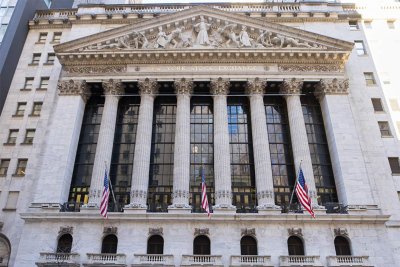
A structural shift is underway in the U.S. financial landscape as Texas rapidly emerges as a formidable alternative to traditional Wall Street centers, colloquially termed 'Y'all Street'. This transformation is marked by the official launch of NYSE Texas and Nasdaq Texas, establishing significant financial infrastructure in the Dallas-Fort Worth metropolitan area. Edward Crawford, Co-CEO of Coltala Holdings and an advisory board member for NYSE Texas, highlighted the expansion of major financial firms like Goldman Sachs and JPMorgan into the region. Furthermore, a new competitor, the Texas Stock Exchange (TXSE), aims to directly challenge the established New York exchanges by incentivizing companies to list locally. This strategic move signals a potential redistribution of financial activity, capital flows, job creation, and economic growth beyond the historical confines of New York City.
Utilities and Other Market Movements
In other developments, utility company Sempra was subject to a analyst downgrade based on valuation concerns, despite acknowledgment of its solid growth prospects and steady expansion. The analysis, presented as an independent appraisal, suggested investors balance the company's growth potential against current valuation risks. Elsewhere, shares of Wall Financial Co. saw a modest decline of 0.8% to C$16.55 on Monday, accompanied by a 14% increase in trading volume.
Overall, the trading day underscored a market navigating multiple crosscurrents: geopolitical risk supporting alternative assets like Bitcoin, regional shifts in financial center gravity, and volatile but recovering equity markets grappling with inflation and energy price concerns. Investor attention remains sharply focused on central bank policy signals and incoming economic data for directional cues.