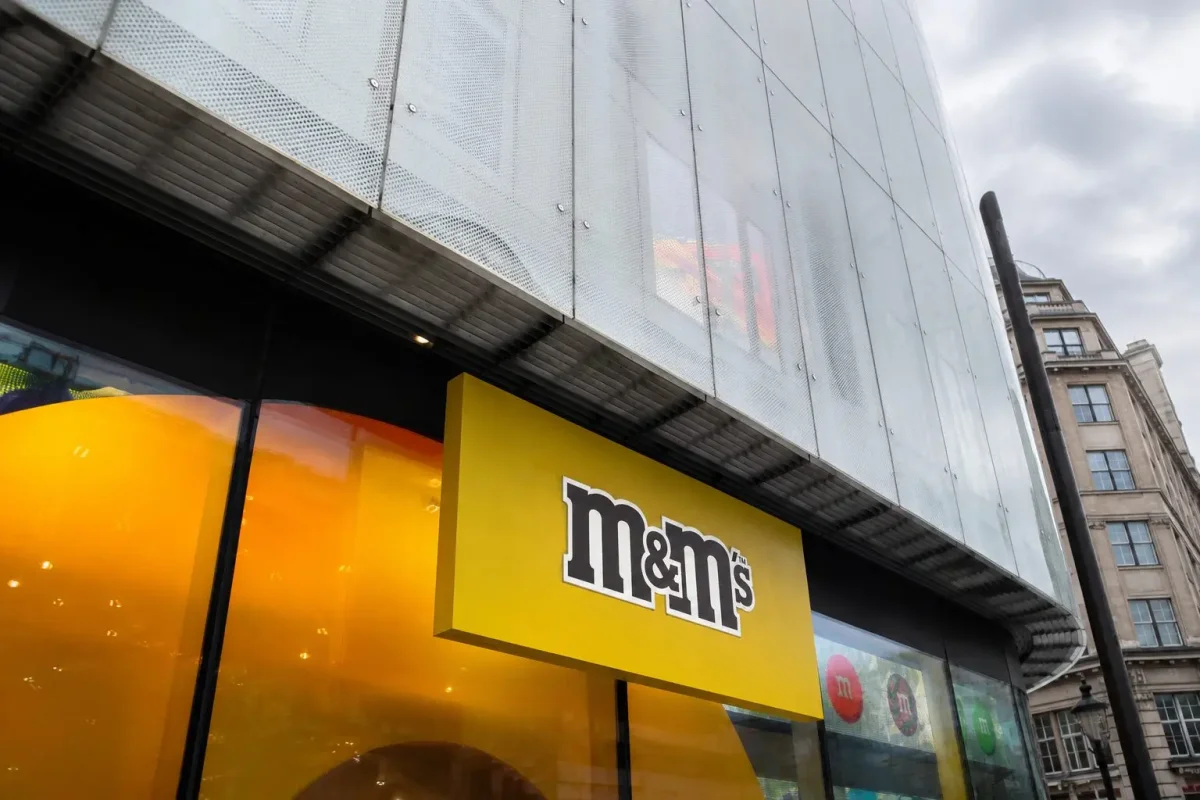
Mars Wrigley, a division of Mars Inc., announced plans to launch a new version of M&M's that eliminates certified synthetic colors, beginning in August. The initial rollout will feature only red, orange, yellow, and green shells, as the company encountered significant technical hurdles in reproducing blue and brown hues using natural alternatives.
The decision comes as U.S. regulators intensify scrutiny on synthetic food dyes, pushing major confectionery and packaged food companies to reformulate products. The Food and Drug Administration (FDA) has listed Mars as 'in progress' on its commitment to remove FD&C colors from several brands, including Extra, M&M's, Skittles, and Starburst, by 2026.
Color is fundamental to the identity of M&M's, making this reformulation a high-stakes endeavor. Anton Vincent, head of Mars Wrigley North America snacks, described the challenge as 'daunting,' noting that the company is 'messing with an 85-year-old icon.' Mars has invested millions of dollars and assigned over 100 employees to the project, aiming to restore all six original colors using natural dyes by 2028.
The company will initially sell the new four-color M&M's online through Amazon, while continuing to offer the classic version in stores. This dual-track approach allows Mars to test consumer acceptance without risking the core brand's market position. The retail price point for the new product has not been disclosed, but industry analysts expect a premium due to higher costs of natural ingredients.
Replacing Blue 1 with natural alternatives such as spirulina has proven particularly difficult. Reports indicate that spirulina is expensive, can clog spray nozzles during manufacturing, and has required new equipment investments. The absence of blue also complicates the reproduction of brown, which traditionally relies on a blend of synthetic dyes.
The broader regulatory landscape is shifting. In April 2025, the Department of Health and Human Services and the FDA unveiled plans to phase out petroleum-based dyes, including Blue 1, Blue 2, Green 3, Red 40, Yellow 5, and Yellow 6. Health Secretary Robert F. Kennedy Jr. has linked these additives to health issues such as ADHD and cancer, though many scientists argue that more evidence is needed.
Mars is not alone in this transition. The FDA tracker shows that Hershey, PepsiCo, and WK Kellogg are also reformulating products or pledging to remove certified color additives. The movement extends beyond candy into broader packaged foods, reflecting a industry-wide shift toward cleaner labels.
However, execution risks remain significant. Sourcing natural colors at scale involves supply chain constraints, higher costs, and manufacturing complexities. If Mars cannot find a cost-effective and stable solution for blue, it may face a prolonged period with a limited color palette, higher expenses, or a slower rollout.
The August launch is thus as much a market test as a product introduction. The real verdict will come from consumers, who will decide whether a four-color M&M's bag retains the same appeal as the full rainbow. Mars is betting that the move toward natural ingredients will resonate with health-conscious buyers, even if it means temporarily losing two iconic colors.