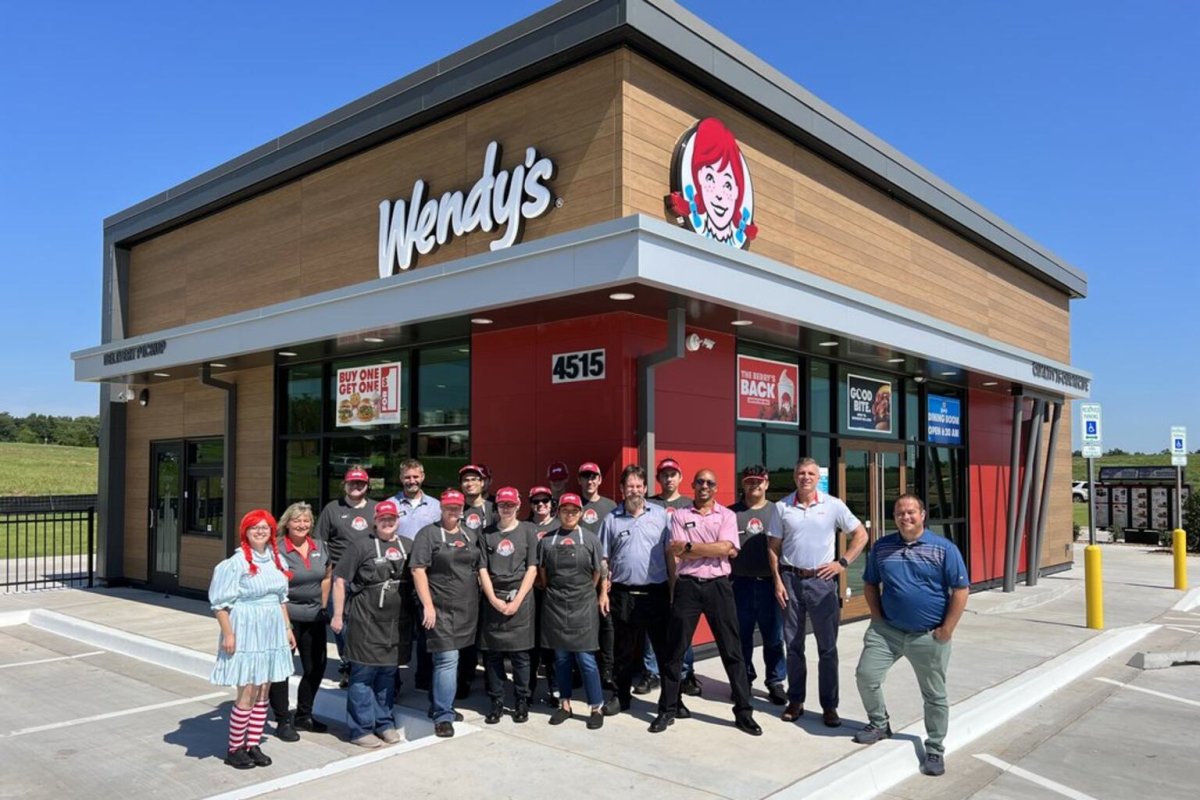
Meritage Hospitality Group, the operator of hundreds of Wendy's restaurants, has filed for Chapter 11 bankruptcy protection, but the company has not yet disclosed the size, pricing, or priority of the debtor-in-possession (DIP) financing it says it is still securing. This missing term sheet has become the first major valuation test for holders of the company's thinly traded MHGU shares.
The filing was announced late Thursday, after the market closed, at 7:31 p.m. ET. Prior to the announcement, MHGU had closed at $1.67 on the OTCQX, down 40 cents, or 19.3%, during the regular session on volume of 41,600 shares—about 4.6 times its average volume over the previous 20 sessions. Because the announcement came after hours, the stock's decline on Thursday cannot be directly attributed to the bankruptcy news. OTC stocks often experience sharp moves on relatively small dollar volume, making Friday's trading session the first clear indicator of how investors are pricing the filing.
Meritage said it expects its restaurant operations to continue during the restructuring. The company operates 314 Wendy's locations, one Bojangles, and five independent restaurants across 15 states. It intends to keep paying its approximately 9,000 employees and to pay suppliers for goods and services provided after the filing, subject to court approval of customary first-day motions.
However, these operational assurances do not protect the common stock. In Chapter 11, DIP lenders typically receive court-approved priority, and existing secured and unsecured claims sit ahead of common equity in the recovery waterfall. Meritage has not yet published a restructuring plan, a valuation, or a proposed treatment for MHGU holders.
The scale of the company's liabilities versus its equity value is stark. Meritage reported 6.72 million diluted weighted-average common shares for the quarter ended June 28. At Thursday's closing price, that implies an approximate equity value of $11.2 million. In contrast, its fiscal 2025 annual report listed $158.6 million of debt as of Dec. 28, 2025, including $154.6 million classified as current. The report also noted that substantially all company-owned property and equipment was pledged as collateral, and it disclosed covenant and payment defaults under its main credit agreement.
While this comparison is not a recovery estimate—the share count is a quarterly average, the debt figure is from year-end, and Chapter 11 value depends on current assets, leases, claims, and operating cash flow—it does explain why a low stock price is not automatically a bargain. Equity holders only receive a recovery if the enterprise value exceeds post-petition financing, administrative claims, and the entire creditor stack.
The bankruptcy follows a sharp earnings contraction. In its July operating update, Meritage reported second-quarter sales of $150.0 million, down from $163.5 million a year earlier, when the comparison included about 40 more restaurants. Restaurant operating income fell to $10.3 million from $15.2 million, while adjusted EBITDA dropped to $2.8 million from $8.2 million. The company recorded a $13.6 million net loss, including $13.8 million of restructuring and closing costs. For the first six months, adjusted EBITDA was only $3.2 million against $11.0 million in the prior-year period.
Management had previously pointed to closures, shorter operating hours, and internal cost reductions as the foundation for a 2027 recovery. Chapter 11 now gives Meritage the tools to renegotiate obligations, but it also confirms that those measures did not solve the near-term capital problem outside of court.
The strongest case for a better-than-feared outcome is that Meritage still has hundreds of operating restaurants, revenue-producing franchise relationships, and a court process that can shed uneconomic obligations. A business that remains open can preserve more value than one forced into liquidation. The counterargument for shareholders is seniority: even a successful operating turnaround can benefit lenders or a new owner while canceling the old common stock.
Investors should watch three key documents to determine the likely recovery for MHGU holders. First, the DIP financing motion and final order will disclose the amount, interest rate, fees, collateral, and any milestones for a sale or plan. Second, the schedules of assets and liabilities, due by Oct. 1 in the Western District of Michigan (case 26-02947), will provide a clearer picture of the company's financial position. Third, any restructuring support agreement or plan will state explicitly whether existing common and preferred shares survive, receive warrants, or are canceled.
Until those documents arrive, MHGU's quoted price remains a highly speculative option on residual value, not a measure of the restaurants' ability to keep serving customers.
