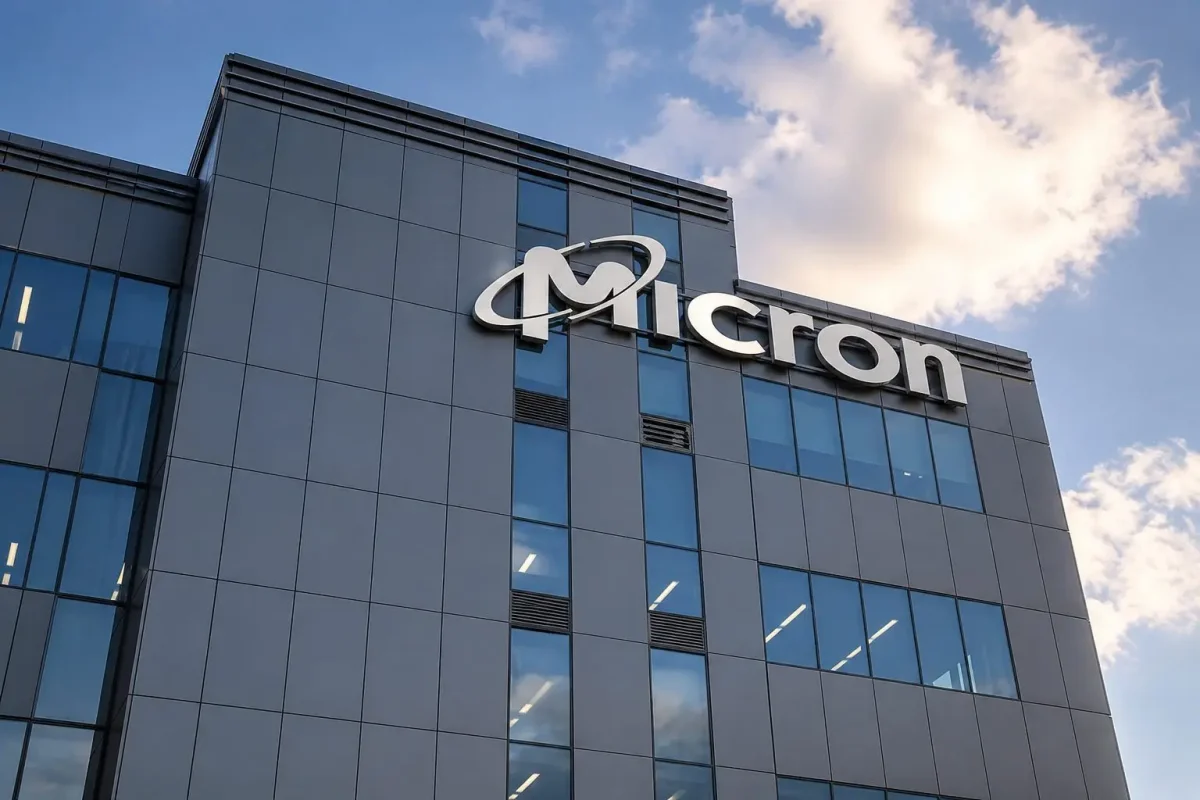
Micron Technology, Inc. (NASDAQ: MU) saw its shares drop 4.6% in premarket trading on Thursday, reaching $862.70, despite the announcement of new long-term supply agreements with automotive clients. The decline follows an 8.0% drop on Wednesday that closed the stock at $904.28, indicating continued investor skepticism about the scope of these contracts.
The new deals, which include take-or-pay provisions that lock in buyers for set volumes, cover only about 20% of Micron's DRAM volume. DRAM accounted for 76% of the company's fiscal third-quarter revenue, which stood at $31.3 billion. In contrast, NAND memory, which represented 24% of revenue at $9.9 billion, has roughly one-third of its volume under signed agreements.
This disparity leaves Micron's primary revenue driver—DRAM—significantly exposed to spot market fluctuations. While the company has signed 16 agreements with a cumulative minimum revenue of approximately $100 billion and is seeking $22 billion in deposits and related commitments, most of these contracts extend through 2030, with auto deals typically lasting three years. CEO Sanjay Mehrotra has stated that these agreements will "significantly enhance the durability and predictability" of results, but the limited coverage for DRAM suggests a more tempered impact.
The broader memory sector is feeling the pressure as well. SK hynix Inc. (KRX: 000660) dropped 11.5% in Seoul trading, while Samsung Electronics Co., Ltd. (KRX: 005930) fell 8.8%. In response to the volatility, South Korean authorities have restricted leveraged single-stock funds, which were blamed for exacerbating the swings.
Qualcomm Incorporated (NASDAQ: QCOM) and Harman also announced deals on Thursday to support supply and manage pricing for AI-powered vehicles. "Automakers are looking for platforms that bring together high-performance compute, connectivity, memory and storage," said Qualcomm CEO Cristiano Amon, highlighting the growing demand for integrated solutions in the automotive sector.
Despite the near-term headwinds, Micron's management remains optimistic about long-term supply dynamics. The company anticipates industry shortages persisting past 2027, which could support pricing power. If that outlook proves accurate, Thursday's selloff might be overdone. However, the risk cuts both ways: if supply ramps more quickly than expected or AI-driven demand falters, excess DRAM inventory could weigh on prices.
For now, the auto deals provide only a modest boost in revenue visibility, leaving the majority of Micron's core business vulnerable to market forces. This disconnect between contract announcements and stock performance underscores the market's focus on the underlying exposure of the company's largest segment.