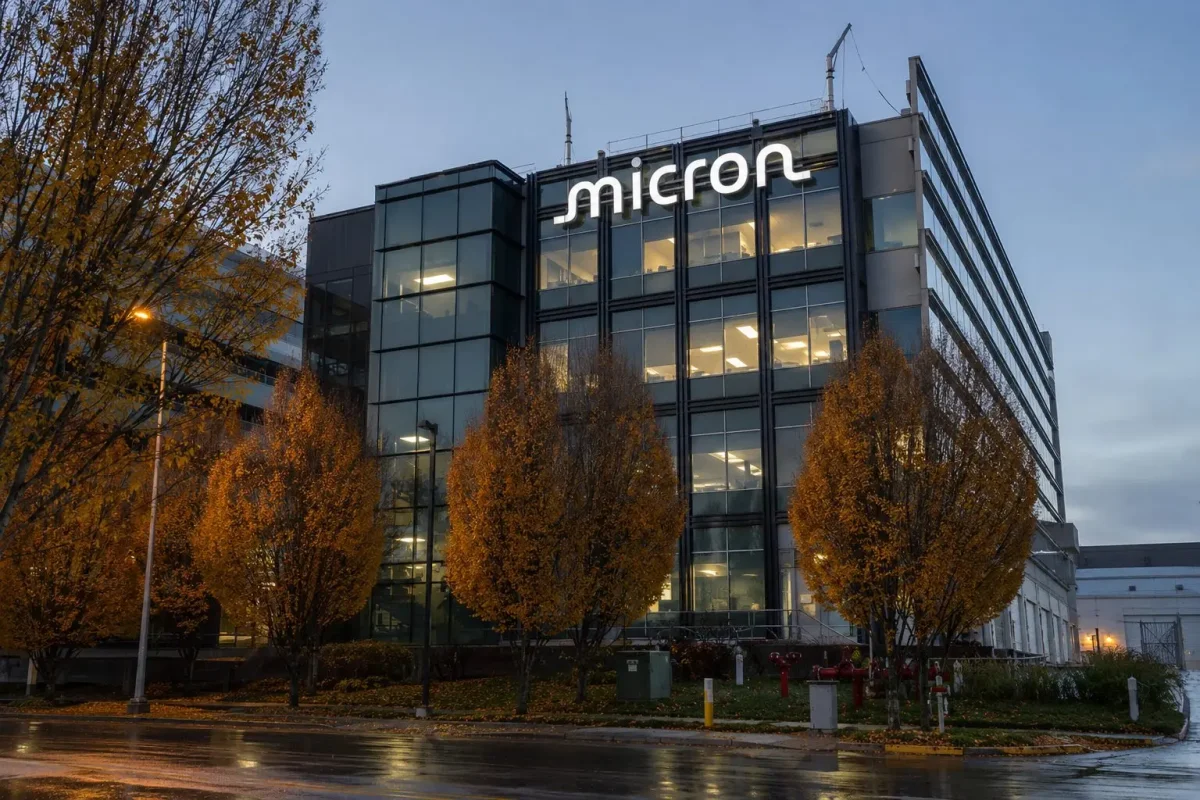
Micron Technology Inc. (MU) shares climbed to approximately $1,064 in premarket trading on Wednesday, continuing a rally that has solidified the company's position as a major beneficiary of the artificial intelligence boom. The stock's ascent reflects surging demand for high-bandwidth memory (HBM), a critical component in AI servers, which is currently outstripping supply.
AI Memory Demand Drives Price Surge
The timing of the rally aligns with the ongoing COMPUTEX trade show, where Micron showcased its latest AI-ready HBM, server DRAM modules, and data-center SSDs. Sumit Sadana, Micron's chief business officer, emphasized on June 1 that "system performance is now driven by memory bandwidth and memory capacity." This statement underscores the strategic importance of memory in AI workloads, where HBM—stacked memory chips placed close to processors—enables rapid data transfer.
Analyst Optimism and Price Targets
Raymond James analyst Melissa Fairbanks doubled her price target on Micron to $1,100 from $530, citing "unprecedented demand" and "rational supply behavior." Despite this, the FactSet consensus average stands at $767.73, suggesting the market may be pricing in higher expectations than analysts collectively anticipate. Micron's fiscal second-quarter results, reported in March, showed revenue of $23.86 billion and non-GAAP earnings per share of $12.20, with CEO Sanjay Mehrotra declaring that "memory has become a strategic asset."
Risks from Competitors and Supply Dynamics
However, the rally faces potential headwinds. Micron warned in a regulatory filing that competitors could expand production, potentially leading to oversupply and falling average selling prices. Key rivals include Samsung Electronics, SK Hynix, Kioxia, SanDisk, ChangXin, and YMTC. SK Group Chairman Chey Tae-won recently stated that SK Hynix plans to double its wafer capacity over the next five years. SK Hynix currently holds 58% of the HBM market, with Samsung and Micron each at 21%.
Chinese memory suppliers are also gaining ground. YMTC's share in NAND flash memory rose to 13% from 8% over the past year, according to Barron's. While NAND is distinct from DRAM and HBM, this trend highlights broader competitive pressures in the memory sector.
Market Context and Macro Factors
The broader market showed mixed signals on Wednesday. S&P 500 and Dow futures edged lower as oil prices rose on Middle East tensions, but Nasdaq 100 futures added 0.26%, driven by buying in AI-related stocks. Morgan Stanley flagged that memory prices have surged sixfold over the past year, coining the term "chipflation" to describe the impact on hardware margins, cloud expenses, and consumer device costs. The firm noted that Samsung, SK Hynix, and Micron together control nearly 90% of global dynamic memory production.
Nvidia Partnership and Forward Outlook
Micron's recent gains also reflect its deepening ties with Nvidia. Nvidia CEO Jensen Huang expressed gratitude that the companies have aligned their roadmaps, while analyst Ben Bajarin of Creative Strategies noted that Micron's spending is driven by long-term customer demand and "real commitment." Micron is scheduled to report its fiscal third-quarter results after the market closes on June 24.
While the current environment treats memory more like scarce infrastructure than a commodity, analysts caution that Micron's elevated valuation leaves little room for error. A weaker-than-expected forecast, a sudden increase in supply, or operational missteps could trigger a sharp correction.