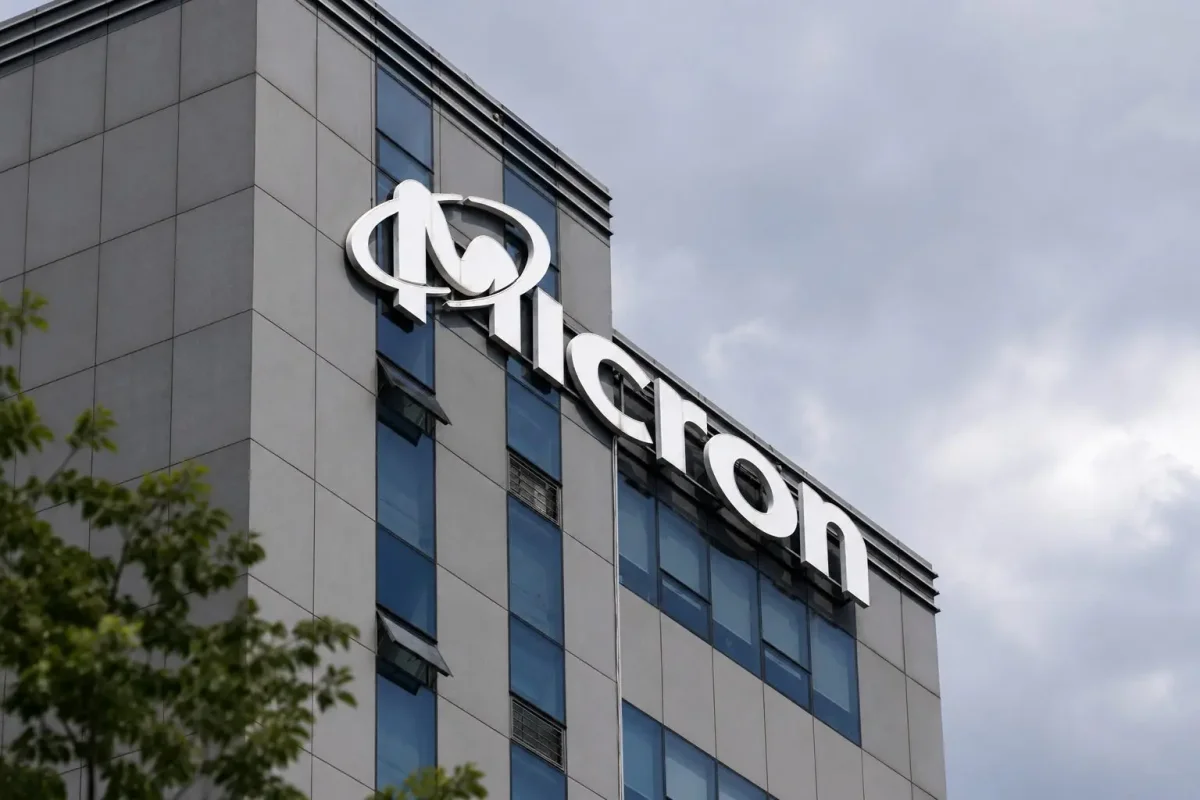
Micron Technology Inc. crossed the $1 trillion market capitalization milestone for the first time on Tuesday, as a sharp price-target upgrade from UBS highlighted the growing importance of memory chips in the artificial intelligence boom. Shares of the Boise, Idaho-based company surged 19.3% to $895.88, after reaching an intraday high of $916.69.
UBS Lifts Target Sharply
UBS raised its price target on Micron to $1,625 from $535, the highest among 46 brokerages tracked by LSEG. The firm argued that long-term supply agreements could stabilize earnings across memory cycles, and that Micron should trade at a price-to-earnings multiple similar to Nvidia's. The upgrade came amid a broader rally in chip stocks that pushed the Philadelphia Semiconductor Index to a record high, up 5.5%.
AI Memory Demand Drives Growth
Investors are increasingly focusing on high-bandwidth memory (HBM), the fast-stacked chips placed near AI processors to accelerate data movement. HBM has become a scarce component in data centers operated by major technology firms, transforming the perception of memory from a cyclical commodity to a strategic asset. "The demand for pure memory is jumping, and Micron sits at the center of it," said Art Hogan of B. Riley Wealth.
Strong Quarterly Results
Micron reported fiscal second-quarter revenue of $23.86 billion, up from $8.05 billion a year earlier, with non-GAAP earnings of $12.20 per share. CEO Sanjay Mehrotra described memory as "a strategic asset," citing solid demand and tight supply. The company noted that its HBM supply for 2026 is already sold out, and next-generation HBM4 chips are in production as customers rush to secure capacity.
Supply Constraints and Competition
The memory market is currently supply-constrained, with analysts expecting prices to remain elevated. Mizuho's Vijay Rakesh said there is "no clear line of sight" on when the shortage of DRAM and NAND will ease, while CFRA's Angelo Zino anticipates prices holding up into 2027. Micron competes with South Korea's Samsung Electronics (SSNLF) and SK Hynix, both of which are also approaching trillion-dollar valuations. Micron's U.S. listing offers a domestic option for American investors seeking exposure to the memory sector.
Market Context and Risks
The broader market also closed at record highs, with the S&P 500 and Nasdaq reaching new peaks. Micron's trading volume surged past 75 million shares, well above average, as investors rotated from Nvidia into memory suppliers. However, the cyclical nature of the memory industry remains a risk. If AI spending slows, or if Micron, Samsung, or SK Hynix add capacity too quickly, oversupply could return. Reuters Breakingviews recently flagged that excess supply and uncertain AI returns could challenge chip stocks.
For now, traders are betting on the visibility provided by long-term supply contracts. The key test will be whether customers stick with these deals at prices that justify the earnings durability UBS has begun to model. Micron's market cap held just above $1 trillion in late trading, cementing its place among the world's most valuable semiconductor companies.