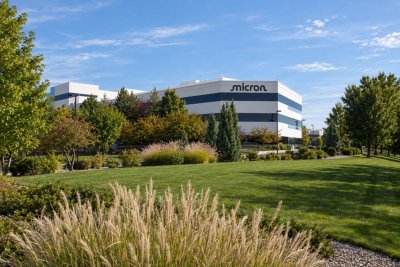
Micron Technology has moved to strengthen its balance sheet by repurchasing a substantial portion of its outstanding debt, accepting tenders for roughly $4.46 billion in senior notes. The chipmaker reported that holders offered about $4.32 billion across six series of notes by the initial deadline, with an additional $140 million submitted via guaranteed delivery procedures. The company has agreed to purchase all validly tendered bonds, with settlement scheduled for April 3, 2026.
Financing a Major Capex Increase
This strategic debt buyback arrives just weeks after Micron announced a major escalation in its capital investment plans. The Boise-based memory manufacturer raised its fiscal 2026 capital expenditure forecast by $5 billion, pushing the total above $25 billion. Furthermore, management has signaled another increase is likely for fiscal 2027. This aggressive spending is squarely aimed at scaling production capacity for high-bandwidth memory (HBM), a critical component for advanced artificial intelligence servers and systems.
Micron concluded its February quarter with a robust liquidity position, holding $16.7 billion in cash, marketable securities, and restricted cash. CEO Sanjay Mehrotra recently emphasized that memory has become a "strategic asset" in the AI era, necessitating significant investment in manufacturing infrastructure to keep pace with soaring customer demand.
Pricing and Market Context
The tender offers covered notes maturing between 2031 and 2035. On Tuesday, April 1, Micron set purchase prices between $1,048.11 and $1,079.93 per $1,000 of principal, with the premium varying based on the specific note series and its maturity. By the expiration deadline, nearly 80% of the targeted $5.4 billion principal amount had been tendered.
This financial maneuvering follows Micron's impressive second-quarter earnings report, where it posted record revenue of $23.86 billion. The company also provided strong third-quarter guidance, projecting revenue of approximately $33.5 billion, plus or minus $750 million. This outlook surpassed the $24.29 billion consensus estimate among analysts surveyed by LSEG.
Position in the AI Memory Triopoly
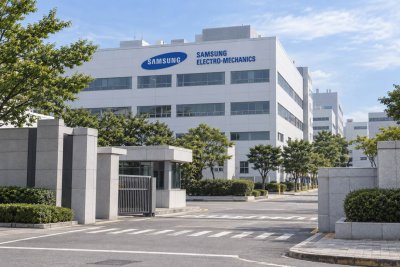
Micron's massive investment underscores its position within an exclusive trio of HBM suppliers, alongside South Korean giants Samsung Electronics and SK Hynix. These three companies dominate the high-stakes market for premium memory chips that power generative AI and large language models. Samsung's co-CEO Jun Young-hyun recently described the current demand surge as an "unprecedented supercycle," noting the company is negotiating three- to five-year supply agreements with major cloud clients.
The spending commitment from cloud hyperscalers is staggering. Microsoft, Amazon, Alphabet, and Meta were reportedly eyeing combined AI infrastructure investments around $635 billion for 2026, although recent concerns over energy costs have introduced some uncertainty into these plans.
Analyst Caution on Capacity Cycle
Despite the bullish outlook, some market observers urge caution. Mike O'Rourke, chief market strategist at JonesTrading, suggested after Micron's earnings that the enlarged capital expenditure plan might indicate the current memory shortage is a "temporary phenomenon." He warned the industry could revert to its historical "commodity nature" once the substantial new manufacturing capacity comes online, potentially leading to oversupply and pricing pressure.
Micron's stock responded positively to the news, climbing roughly 4.2% in early U.S. trading on Wednesday, April 2. This rebound helped recoup some losses sustained after the previous month's earnings report. Investors appear focused on the robust long-term demand narrative for AI memory, even as the costs of maintaining competitive scale continue to climb. The company noted that the debt tender offers remain subject to certain customary closing conditions.