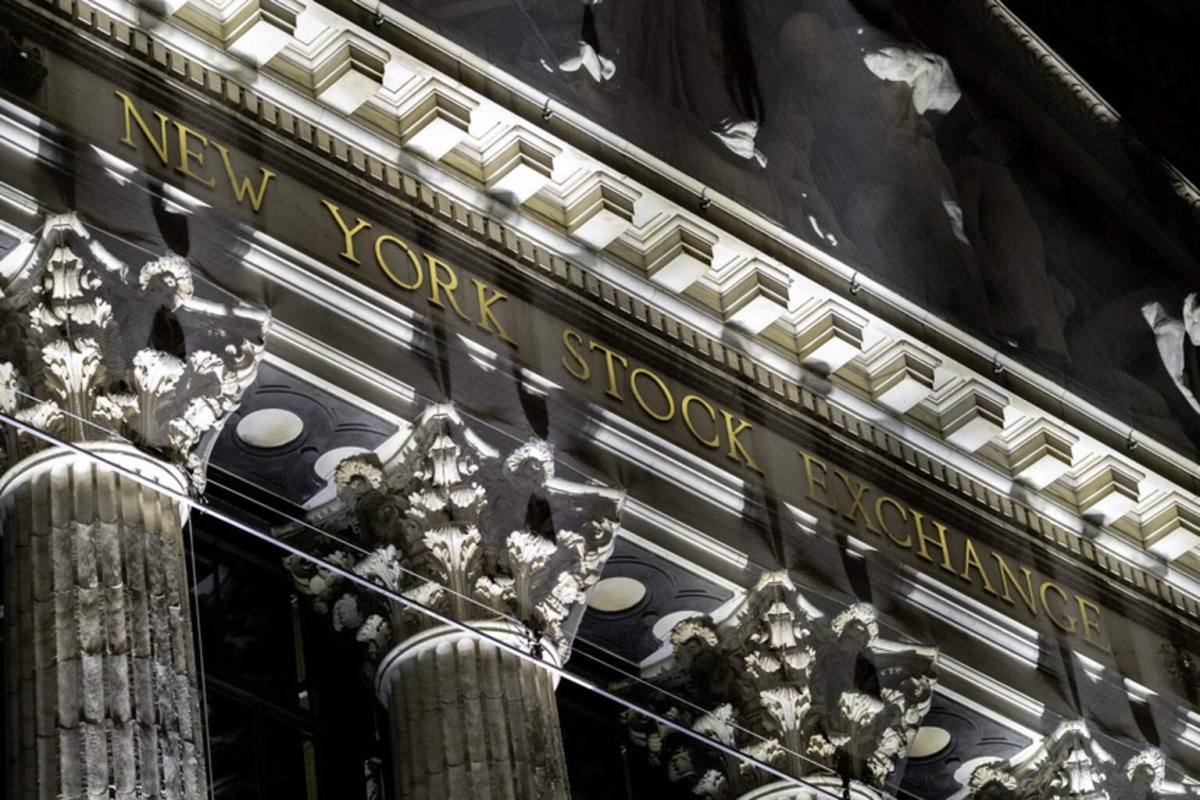
U.S. equities kicked off the trading week with a bifurcated session on Monday, as a surge in service-sector price pressures and elevated Treasury yields tempered an otherwise broad advance. By 10:05 a.m. EDT, the Nasdaq Composite had climbed 0.5%, while the S&P 500 added 0.2% shortly after the opening bell. In contrast, the Dow Jones Industrial Average slipped 0.4%, reflecting a market split between growth-oriented technology names and interest-rate-sensitive sectors.
The divergence sharpened following the release of the Institute for Supply Management's (ISM) services index, which eased to 54.9 in September from 55.4 in August. While the headline figure remained comfortably above the 50-point expansion threshold, the prices paid component jumped to 74.0—its highest level since March 2025—up from 72.6. This renewed inflation signal, paired with a 10-year Treasury yield holding at 5.30%, kept pressure on longer-duration assets and reinforced the case for a cautious Federal Reserve stance.
Among the sub-indices, business activity fell to 56.5 from 61.7, and new orders slipped to 59.8 from 60.9. However, employment rebounded into expansion territory at 50.1, up from 47.8 in August. The mixed data painted a picture of moderating demand but persistent cost pressures, leaving investors to weigh the implications for corporate margins and Fed policy.
Market breadth, however, told a more constructive story. Advancers outnumbered decliners on both major exchanges, with 60.4% of NYSE-listed issues and 53.8% of Nasdaq-listed stocks trading higher at the time of the snapshot. This breadth suggested that the weakness was concentrated in specific sectors rather than reflecting a broad risk-off mood.
Sector ETFs illustrated the rate-driven divide. Communication services (XLC) led the pack with a 0.53% gain, followed by technology (XLK) at +0.26% and health care (XLV) at +0.17%. Conversely, real estate (XLRE) fell 0.55% and industrials (XLI) dropped 0.54%, as higher yields weighed on rate-sensitive groups. Financials (XLF) were nearly flat, despite the steeper yield curve backdrop.
Oil prices eased slightly, with Brent crude trading at $101.83 a barrel, down 0.4%, after oscillating between $100 and $103. The dollar index strengthened 0.3% to 102.23, while the euro touched a 17-month low overnight, according to a Reuters feed on Euronext. These moves added another layer of complexity for multinational earnings and commodity-driven inflation expectations.
Corporate deal-making provided the most dramatic single-stock moves. PTC Inc. (NASDAQ: PTC) surged 34.8% to $194.20 after Schneider Electric SE (EPA: SU) agreed to acquire the software firm for $205 per share, valuing PTC's equity at approximately $22.6 billion. In the logistics space, RXO Inc. (NYSE: RXO) jumped 23.3% following a $5.8 billion takeover offer from C.H. Robinson Worldwide (NASDAQ: CHRW), which itself tumbled 11.0%. C.H. Robinson's CEO Dave Bozeman described the acquisition as "a natural next step in our transformation."
Analyst actions also contributed to stock-specific volatility. Microsoft (NASDAQ: MSFT) rose 1.7% after Melius Research upgraded the stock to Buy from Hold with a $665 price target. Wells Fargo (NYSE: WFC) gained 1.3% following a Morgan Stanley upgrade to Overweight with a $102 target. Conversely, Align Technology (NASDAQ: ALGN) fell 2.5% after Evercore ISI downgraded the stock to In Line from Outperform, setting a $155 target.
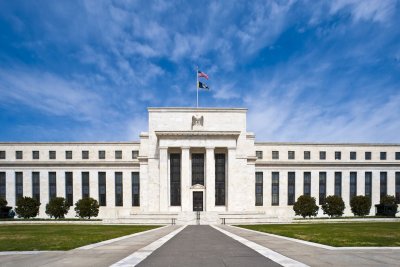
Looking ahead, investors will parse the Federal Reserve's September meeting minutes on Wednesday, October 7, at 2 p.m. EDT. The key question remains whether policymakers view persistent services inflation as a barrier to rate cuts. Additionally, the Treasury's auction of 13- and 26-week bills, with competitive bids closing at 11:30 a.m. EDT, will provide a fresh test of demand for short-dated government paper. A sustained move above 5.30% in the 10-year yield or a renewed spike in oil prices could derail the growth-stock bid, while softer services demand could become an earnings concern if new orders continue to roll over.