NASA has initiated an ambitious in-orbit demonstration of a dual-mode propulsion system designed to give small satellites both rapid maneuvering capability and efficient fine-tuning. The ASCENT Propulsion Dual Mode spacecraft, launched on October 1 via SpaceX's Transporter-18 rideshare mission, is now in low Earth orbit. This 6U CubeSat, roughly the size of a large shoebox, carries a single propellant tank that feeds both a chemical engine and four electrospray thrusters, a configuration that could reshape how CubeSats manage their orbital movements.
Balancing Power and Efficiency
The core challenge in small satellite propulsion is the trade-off between high-thrust chemical systems, which allow quick orbit changes but consume fuel rapidly, and electric propulsion, which offers exceptional fuel efficiency but generates very low thrust. Historically, satellites requiring both capabilities had to carry separate propulsion systems with dedicated tanks, valves, and plumbing—a luxury that small CubeSats cannot afford due to severe volume and weight constraints.
The ASCENT mission addresses this by using a single shared propellant tank for both modes. The chemical side features a catalytic thruster rated at 100 millinewtons, sufficient for orbit insertion adjustments or collision avoidance. The electric side uses four electrospray thrusters developed by MIT, which produce a gentle but highly controllable thrust suitable for precise station-keeping or formation flying. Both systems draw from the same ASCENT propellant, a hydroxylammonium-nitrate-based ionic liquid developed by the U.S. Air Force Research Laboratory.
The Propellant Advantage
ASCENT, formerly known as AF-M315E, offers a significant improvement over the traditional hydrazine propellant. According to AFRL, it provides a 50% gain in density-specific impulse, a metric that combines propellant density with specific impulse, meaning the fuel is both denser and more efficient. It also has a lower toxicity and reduced vapor hazards, which simplifies ground handling and reduces the need for specialized protective equipment. However, it is not without drawbacks: the ionic liquid requires more preheating before ignition, and its hotter combustion demands more robust and expensive catalyst and chamber materials.
ASCENT has already proven its chemical thruster capabilities in orbit during NASA's Green Propellant Infusion Mission in 2019-2020. The new dual-mode test, however, is the first to explore whether a single tank can support both chemical combustion and electrospray ion emission over an extended mission.
Electrospray Thrusters: Precision at the Micro Scale
Electrospray thrusters operate by applying a strong electric field to a conductive liquid, causing charged particles to be emitted from microscopic nozzles. This produces a tiny but extremely precise thrust, ideal for long-duration burns and fine adjustments. MIT researchers have tested ASCENT in porous electrospray devices, reporting a specific impulse of about 600 seconds, 15% total efficiency, and a thrust-to-power ratio of 40-65 micronewtons per watt. Some units ran for up to 167 hours without degradation, though the study also identified discrepancies in mass-flow measurements, suggesting additional loss mechanisms that need on-orbit validation.
One of the main technical hurdles is pressure management. The shared tank operates between 275 and 60 psi, but the electrospray inlet can only accept up to 10 psi. The system uses flow restrictors and heritage valves to bridge this gap, and porous membranes help remove water and volatiles before ion extraction.
Mission Objectives and Success Criteria
The mission's primary goals include demonstrating at least one chemical maneuver, one electrospray maneuver, and an on-orbit refill of the electrospray reservoir. Full success requires extended electric burns, multiple reservoir refills, and repeated switching between the two modes. Georgia Tech, which built the spacecraft bus, plans to conduct over 1,000 hours of propulsion testing, aiming to move the satellite across an altitude range of about five kilometers.
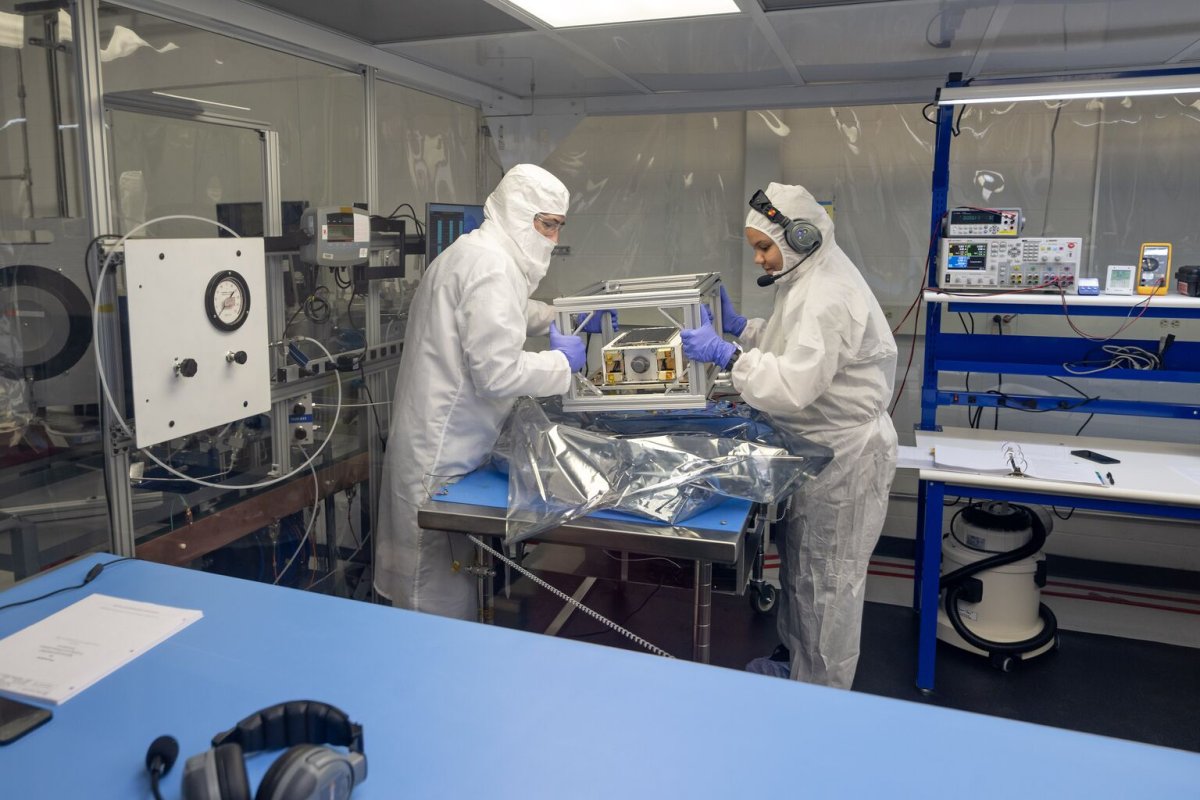
The flight is scheduled to last nine months, with the commissioning phase expected to take about four weeks. Ground testing has already included helium leak checks, thermal vacuum exposure, and spin balance, but the true test is in the harsh environment of space.
Implications for the Satellite Industry
This demonstration is classified as a low-cost, high-risk technology demonstration, with the goal of raising the integrated system to Technology Readiness Level 7 for specific applications. Success could open the door for more capable small satellites that can perform both rapid orbit changes and precise station-keeping without the weight penalty of dual systems. This would be particularly valuable for constellations, where maintaining formation and avoiding collisions are critical.
While the chemical engine is small and electrospray thrust remains microscopic, the potential for scaling these systems exists. However, challenges remain in catalyst development, thermal management, and lifetime extension. As the mission progresses, the space industry will be watching closely for data on fuel accounting, system reliability, and overall performance.