Cowboy Space, the space-based computing venture formerly known as Aetherflux, unveiled its Big Iron rocket architecture late Monday, revealing a design that integrates a 1-megawatt orbital data center with the launch vehicle itself. The company aims to address the dual challenges of deploying heavy payloads to orbit and managing the intense heat generated by high-performance computing in the vacuum of space.
The Big Iron rocket is engineered to deliver more than 15,000 kilograms to sun-synchronous orbit. Its upper stage, once in orbit, is designed to remain operational as a data center, housing five racks of computing hardware. This dual-use approach gives launch hardware a second purpose, potentially improving the economics of space-based computation.
Central to the design is the rocket's thermal management system. The vehicle's skin doubles as a radiator, while the ammonia propellant, typically used for propulsion, is repurposed as a coolant. This innovative coupling directly ties the cost of launching computers to the engineering challenge of dissipating heat in space, where conventional air cooling is impossible.
In space, heat rejection relies solely on radiative emission. NASA's thermal guidance indicates that the power radiated is proportional to the fourth power of the absolute temperature and the surface area. Cowboy Space has not disclosed its operating radiator temperature, but editorial calculations based on a 1-megawatt heat load and an emissivity of 0.9 illustrate the sensitivity. At 300 kelvin (27°C), approximately 2,420 square meters of emitting surface would be required; at 350 kelvin (77°C), that requirement drops to about 1,306 square meters; and at 400 kelvin (127°C), it falls to roughly 765 square meters.
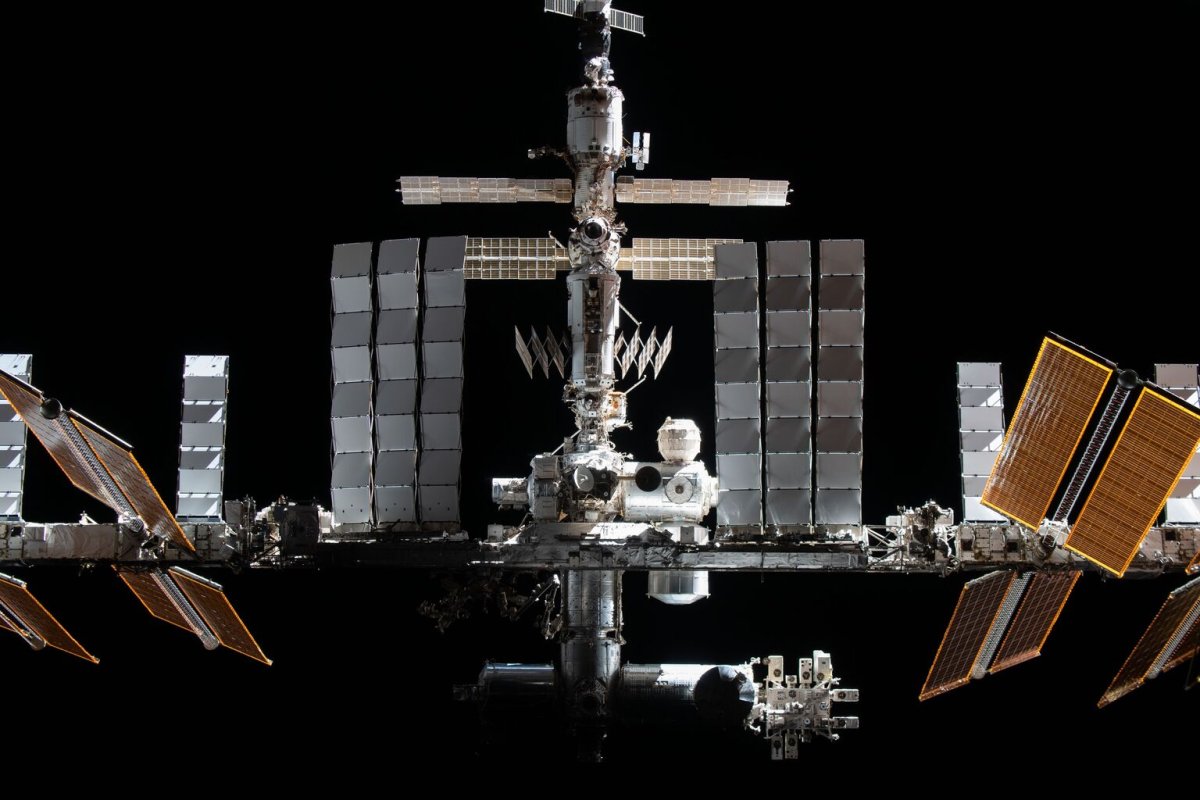
These figures underscore the trade-off between radiator temperature and physical footprint. The International Space Station's external cooling system, which circulates ammonia through closed loops to reject heat, serves as a real-world precedent, though Cowboy's vehicle and mission are distinctly different.
Cowboy Space's CEO Baiju Bhatt stated that the design "puts us on a path to cost parity with terrestrial data centers," though the company has not released launch pricing, per-computing-hour costs, or audited comparisons. The company's website describes a 1-megawatt data center with active thermal management but does not specify the power delivered to processors after other spacecraft loads are met—a critical distinction for assessing useful computational output.
The company has already taken a first step with its Reason-1 demonstration satellite, launched on October 1 aboard a SpaceX rideshare to test laser power beaming toward Earth. However, this does not validate orbital computing or megawatt-scale thermal management. A larger fleet is planned: a June FCC filing requests 20,000 satellites in sun-synchronous orbits between 700 and 1,000 kilometers, though acceptance for filing does not authorize deployment.
NVIDIA's Space-1 Vera Rubin program lists Cowboy Space as a partner, establishing a technology pathway, but no measured throughput or service availability has been provided. The company plans to launch Reason-2 for GPU operations in 2027, ahead of Big Iron's targeted 2028 debut.
The timeline carries significant risks, including rocket development, radiator deployment, sustained cooling performance, and regulatory approval. A launch failure or cooling shortfall could simultaneously eliminate both transport and computing capacity. Investors and industry observers will be watching for published heat-rejection measurements and sustained compute validation before the first full-scale vehicle takes flight.