Verizon Communications (NYSE: VZ) has unveiled a significant expansion of its artificial intelligence infrastructure portfolio with a dark fiber agreement valued at more than $2 billion with Amazon Web Services (AWS), the cloud computing subsidiary of Amazon (NASDAQ: AMZN). The disclosure came alongside the carrier's October 26 earnings release, marking a major customer commitment for Verizon's AI networking ambitions.
Chief Executive Dan Schulman revealed during the earnings call that the company's AI Connect initiative now holds approximately $4 billion in signed contracts. This total encompasses both fiber and edge computing agreements, with the AWS deal included. The announcement follows a similar dark fiber partnership with Google (NASDAQ: GOOGL) announced in July, which was reported by Dow Jones to be worth over $1 billion.
Schulman indicated that the financial impact of these contracts would begin to materialize in 2027. However, the company has not yet disclosed specific delivery milestones, such as route lengths, throughput capacities, or service activation dates for the AWS agreement. This lack of granular data leaves some uncertainty regarding the execution timeline.
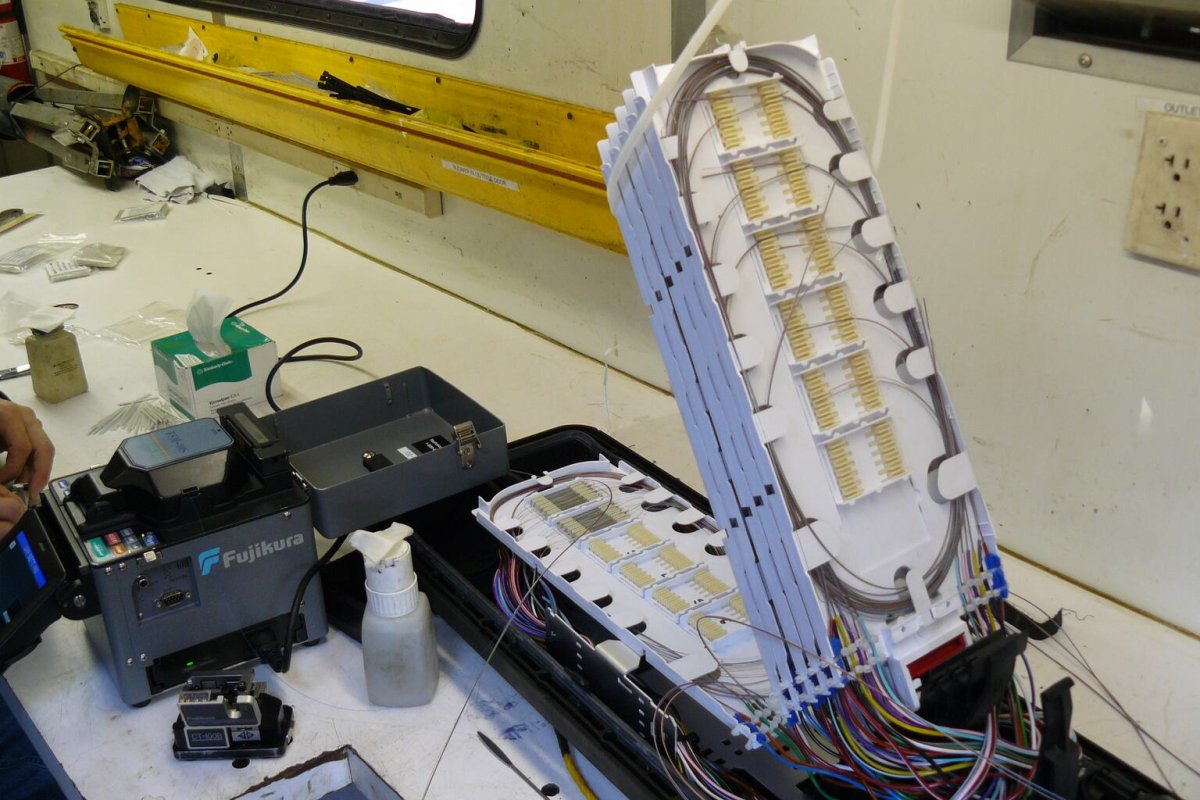
Dark fiber contracts involve the provision of optical fiber strands without active transmission equipment; customers supply their own electronics to light the fibers and manage data traffic. This arrangement gives cloud providers like AWS full control over the network electronics, enabling them to optimize capacity according to their needs. Verizon's service guide outlines the responsibilities of customers in this regard.
Verizon and AWS had previously collaborated on fiber infrastructure, with an earlier announcement detailing new long-haul pathways connecting AWS data centers. Monday's disclosure adds a contract value but does not specify a completed route. The agreement follows a similar dark fiber deal with Alphabet's Google in July, valued at over $1 billion, as reported by Dow Jones. Both figures represent lower bounds and do not provide a precise ratio of the contracts' sizes.
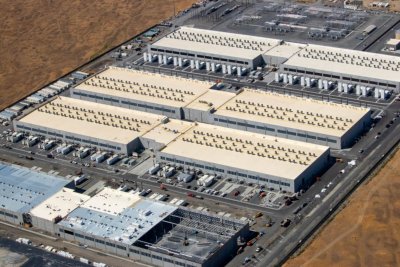
Beyond fiber, Verizon is also selling access to its network hubs for AI inference computing. Data Center Dynamics reported that initial edge-site contracts are expected to generate hundreds of millions of dollars over their terms. These commitments are part of the approximately $4 billion portfolio, which represents total contract value, not annual revenue.
In a separate development, Verizon's September agreement with Corning (NYSE: GLW) covers more than 80 million fiber miles, with supply scheduled from 2027 through 2032. Corning's announcement indicates that the supply will support both residential broadband and long-haul AI corridors. Fiber mileage measures the total length of individual strands, and since cables bundle many strands along the same physical route, the supply figure does not directly translate to the length of Verizon's AWS buildout.
Corning's flexible-ribbon Contour Flow cable is designed to fit more fiber into conduit pathways, addressing physical space constraints. However, the announcement does not provide AWS-specific strand counts or cable allocations. The supply plan also supports a target of passing 40-50 million broadband premises, a measure of access coverage for homes and businesses, distinct from data-center endpoints.
Chief Financial Officer Tony Skiadas noted that Verizon is already processing orders under the Google agreement, but the AWS disclosure lacks an equivalent delivery milestone. This raises questions about which AWS routes will be accepted first and when billing will commence. While the contracts represent substantial commitments, they do not eliminate risks related to construction, permitting, or customer acceptance delays, which could affect revenue timing.