Iridium Communications has officially activated its NTN Direct service, marking a significant step in extending satellite connectivity to standards-based narrowband Internet of Things (IoT) devices. The activation, confirmed on November 17, 2026, opens the company's low-earth orbit satellite network to compatible devices that support the 3GPP non-terrestrial network (NTN) standard. However, the service's availability is still subject to local regulatory approvals and individual service-provider agreements, meaning not all regions will have immediate access.
As part of the launch, Iridium has certified Nordic Semiconductor's nRF9151 module, a low-power system-in-package that supports LTE-M, NB-IoT, and satellite NB-NTN radio technologies. This certification is a critical milestone for device manufacturers, as the nRF9151 is designed to enable hybrid cellular-satellite designs, allowing IoT devices to seamlessly switch between terrestrial and satellite networks. Iridium has also announced that a public firmware update for existing nRF9151 modules is planned for January 2027, which will enable NTN Direct functionality on hardware already deployed in the field.
What NTN Direct Offers
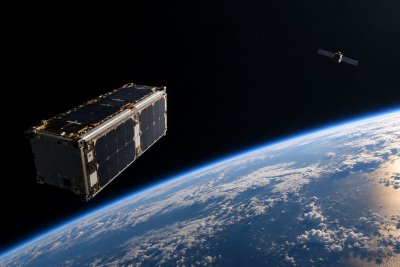
NTN Direct is designed to extend mobile operators' networks into areas beyond traditional cellular coverage. By leveraging Iridium's constellation of 66 operational satellites orbiting approximately 780 kilometers above Earth, the service provides pole-to-pole coverage, making it particularly suitable for applications such as asset tracking, precision agriculture, utility monitoring, and wearable devices. The network architecture uses inter-satellite links, where each spacecraft connects to four others, forming a mesh that routes traffic to ground gateways, which then deliver data to carriers, the internet, or end customers.
This activation is not Iridium's first foray into satellite IoT, but it represents a more open, standards-based approach compared to proprietary solutions. The company completed its second-generation satellite fleet in 2019, replacing its original constellation, and has since been expanding its service portfolio. The NTN Direct service is expected to appeal to mobile network operators looking to offer IoT connectivity in remote areas without building additional terrestrial infrastructure.
Nordic's nRF9151: A Key Enabler
Nordic Semiconductor's nRF9151 is a compact module that integrates an application processor, memory, and multi-mode radio support. It features a 64 MHz Arm Cortex-M33 processor, 1 MB of flash memory, and 256 KB of RAM, along with LTE-M, NB-IoT, and NB-NTN radio capabilities. This combination makes it one of the first modules to support both cellular and satellite IoT in a single design, reducing the complexity and cost for device manufacturers. The pending firmware update will add the Iridium-specific NTN Direct capability, turning the module into a dual-mode connectivity solution.
Demonstration Precedes Launch
Prior to the activation, Iridium and Deutsche Telekom IoT showcased the potential of NTN Direct in a September 10 demonstration. The partners transmitted a compressed voice message from a Toyota vehicle over Iridium's satellite network using an nRF9151 development board and a Deutsche Telekom IoT SIM. The demonstration employed Fraunhofer's NESC voice codec, which operates at data rates of one kilobit per second or less, highlighting the feasibility of low-bandwidth voice applications over satellite. However, the demonstration was conducted under controlled conditions, and routine voice calling, commercial product availability, and consumer pricing have yet to be established.
Market Implications and Outlook
The activation of NTN Direct comes at a time when the IoT market is increasingly looking to satellite connectivity to bridge coverage gaps. According to industry analysts, the number of satellite IoT connections is expected to grow significantly over the next few years, driven by demand from logistics, agriculture, and energy sectors. Iridium's move positions it to compete with other satellite operators, such as Globalstar and Inmarsat, as well as emerging low-earth orbit constellations like SpaceX's Starlink, which are also targeting IoT applications.
For device makers, the certification of the nRF9151 provides a clear path to building satellite-capable products. However, the availability of the service will depend on agreements between Iridium and local mobile operators, as well as regulatory approvals in each country. Iridium's announcement does not include details on pricing, country-by-country rollout schedules, or measured end-to-end performance, leaving buyers with some uncertainty. The company has stated that the network provides worldwide coverage today, but initial availability will vary.
Looking ahead, the successful deployment of NTN Direct will hinge on two key factors: the timely release of the January 2027 firmware update and the ability of service providers to translate network activation into commercially viable offerings. If these hurdles are cleared, NTN Direct could become a valuable option for enterprises that need reliable IoT connectivity in remote and underserved areas.