Houston-based Solstar Space announced on October 21 that its orbital Wi-Fi demonstration successfully collected more than 2,300 files during a recent mission. A subset of that data was transmitted to NASA's Johnson Space Center through an experimental relay using Iridium Communications' (NASDAQ: IRDM) satellite network, according to the company's statement.
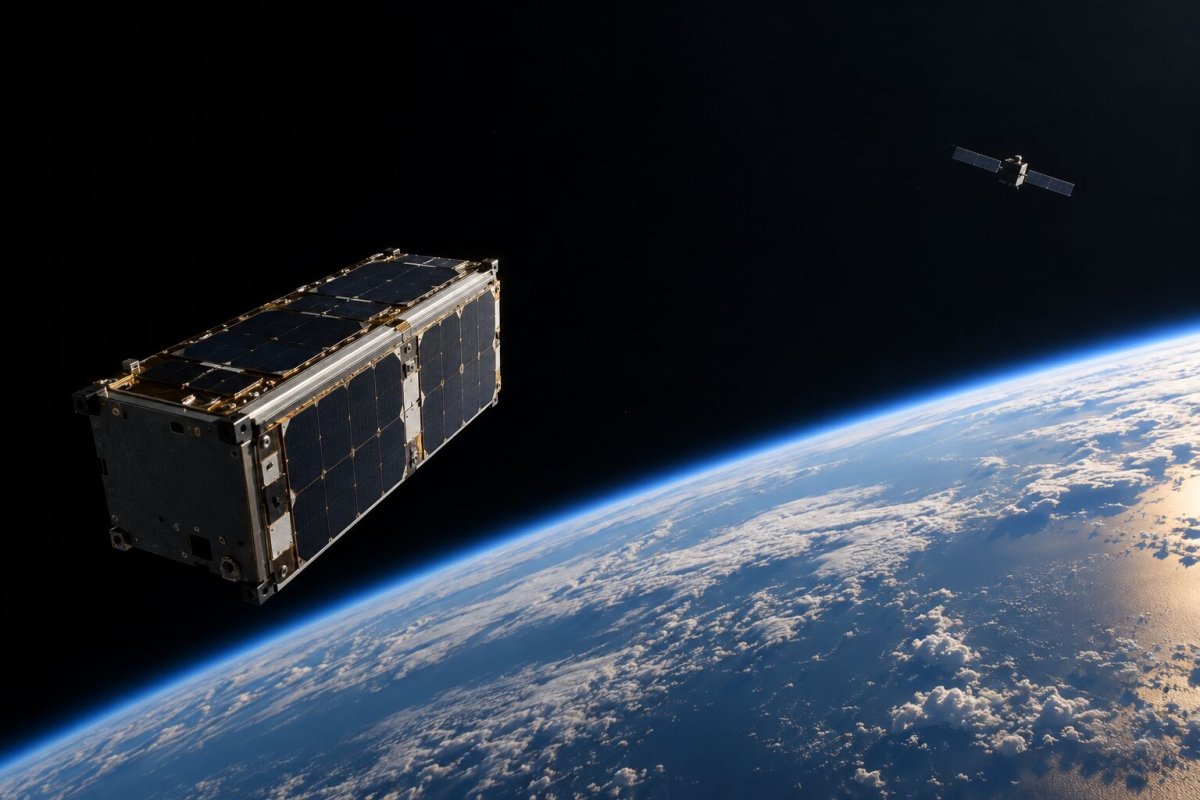
The test linked a local spacecraft network aboard the Momentus Vigoride-7 service vehicle with a communication path back to Earth. This capability is crucial for inspection missions, which require both imagery and spacecraft health telemetry during close approaches. The demonstration involved NASA's R5-S10 CubeSat operating near the Vigoride-7 vehicle, with the proximity operation lasting approximately 30 minutes.
Solstar's announcement focuses on the volume of files collected rather than the amount of data delivered. While more than 2,300 files were gathered, the company did not disclose how many were relayed or the total byte count, making it impossible to calculate throughput or latency from the provided figures.
Mission Context and Prior Reports
This communication disclosure follows an earlier mission update from Momentus (NASDAQ: MNTS) on September 29, which reported the completion of the R5-S10 proximity operations and formation-flying objectives. Momentus identified R5-S10 as a 6U CubeSat and confirmed that both primary and extended mission goals were achieved. The mission also tested commercial optical, infrared, and lidar sensors adapted for orbital conditions, under a SpaceWERX contract valued at $1.86 million.
"Solstar added an important communications dimension to this mission, expanding the capabilities validated during proximity operations," said Momentus CEO John Rood in the October 21 release.
Two Communication Links, Distinct Roles
The demonstration involved two separate communication links with different functions. The local Wi-Fi link connected the CubeSat to a router aboard the Vigoride-7, while the remote relay used Iridium's satellite constellation to transmit data to Earth. NASA describes the Deke system as a narrowband relay and Wi-Fi hotspot, which first flew on Vigoride-7 in March.
Iridium's network consists of satellites orbiting at approximately 780 kilometers above Earth, with user links operating in the L-band. Each satellite connects to four others, and ground gateways deliver traffic to customers. These network specifications provide background but do not directly measure the performance of this experimental spacecraft connection.
The speed of the local link alone does not determine how quickly images reach Earth; the relay service and data selection also play critical roles. For mission planners, the key metric would be delivered bytes per unit time to enable capacity comparisons.
Historical Flight Tests and Future Outlook
This orbital result extends Solstar's earlier flight-test program, which included four suborbital campaigns using a balloon, sounding rocket, and two New Shepard flights between 2013 and 2018. The company now plans for Vigoride-8 in 2027, carrying two NASA payloads, though the schedule remains a target.
While the demonstration is a positive step, the Iridium relay used experimental licensing, and repeatable service will require evidence of delivery rate, delay, and link availability. Successful proximity sensing alone does not establish an operational communications guarantee. Future demonstrations will need to disclose delivered bytes, delay distributions, and the maximum spacecraft separation that sustains the link to validate the technology for commercial and scientific use.