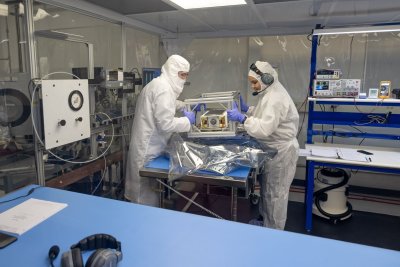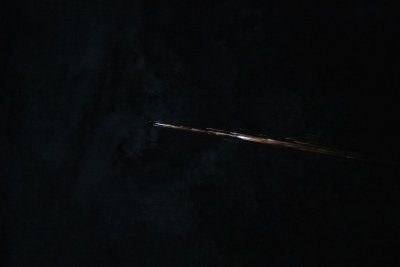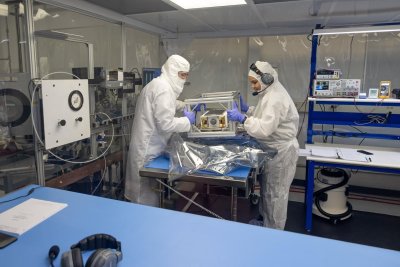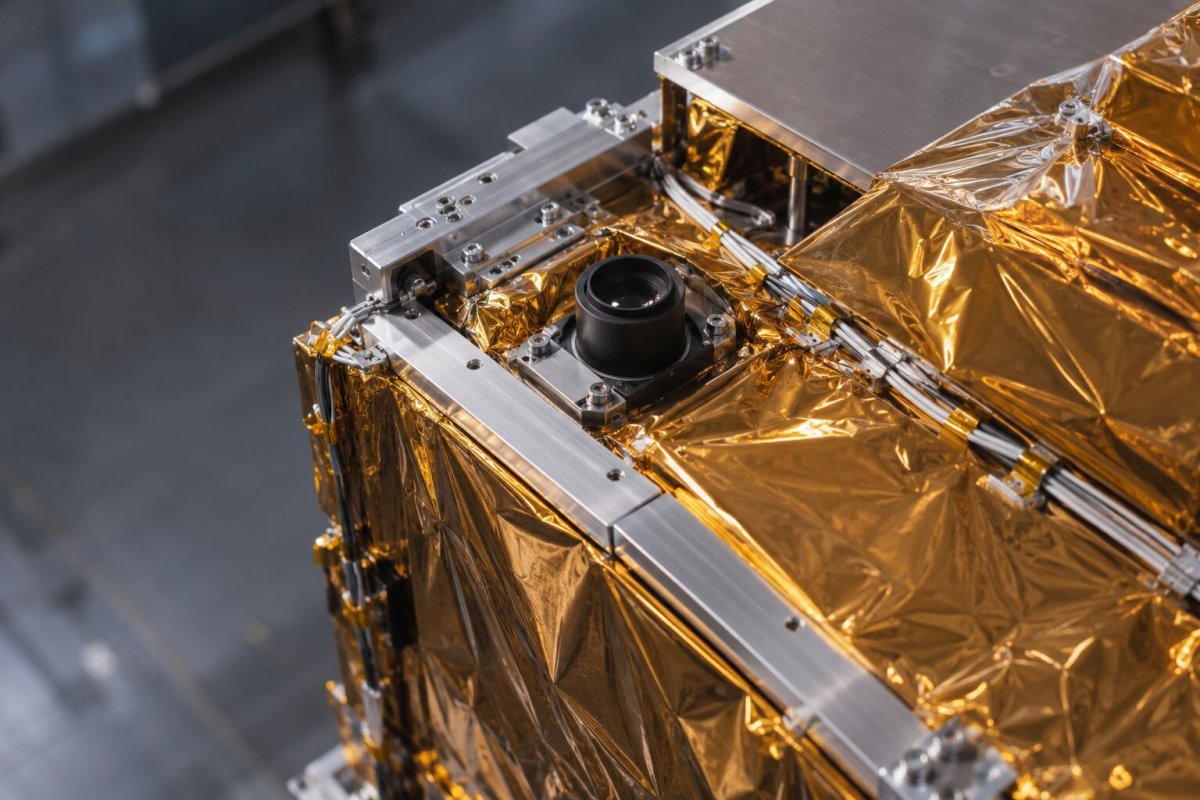
Viasat (NASDAQ:VSAT) initiated a five-month orbital communications trial on Wednesday, following the successful launch of its Maxwell spacecraft on Tuesday. The experiment, conducted under NASA's Communications Services Project, will run through March 2027 and aims to test advanced relay technologies for future space missions.
The Maxwell spacecraft is equipped with a Ka-band data terminal and an L-band terminal for spacecraft control, both designed to connect through geostationary satellite networks. This dual-band approach is intended to validate both high-rate data delivery and reliable command-and-control capabilities, addressing two critical aspects of space communications.
NASA is actively developing commercial alternatives as it phases out its aging Tracking and Data Relay Satellite (TDRS) fleet. The Maxwell mission is one of two demonstrations launched together; the other, SES's Pelican-12 payload, will test a different architecture. SES Space & Defense, a subsidiary of SES (EPA:SESG), is using a software-defined radio with a flat tracking antenna to route high-rate traffic through medium Earth orbit (MEO) and low-rate traffic through geosynchronous satellites.
The distinction between high-rate and low-rate links is crucial: high-rate links carry large science files and imagery, while low-rate links handle tracking, telemetry, and commands. A successful science data download alone would not prove the command service works, making the dual-test approach essential.
John Reeves, Viasat Government's vice president of Space and Mission Systems, emphasized the goal of achieving "continuous access and command and control of the spacecraft." The trial also includes direct links to Viasat's Real-Time Earth ground-station service using S-, X-, and Ka-bands, further expanding the testing scope.
NASA's existing TDRS constellation, which includes seven satellites supporting more than 25 missions such as the International Space Station and Hubble, provides near-continuous relay coverage across the Atlantic, Pacific, and Indian Ocean regions. The commercial program began with $278.5 million in awards to six companies in 2022, marking a significant step toward privatizing space communications.
Independent reports from Via Satellite confirm that Maxwell and the SES payload were aboard the Bandwagon-5 rideshare, which carried 32 payloads. However, operational claims will require data from the communications trials themselves, as no measured latency, throughput, or availability figures have been released yet.
Risks remain, including potential delays from on-orbit commissioning, terminal performance issues, and network integration challenges. Viasat's next milestone is the trial endpoint in March 2027, when the industry will see whether these demonstrations establish sustained science-data delivery alongside dependable spacecraft control, backed by published measurements.