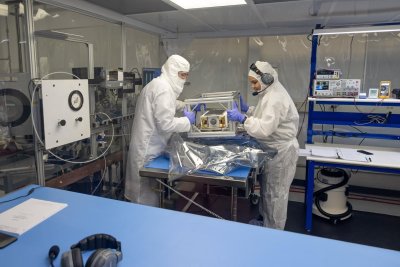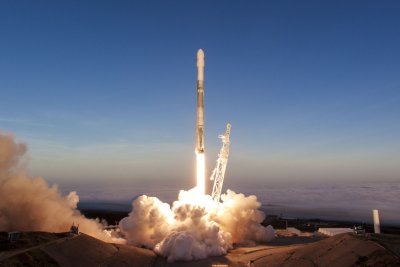
Rocket Lab continued its rapid-fire launch cadence on Saturday, September 26, successfully deploying the 13th StriX synthetic-aperture radar (SAR) satellite for Japanese Earth-observation company Synspective. The Electron rocket lifted off at 00:39 UTC, placing the spacecraft into a 559-kilometer orbit inclined at 37 degrees.
This mission came exactly seven days after the deployment of the 12th StriX satellite, which reached a slightly higher orbit of approximately 572 kilometers. The back-to-back launches underscore Rocket Lab's ability to support dedicated small-satellite missions with short turnaround times, a key advantage for constellation operators seeking to build out their fleets rapidly.
However, industry analysts caution that reaching orbit is only the first step. The newly deployed satellite is not yet operational. Synspective has not announced the successful deployment of the satellite's antenna, nor has it confirmed that the radar payload is functioning. The commissioning process—establishing communications, stabilizing the spacecraft, verifying power systems, and testing the radar—carries significant technical risk.
Rocket Lab's tally of 13 successful StriX deliveries refers to launch success, not to the operational health of each satellite. Some earlier StriX units were demonstrators, and the current operational status of the full fleet is not publicly confirmed. Synspective has stated a goal of operating a constellation of 30 small SAR satellites by the late 2020s, though other registries list a target of 25 operational spacecraft by 2030.
The StriX satellites use X-band radar at 9.65 gigahertz, with up to 600 megahertz of chirp bandwidth and one kilowatt of peak radio-frequency power. The side-looking instrument can image to either side of the ground track, and because microwaves penetrate clouds and operate without sunlight, the satellites can provide day-and-night, all-weather imaging. However, heavy rain can attenuate X-band signals, and steep terrain can cause radar shadow and geometric distortion.
Each StriX spacecraft weighs approximately 100 kilograms and carries a deployable slot-array antenna about five meters long. The antenna is folded during launch, reducing volume but adding mechanical complexity. Power management is crucial, as radar pulses require substantial short bursts of energy, and the thermal system must dissipate heat between observations.
The 37-degree orbital inclination gives the satellite coverage of low and middle latitudes, including densely populated regions like Tokyo and coastal Asia. This differs from the near-polar, sun-synchronous orbit of the earlier StriX-1, suggesting Synspective is diversifying its orbital planes to increase revisit frequency and coverage flexibility.
Rocket Lab's dedicated small-satellite launch service allows customers to select precise orbits, rather than piggybacking on larger missions. The trade-off is one satellite per flight, making launch cadence a critical factor in constellation deployment. The seven-day gap between the 12th and 13th StriX missions demonstrates Rocket Lab's operational tempo, though analysts note that additional satellites do not automatically translate into proportional capacity gains. Revisit time depends on orbital phasing, radar duty cycle, ground station availability, and customer tasking priorities.
For now, investors and industry observers will watch for Synspective's announcements regarding the commissioning of StriX-13 and the operational status of the broader fleet. The successful deployment is a positive signal for Rocket Lab's launch business, but the true measure of success will be the satellite's first radar images and subsequent commercial service.