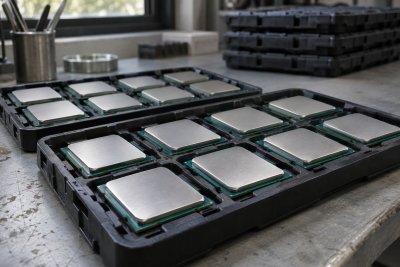
Advanced Micro Devices (NASDAQ: AMD) has announced that its fifth-generation EPYC processors will serve as the host CPUs for Google Cloud's newly unveiled TPU 8tx infrastructure. This development underscores AMD's expanding role in the AI computing ecosystem, even as it competes with its own accelerator products.
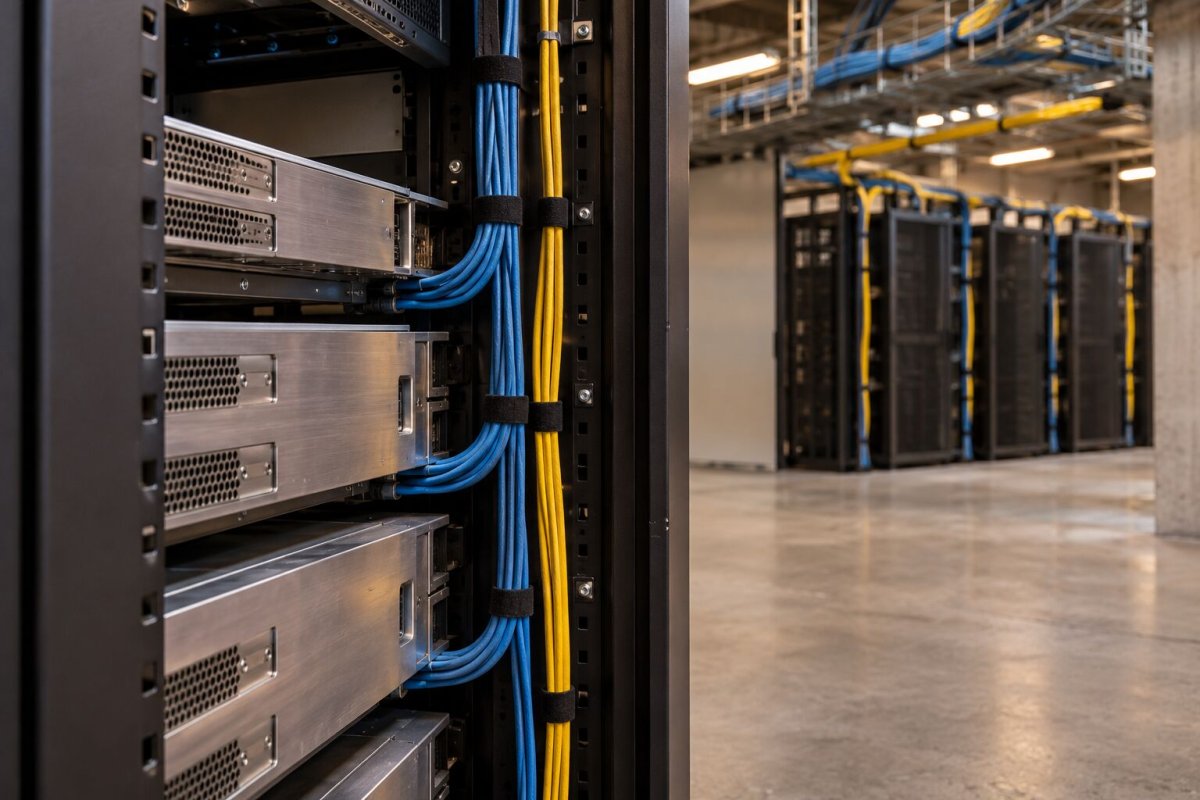
The TPU 8tx system, detailed by Google on November 9, 2026, is built around Google's TPU 8t silicon, with AMD's EPYC CPUs providing the surrounding processing infrastructure. This includes data preparation, workload orchestration, and communication with the accelerators. AMD also highlights hardware security features that extend between host memory and connected accelerators, a key selling point for confidential computing applications.
This announcement is significant because AMD sells both host CPUs and competing AI GPUs. By supplying the host processors for Google's TPU systems, AMD can participate in cloud AI deployments without necessarily providing its own accelerators. However, neither company has disclosed the contract value or the volume of processors involved.
Data centers now represent the overwhelming majority of AMD's revenue. In the third quarter of 2026, AMD reported $8.5 billion in Data Center segment sales, which accounts for approximately 63.5% of its total revenue of $13.377 billion. This segment includes both EPYC CPUs and Instinct GPUs, and it grew 97% year-over-year.
Investors reacted positively to the news, with AMD shares climbing 9.63% to $492.30 at 10:31 a.m. EST on Monday, according to Google Finance. The stock gained $43.26 from Friday's close of $449.04. Despite this rally, AMD remains 25.2% below its 52-week high of $658.52, meaning a 33.8% gain would be required to return to that level.
Independent analysis from Stock Analysis confirmed AMD's host role in the TPU 8tx configuration, distinguishing it from the TPU 8i Max, which uses two TPU 8i chips in a single package. The AMD host role is specific to the 8tx system and should not be assumed to extend across Google's entire TPU lineup.
The announcement highlights the growing importance of confidential computing, which protects sensitive data during processing. For regulated industries, this includes model weights and data used by AI agents. AMD's EPYC processors are designed to meet these demands, with hardware-level security features.
AMD's financial results show a clear shift toward data center dominance. While Data Center revenue surged 97% year-over-year, Client and Gaming revenue fell 8% to $3.7 billion. This disparity places more growth burden on the server business. AMD forecasts fourth-quarter revenue of $17 billion, plus or minus 3%, implying a range of $16.49 billion to $17.51 billion.
However, the latest financial results do not break out revenue from the TPU 8tx deal. Undisclosed deployment volumes and potential rollout delays could create a gap between the technical announcement and material CPU sales. As of November 9, neither company has specified pricing, general availability, or unit volumes for the TPU 8tx system.
This partnership with Google is a strategic win for AMD, as it positions the company as a key supplier in the AI infrastructure space, even in systems where its own GPUs are not used. The market will be watching for further details on the commercial impact of this collaboration.