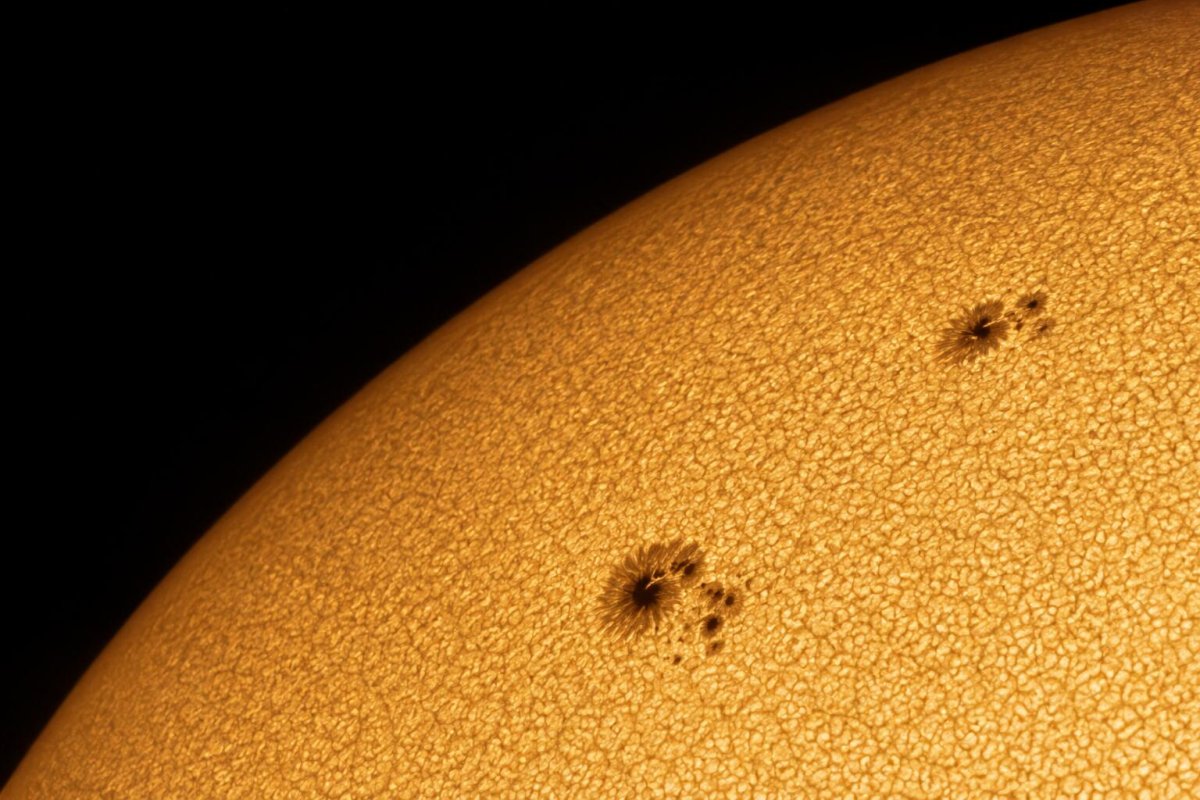
A collaborative effort led by Japanese researchers has automated 19 parameters within a solar radiation simulation, leveraging data from five spacecraft. The findings, announced on October 21, successfully reproduce a past particle storm across widely separated observation points. However, the study stops short of establishing reliable warning times for future solar events—a critical gap for satellite operators and crews operating beyond Earth's protective magnetosphere.
The distinction between retrospective accuracy and predictive capability is pivotal. According to NASA, the fastest solar particles can reach Earth in approximately 30 minutes or less, posing risks to satellite electronics and astronaut health. The new approach addresses a long-standing calibration challenge that previously depended heavily on expert judgment.
The research team reports a mean absolute error near 0.45 in base-10 logarithmic particle flux, a measure of agreement with observed data. This translates to a flux ratio of approximately 2.8 (calculated as 10^0.45), indicating that model predictions typically deviate from actual measurements by a factor of about 2.8. Importantly, this metric does not quantify advance warning time.
Methodology and Spacecraft
The simulation framework, named SEITEN, was developed by Fujitsu (TYO:6702) in collaboration with Nagoya University, JAMSTEC, and NICT. It integrates the SUSANOO solar-wind model with the SEPIF particle model. SUSANOO provides shock conditions, while SEPIF calculates particle acceleration and transport.
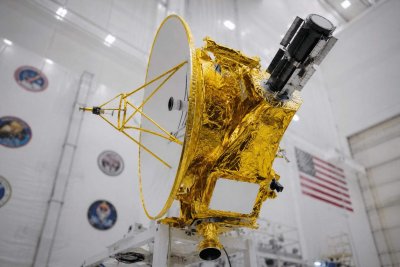
The team analyzed the October 9, 2021, solar event using data from BepiColombo, Solar Orbiter, Parker Solar Probe, STEREO-A, and SOHO. These spacecraft spanned roughly 50 degrees around the Sun, at distances ranging from 0.33 to 1 astronomical unit (AU). This spatial diversity tests whether a single calculation can simultaneously explain observations from multiple vantage points.
Key findings indicate that allowing scattering to vary with direction reproduced observations more successfully than assuming uniform scattering. The uniform assumption failed to match all five spacecraft simultaneously, highlighting the need for more complex models.
Parameter Search and Results
The optimization process involved 1,000 broad trials followed by 480 focused trials, totaling 1,480 simulation runs. The model incorporated 19 adjustable parameters—7 for scattering and 12 for particle injection. Exhaustively testing ten choices for each parameter would require 10^19 combinations, underscoring the computational efficiency of the search strategy.
Despite the improved fit, six independent optimization runs revealed a critical limitation. Different assumed shock strengths led to different dominant parameters, with injection efficiencies varying by orders of magnitude across configurations that produced nearly identical fit quality. This ambiguity means that matching past measurements does not uniquely determine the physical conditions, creating an operational challenge for forecasting.
Implications for Forecasting
NICT already operates SUSANOO for daily solar-wind disturbance predictions, but this existing capability does not establish operational readiness for the newly coupled particle model. The organizations describe further development toward more reliable predictions without announcing a deployment date.
The study's authors identify joint estimation of solar-wind and particle-model parameters as a necessary next step. This would help constrain competing shock configurations that currently yield similar fits. The unresolved test is whether those choices can be pinned down before a new particle storm arrives, a prerequisite for actionable warnings.
For the financial markets, the implications are indirect but significant. Satellite operators, insurers, and space-dependent industries closely monitor solar activity. Improved forecasting could reduce uncertainty for companies like Intelsat (I), SES (SESG), and Viasat (VSAT), which rely on satellite infrastructure. However, until reliable warning lead times are validated, the operational value of this research remains prospective.