The European Space Agency's Euclid space telescope has taken a monumental step in mapping the universe, releasing a treasure trove of observations that encompass more than 900 million galaxies. This initial data release, designated DR1-Foundation, was unveiled on November 12 and represents roughly 13 months of observational work, providing astronomers with an unprecedented resource to study cosmic evolution and the mysterious forces shaping our universe.
According to the ESA announcement, the DR1-Foundation release includes a vast array of imaging, spectroscopic data, and source catalogues. Among the highlights are approximately 15,000 strong gravitational lens candidates and over 60 million quasar candidates. These figures, while impressive, represent distinct categories of celestial phenomena and should not be combined into a single total, as they may overlap.
Inside the Euclid Mission
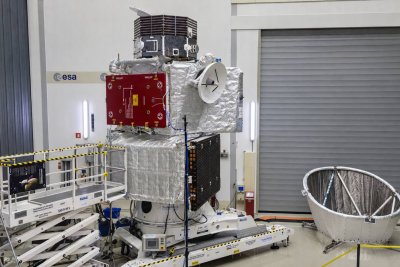
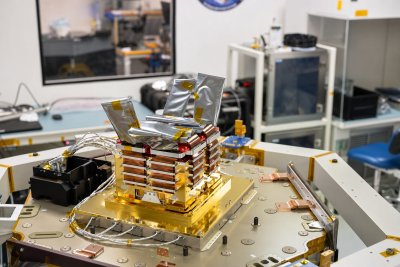
Euclid's ability to transform a simple photograph into a three-dimensional map of the cosmos lies within its sophisticated instrumentation. The spacecraft's 1.2-metre telescope directs light to two primary instruments: the VISible instrument (VIS), which captures the shapes of galaxies, and the Near-Infrared Spectrometer and Photometer (NISP), which measures infrared brightness and spectra. The NISP's spectral data is crucial for determining redshifts, which allow scientists to estimate the distances to galaxies, adding depth to their positions on the sky.
VIS also measures the subtle distortions in galaxy shapes caused by the gravitational influence of intervening matter, a phenomenon known as weak gravitational lensing. By combining these shape measurements with distance data, researchers can map the distribution of dark matter and track how cosmic structures have evolved over time. However, producing calibrated measurements suitable for cosmological analysis requires additional processing beyond the raw images.
What DR1-Foundation Delivers Now
The DR1 overview manuscript, led by Aussel and colleagues, clearly outlines the scope of this release. Images, spectra, and source catalogues are immediately available to the scientific community. However, the shear measurements—quantified distortions essential for weak-lensing studies—along with three-dimensional galaxy catalogues and clustering measurements, are scheduled for completion in June 2027 as part of the full DR1 release. This timeline means that while the current dataset is massive, it does not yet include the final products needed for definitive cosmological conclusions.
Despite this, the strong gravitational lens candidates already offer significant scientific opportunities. These systems occur when a foreground galaxy's gravity bends and magnifies the light from a more distant object, providing natural telescopes for studying the early universe. The Euclid Consortium's release report indicates that these candidates were identified using a combination of machine learning algorithms, volunteer classifications, and expert verification. This systematic selection method enables population-wide studies, moving beyond the analysis of individual spectacular examples.
Spectroscopic Depth and a Stunning Image
The NISP instrument's slitless spectroscopy is another highlight of the release. By spreading light from many objects across its detectors simultaneously, it captures spectral features that help measure redshifts and study galaxy composition and star formation rates. Each released spectrum serves as a raw input for research, with interpretation and quality assessment remaining essential steps.
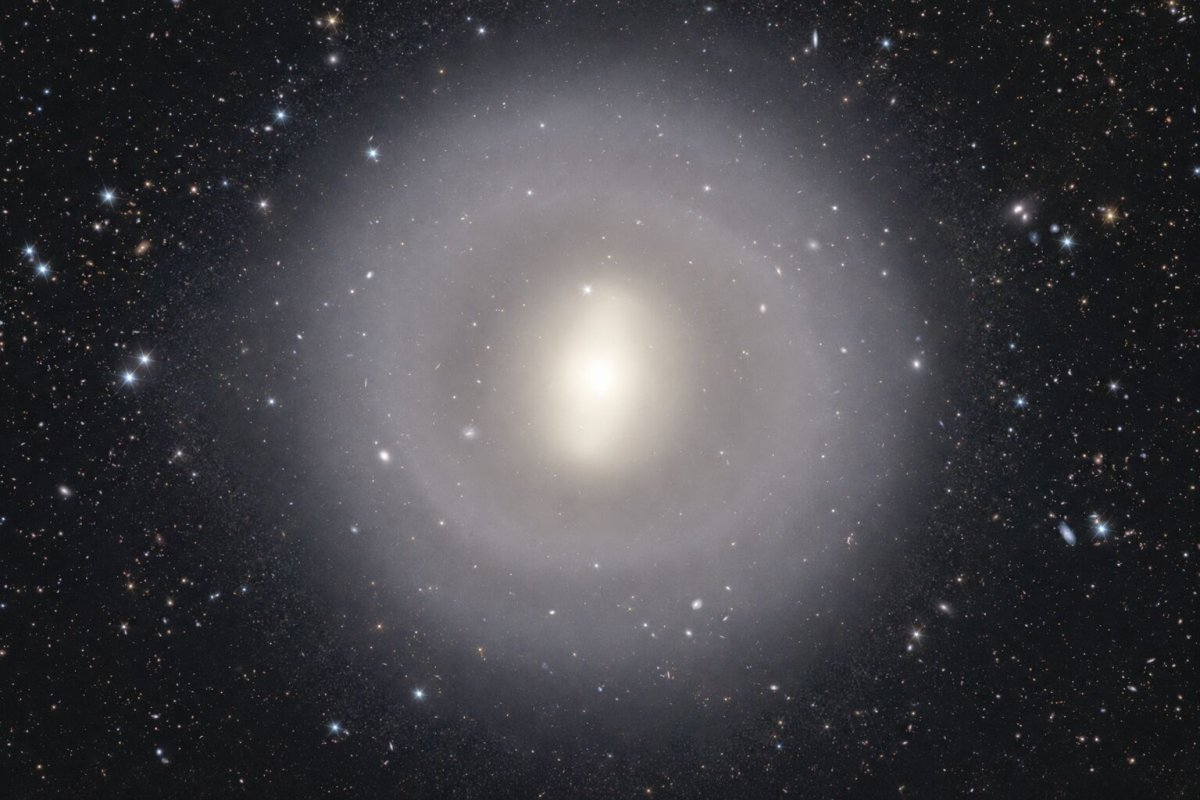
Among the imaging data, Euclid has provided a striking new view of NGC 1291, a ring galaxy located approximately 33 million light-years away. This close-up, representing about 70 minutes of observing time and covering 0.11 square degrees, showcases the telescope's ability to capture both the bright central core and the faint outer structures of galaxies, along with a backdrop of distant galaxies.
Implications for Cosmology and Market Context
While this release does not yet deliver final cosmological constraints, it lays a critical foundation. The sheer volume of galaxy data will enable researchers to refine models of dark energy and dark matter, potentially reshaping our understanding of the universe's expansion. For the broader scientific community, and by extension the technology and data analytics sectors, this mission exemplifies the growing importance of big data in research. Companies involved in space technology, data processing, and advanced analytics could see indirect benefits as such missions drive innovation.
As the Euclid mission progresses toward its full cosmology release in June 2027, the anticipation is palpable. The data released now provides a solid groundwork, but the real breakthroughs in understanding cosmic evolution and the nature of dark energy are expected once the complete dataset is available. Researchers worldwide now have a powerful tool to probe the universe's deepest mysteries.