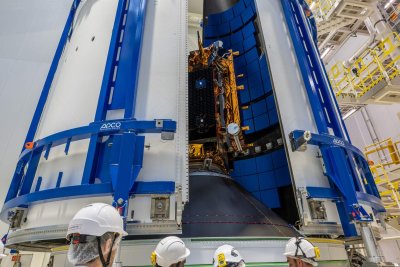
NASA's Compton Spectrometer and Imager (COSI) has taken a significant step toward spaceflight, with its scientific payload now at Northrop Grumman's facility in Sterling, Virginia. The delivery, confirmed in a NASA update on November 16, marks the beginning of spacecraft integration and pre-launch environmental testing. The mission is on track for an August 2027 launch aboard a SpaceX Falcon 9 rocket, a contract valued at approximately $69 million.
From Berkeley to Virginia: A Key Milestone
The payload was prepared for shipment on November 1 at the University of California, Berkeley's Space Sciences Laboratory and loaded onto a truck the following day. Arriving at Northrop Grumman earlier this month, the instrument will now be mated with a LEOStar-2 spacecraft bus. Engineers will conduct rigorous vibration and thermal testing to ensure the telescope can withstand the harsh conditions of launch and orbit.
Unprecedented Gamma-Ray Survey Capabilities
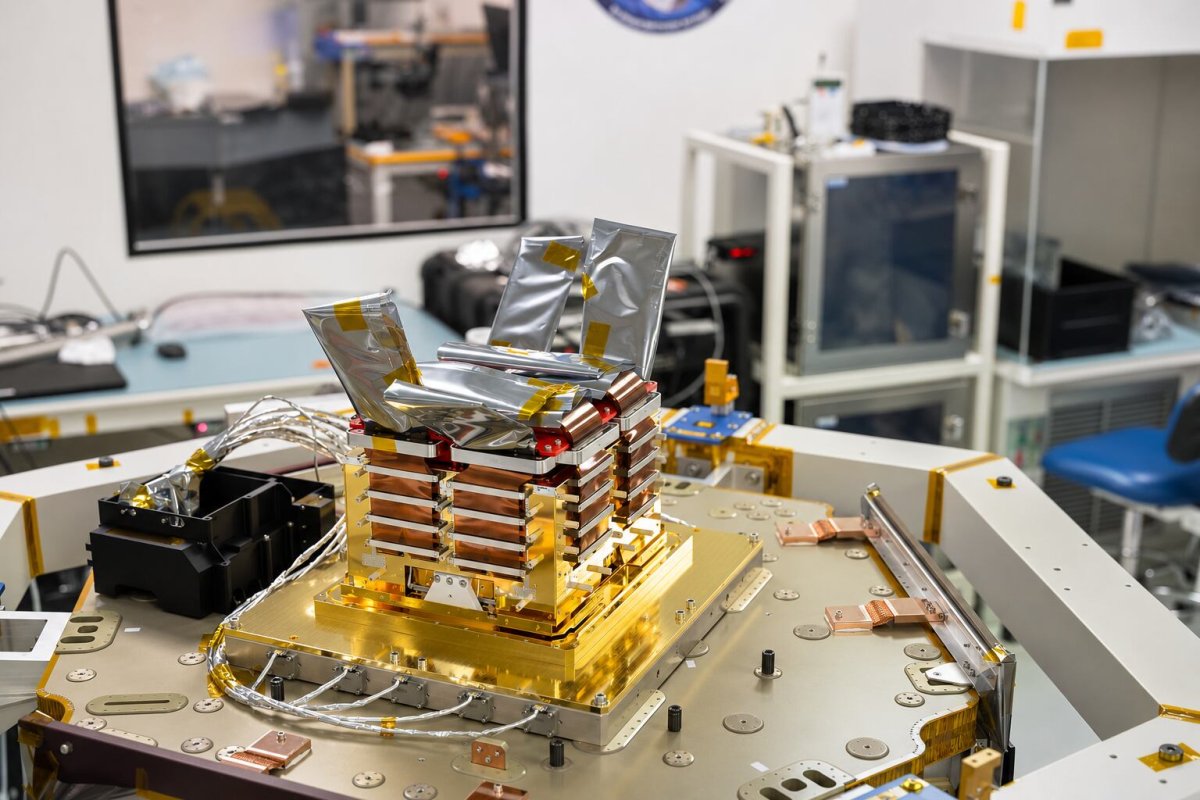
COSI is designed to detect gamma rays with energies ranging from 0.2 to 5 megaelectronvolts (MeV). Its core instrument features 16 germanium detectors arranged in a 2x2x4 stack, providing a field of view covering more than 25% of the sky at once. In survey mode, the telescope will map the entire sky every day, offering an unprecedented view of the high-energy universe.
The detection method relies on Compton scattering: when a gamma ray enters a germanium detector, it deposits energy as it scatters. By precisely measuring the positions and energies of successive interactions, scientists can reconstruct the photon's origin to a ring on the sky. Overlapping rings from multiple photons pinpoint the source's location, while the polarization of the light provides additional insights into extreme cosmic environments.
Scientific Goals: Antimatter, Elements, and Multi-Messenger Astronomy
One of COSI's primary objectives is to investigate the origin of positrons, the antimatter counterparts of electrons, in the Milky Way. Their annihilation produces a distinctive gamma-ray signal at 511 keV, and mapping this emission could reveal where positrons are created and how they propagate. The mission will also map radioactive elements forged in stellar explosions, helping astronomers trace the life cycle of matter in our galaxy.
COSI will also study gamma-ray bursts, particularly short bursts that may be linked to neutron star mergers. By quickly locating these events, COSI will enable follow-up observations across the electromagnetic spectrum and with gravitational wave detectors, ushering in a new era of multi-messenger astronomy. Polarization measurements could shed light on the extreme physics near black holes and other compact objects.
Building on a Balloon-Borne Legacy
The satellite design builds on a successful balloon-borne prototype that flew from Wanaka, New Zealand, in 2016, spending 46 days aloft with 12 germanium detectors. The orbital version extends this heritage with 16 detectors and a planned two-year mission, transforming a proof-of-concept into a full-scale space observatory.
Market and Industry Implications
The COSI mission represents a significant investment in space-based astrophysics. The launch contract with SpaceX, announced in July 2024, underscores the growing commercial space industry's role in supporting NASA's science objectives. Northrop Grumman's involvement in spacecraft integration highlights the continued demand for specialized satellite manufacturing and testing services. As the space economy expands, missions like COSI contribute to the technology pipeline that drives innovation in detectors, materials, and data analysis.
With the payload now in Virginia, the next phase of integration and testing will be critical. Successful completion of these milestones will clear the path for a 2027 launch, promising a new window into the most violent and mysterious processes in the universe.