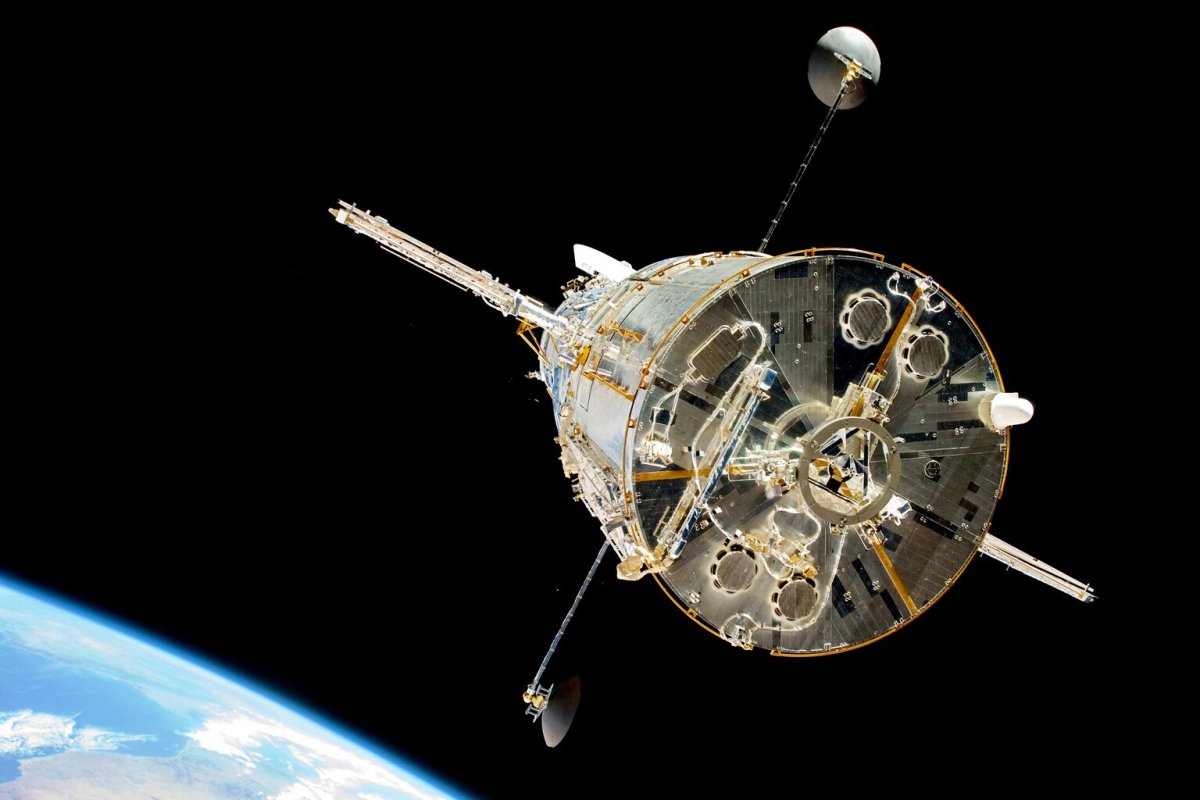
NASA has formally reached out to the private sector for innovative concepts to extend the operational life of the Hubble Space Telescope, including a critical maneuver to boost its orbit to at least 600 kilometers above Earth. The agency's October 29 request for information (RFI) also solicits ideas for in-orbit servicing and controlled reentry procedures, marking a significant step toward a potential mission targeted for 2032.
The urgency is underscored by NASA's own risk models: a July analysis estimates a 10% probability of uncontrolled reentry by September 2032, rising to 50% by December 2033. These figures highlight the need for timely intervention, as the telescope's current orbital decay could lead to an unplanned atmospheric burn-up if left unaddressed.
NASA Administrator Jared Isaacman emphasized Hubble's continued scientific value, stating, "Hubble still has important science ahead of it." The telescope remains in high demand, with observing time oversubscribed by a seven-to-one ratio and over 1,000 scientific papers published annually based on its data. Its unique ultraviolet capabilities, which cannot be replicated from the ground due to atmospheric absorption, are a key reason for preservation efforts.
The RFI outlines three potential outcomes for the mission: a pure orbital boost, servicing to enhance resilience, or a controlled disposal. Companies are invited to propose any of these approaches, though NASA has not yet committed to funding or selecting a specific servicer. The agency is seeking detailed responses, including cost estimates, payment assumptions, and the earliest possible service dates.
Technical challenges are substantial. Hubble, with a mass of approximately 12,200 kilograms and a length of 13.2 meters, requires a capture vehicle capable of controlling both itself and the observatory. A capture ring, installed during the final shuttle servicing mission in 2009, provides a designated interface, but the operation demands precise attitude control and docking capabilities.
NASA is asking respondents to specify the minimum altitude at which their service could still achieve the 600-kilometer target, as well as the allowable rotation rate during capture and the expected duration of attachment. This information will help determine the feasibility of late-stage interventions as Hubble's orbit continues to decay.
The proposed arrangement would see NASA's Goddard Space Flight Center provide telescope data, expert consultation, and coordinated operations, while the contractor would handle launch, servicing spacecraft, and mission operations—potentially including crewed missions. Both crewed and robotic approaches are under consideration, reflecting the evolving landscape of commercial space services.
Responses are due by 3:00 p.m. EST (20:00 UTC) on November 30, 2026. While this RFI does not guarantee a future contract, it signals NASA's commitment to exploring all avenues to preserve Hubble's legacy until next-generation observatories come online, with the earliest expected replacement timeframe around 2040.
Market observers note that this initiative could open new opportunities for commercial space companies, though the timeline and funding remain uncertain. The agency's risk threshold, set earlier than the most likely reentry period, suggests a proactive approach to managing the telescope's fate.