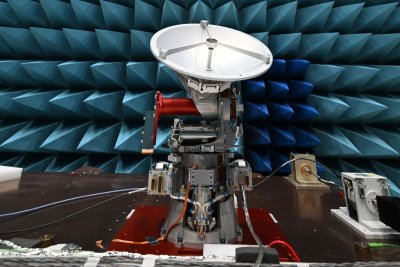
The French space agency CNES has initiated a ground-based qualification campaign for its Callisto reusable rocket demonstrator at the Guiana Space Centre in Kourou. Announced on October 29, the week-long test focuses on verifying the vehicle's communication systems, specifically the six antennas arranged in their flight configuration. This stationary test is a critical precursor to the eventual flight testing of the reusable launch vehicle.
Purpose of the Ground Campaign
The primary objective of this campaign is to ensure that the Callisto vehicle can maintain a reliable communication link during its descent phase, a period when the vehicle experiences intense aerodynamic forces and potential signal disruptions. The mockup will interact with the base's radar and other ground installations to simulate the communication environment as closely as possible. By keeping the test article on the ground, engineers can validate the antenna layout and radio frequency performance without the complexities and risks of an actual flight.
This ground work is part of a broader effort to qualify the infrastructure needed for launching and recovering the experimental vehicle. While engine restart and flight maneuvers will be tested separately, the communications qualification is an essential building block. The overall program also aims to measure refurbishment requirements and operating costs for future reusable launchers, which are crucial for assessing the economic viability of such systems.
Technical Specifications and Design
The Callisto vehicle, a collaborative project between CNES, Germany's DLR, and Japan's JAXA, is designed to be an experimental platform for recovery technology. According to CNES, the planned series of ten flights will reach altitudes of about 20 kilometers. The vehicle's propulsion system is a hydrogen-and-oxygen engine capable of restarting in flight and throttling between 16 and 46 kilonewtons of thrust. This throttle range, with a maximum-to-minimum ratio of approximately 2.9:1, provides engineers with a measurable control envelope to study.
JAXA lists propellant management as a central research objective, alongside guidance and engine maintenance. The vehicle has a gross mass of 3,600 kilograms and stands 13.5 meters tall. Researchers aim to verify reliable engine feeding even during large changes in vehicle attitude, a challenge that is critical for landing maneuvers.
Schedule and Next Steps
The ground qualification campaign is expected to continue into 2027, according to CNES. Following this, the flight vehicle will be delivered to the launch site. European Spaceflight reported on October 30 that no precise arrival date has been given, but the agency has indicated that the flight vehicle will come after the ground tests are complete. The latest CNES announcement does not specify a first flight date, despite earlier project pages listing a 2026 target. A later DLR update suggests a 2027 target, but these remain planning figures.
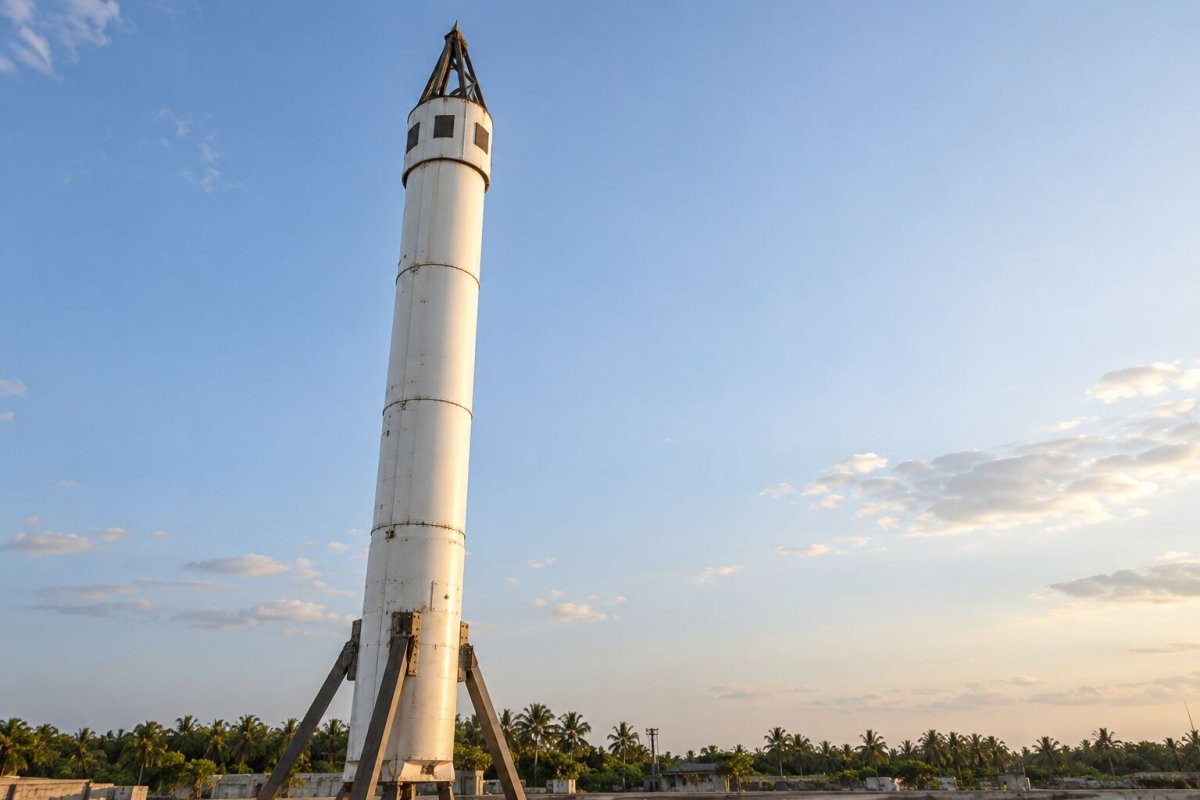
The French manufacturer CIPAL built the full-scale mockup for the refurbished Diamant launch site, where CNES is jointly testing ground systems, vehicle interfaces, and operating procedures. This ground campaign is distinct from earlier landing-leg deployment tests, which examined a different part of the recovery sequence.
Implications for Reusable Launch Technology
Successful completion of these ground tests is a necessary step toward demonstrating the feasibility of reusable rockets. The data gathered on communication reliability during descent will inform the design of future operational vehicles. However, a working communications link alone cannot establish reusable-flight performance; landing accuracy, engine restart, and overall turnaround costs remain to be proven in flight.
The collaboration between CNES, DLR, and JAXA brings together expertise from three major space agencies, highlighting the global interest in reducing launch costs through reusability. As the program progresses, the focus will shift from ground validation to flight testing, which will provide the ultimate proof of the technologies involved.