The European Space Agency (ESA) has placed an order for four additional Galileo Second Generation (G2) satellites, expanding the planned constellation by one-third to a total of 16 spacecraft. The procurement, announced on Tuesday, brings the total number of G2 satellites on order to 16, up from the initial 12. The new satellites are scheduled for delivery in 2031, with launches expected shortly thereafter. The first G2 launch remains targeted for 2028, creating a three-year gap between the initial launch and the follow-on deliveries.
This expansion underscores ESA's commitment to modernizing the Galileo navigation system, which is a cornerstone of European strategic autonomy. The G2 satellites represent a significant technological leap over the first-generation (G1) spacecraft, incorporating advanced atomic clocks, intersatellite links, and digital payloads that can be reconfigured in orbit. These enhancements are designed to improve the accuracy, resilience, and flexibility of the Galileo system, which serves over 3 billion users worldwide in sectors such as transport, agriculture, financial timing, and search-and-rescue operations.
Key Technical Upgrades
One of the most notable changes aboard the G2 satellites is the increase in atomic clocks. Each G2 satellite will carry six atomic clocks, up from four on the G1 spacecraft—a 50% increase. This upgrade is part of a redesigned timing architecture that aims to enhance the precision of navigation signals. According to the European Commission, the new clocks, combined with intersatellite links, will provide more accurate clock offset and orbital position measurements. These links allow satellites to communicate with each other, reducing reliance on ground stations and enabling message relay when a satellite is out of direct contact with a ground segment.
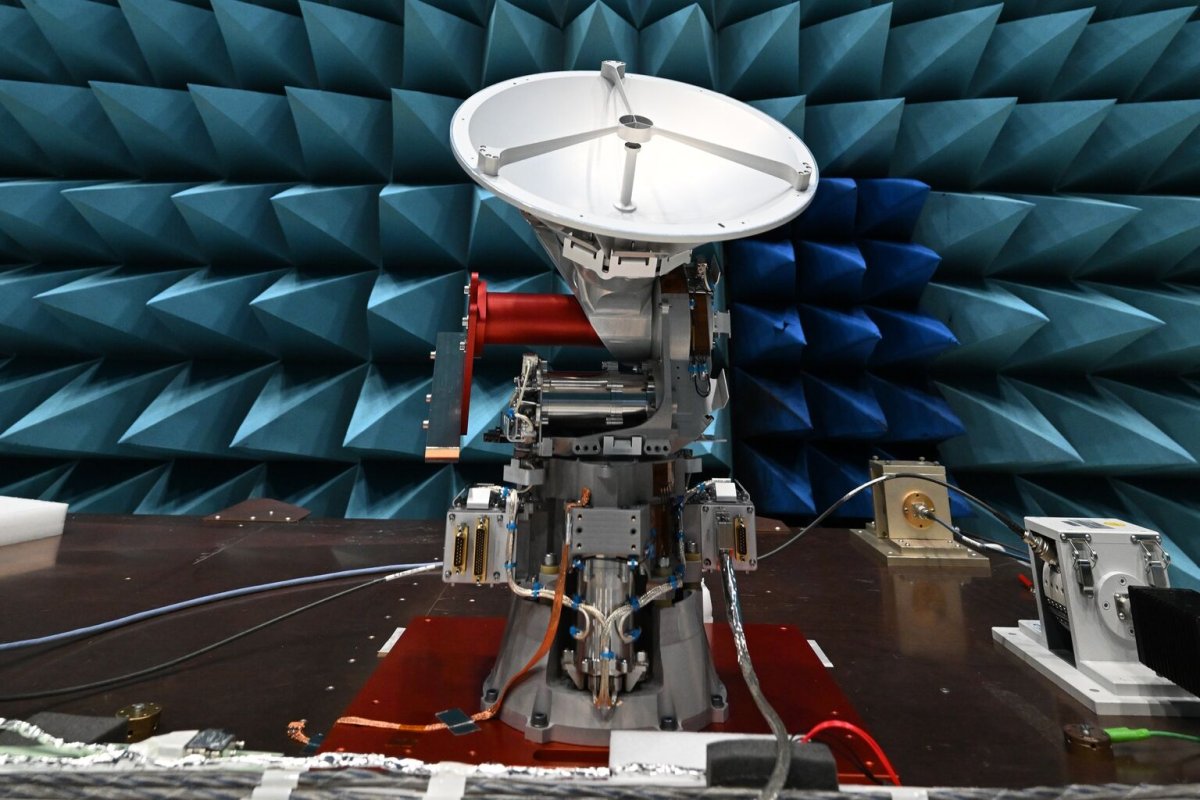
The intersatellite links address a key limitation of the current system. Today's Galileo spacecraft must be within line-of-sight of a ground station to exchange data. The G2 links will allow satellites to relay information through other satellites, a capability that ESA detailed in its June engineering update. This requires moving antenna hardware that can withstand years of operation. Beyond Gravity, a supplier to Thales Alenia Space, has tested the pointing mechanism through 15 million consecutive movements in a seven-month ground test that concluded in March 2026. Orbital service has yet to begin, but the successful ground tests are a positive indicator.
Manufacturer Roles and Production Plans
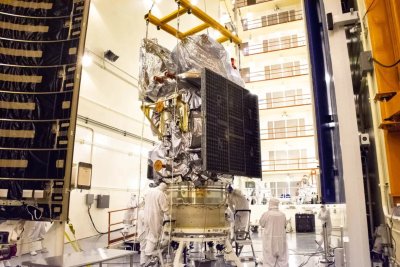
Airbus and Thales Alenia Space will each build two additional satellites, increasing their individual orders from six to eight spacecraft. Airbus will manufacture its satellites using facilities across Germany, Spain, and France, with each spacecraft weighing more than two tonnes and having a planned operating life of 15 years. Thales Alenia Space will integrate and test its additional pair at its Space Smart Factory in Rome. The company is also responsible for Galileo's Ground Mission Segment, and its satellite consortium includes partners from 14 European countries.
Neither manufacturer disclosed the financial terms of the additional orders, so a comparable cost per satellite could not be calculated from the announcements. However, the new units will use designs already under development, extending the production order without introducing a new spacecraft family. This approach is likely to reduce development risk and leverage existing manufacturing efficiencies.
Strategic and Market Implications
ESA's decision to expand the G2 fleet comes amid growing global competition in satellite navigation. The United States, Russia, China, and India all operate or are developing their own GNSS systems, and Europe's Galileo is a key player. The expansion signals confidence in the G2 design and a desire to ensure the constellation's robustness and capacity. ESA's navigation director, Laurent Jaffart, emphasized the strategic importance of the initiative: "These contracts represent an investment in Europe's ability to navigate its own future, independently and with confidence."
For investors, the news is a positive indicator for Airbus and Thales Alenia Space, both of which are part of major European defense and aerospace conglomerates. Airbus is listed on European exchanges and trades in the U.S. via over-the-counter markets (EADSY), while Thales is also available as THLLY. The expansion could provide a steady revenue stream through 2031, supporting long-term growth in their space divisions. However, investors should note that the program remains subject to technical milestones, including integration and flight testing scheduled for 2027, ahead of the planned first G2 launch in 2028. Any delays in these stages could shift launch and service dates, but the additional orders demonstrate ESA's commitment to the program's success.
The G2 satellites also feature digital payloads that can be reconfigured in orbit, offering operators the ability to adapt services after launch. Airbus says its design includes protections against jamming and spoofing, though no specific performance metrics were disclosed. The combination of advanced clocks, intersatellite links, and digital flexibility positions Galileo G2 as a state-of-the-art navigation system that will serve Europe for decades to come.
In summary, ESA's order for four additional G2 satellites is a significant step forward for the Galileo program, reinforcing Europe's position in the global navigation satellite market. The expansion not only increases the constellation's size but also brings advanced capabilities that will enhance service reliability and accuracy. As the program moves toward its 2028 launch target, all eyes will be on the upcoming integration and flight tests to ensure the new spacecraft and ground systems work seamlessly together.