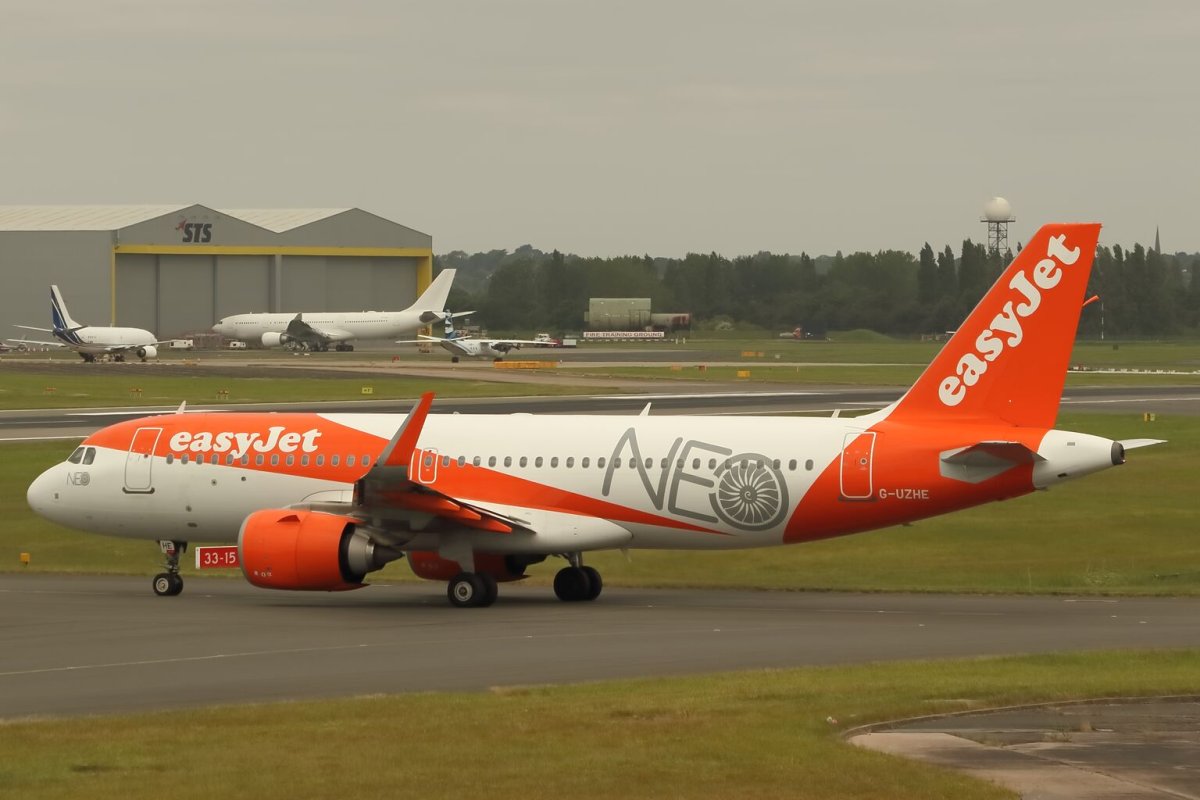
easyJet (LON:EZJ) has taken a significant step toward modernizing its passenger experience by partnering with SpaceX's Starlink satellite network to introduce onboard Wi-Fi for the first time. The announcement, made on October 26, outlines a phased installation program beginning in the first half of 2027 and targeting completion by early 2028. However, the rollout will not cover the airline's entire fleet, leaving its older A319 aircraft without connectivity.
Scope of the Rollout
According to details reported by PaxEx.Aero, the Starlink installation will apply exclusively to the A320, A320neo, and A321neo models. This decision reflects a strategic focus on newer, more fuel-efficient aircraft that form the backbone of easyJet's future operations. The airline's fleet disclosure as of March 31, 2026, shows that these three aircraft types accounted for 277 of the 356 total aircraft, representing 77.8% of the fleet. The remaining 79 aircraft, all A319s, are excluded from the program, meaning 22.2% of the fleet will not receive the upgrade.
Fleet Composition and Implications
While the March figures provide a historical baseline, easyJet has not confirmed the exact number of aircraft that will be retrofitted under the Starlink agreement. The company's fleet composition is subject to change due to deliveries and retirements, which could alter the installation workload and the eventual coverage share. Counting the entire fleet as the retrofit order would overstate the announced scope, as the A319s are explicitly excluded. This leaves a notable gap in connectivity for passengers flying on these smaller jets.
Technical Advantages of Starlink
The choice of Starlink is driven by its low-Earth orbit (LEO) architecture, which offers significantly lower latency compared to traditional geostationary satellites. SpaceX's mission-design document describes Starlink service shells at altitudes between 500 and 600 kilometers, with an on-station altitude of 550 kilometers. In contrast, geostationary satellites orbit at 35,786 kilometers, according to the European Space Agency. At the 550-kilometer reference, the altitude ratio is 65.1 times lower, which reduces propagation delay over the space link. However, this advantage comes with a trade-off: LEO satellites move across the sky, requiring a constellation to maintain continuous coverage. This means an aircraft connection must seamlessly hand off between satellites as both the aircraft and satellites move, a complex engineering challenge.
Service Ambitions and Unanswered Questions
SpaceX president and chief operating officer Gwynne Shotwell highlighted the intended experience in easyJet's announcement, stating, "Fast, reliable connectivity from take-off to landing means people can work, stream, or stay in touch without interruption." While this sets a clear service ambition, the announcement lacks specific flight-test measurements, antenna configurations, or guaranteed download speeds per passenger. These details are critical for assessing performance in a cabin full of simultaneous users, as an advertised satellite capability and the service an airline purchases are separate specifications.
Pricing and Economic Considerations
Access terms remain unresolved. An easyJet spokesperson told PaxEx.Aero that "as the first aircraft are Starlink-equipped, more details on access including pricing will be shared." It is unclear whether passengers will pay for the service, receive it complimentary, or encounter a mix of offers. No passenger tariff has been announced. The economics of onboard Wi-Fi were a sticking point earlier this year, with CEO Kenton Jarvis questioning the financial viability in January. The airline has not disclosed the agreement's financial terms, leaving installation costs and recurring network charges unknown.
Future Connectivity and A319 Retirement
easyJet has identified flight information and potential digital food ordering as additional uses for the connectivity. During the installation period, availability will depend on which aircraft operates a flight and whether its equipment has entered service. A route's inclusion in the network does not guarantee Wi-Fi availability. The excluded A319s follow a separate timetable: in its May results, easyJet targeted retirement of all A319s by financial year 2029. The October Wi-Fi announcement does not accelerate that deadline. Consequently, which flights remain offline after the retrofit program will depend on how many A319s are still flying.
Market Context
This move places easyJet among a growing number of carriers adopting satellite-based connectivity to enhance passenger experience and operational efficiency. The partnership with Starlink, a subsidiary of SpaceX (NASDAQ:SPCX), underscores the increasing role of LEO satellite technology in commercial aviation. As the rollout progresses, investors and passengers alike will watch for pricing details and the impact on easyJet's competitive positioning.