BWX Technologies (NYSE:BWXT) has entered into a multiyear fuel supply agreement with Antares Nuclear, committing an initial allocation of one metric tonne of uranium for TRISO-based nuclear fuel. The announcement, made Tuesday, adds a second contracted fabrication supplier for Antares as it advances toward a planned electricity demonstration at Idaho National Laboratory in 2027.
The fuel will be produced on BWXT's existing fabrication line in Lynchburg, Virginia, leveraging the company's experience in manufacturing tristructural isotropic (TRISO) particles—a robust fuel form designed to contain fission products under extreme conditions. Antares previously secured a similar agreement with Standard Nuclear (NYSE:STDN), which covers at least one metric tonne and permits up to eight tonnes through 2035.
TRISO fuel production is a multi-step process involving the formation of uranium kernels, coating them with layers of carbon and silicon carbide, and then compacting them into pellets or pebbles. Each stage requires stringent quality control, as outlined by Idaho National Laboratory, to ensure the fuel meets reactor performance and safety standards.
Contract Structure and Delivery Horizons
The BWXT agreement provides Antares with fabrication capacity through the end of the decade, though specific delivery quantities and schedules will be determined by future task orders. This means the initial allocation establishes a production framework rather than a confirmed shipment. Neither company disclosed the financial value of the contract or the number of reactors the uranium could support.
Antares CEO Jordan Bramble highlighted the significance of the partnership, noting that the company achieved criticality with BWXT fuel in its Mark-0 reactor earlier this year. The same fuel specification will power the Mark-1 reactor, which is targeted to generate electricity in 2027 as part of a six-month full-power campaign.
Fuel Supply Chain and Enrichment
The uranium allocation measures mass, not energy output, and excludes the surrounding carbon and ceramic materials. One metric tonne equals 1,000 kilograms of uranium. The actual electricity generated will depend on reactor loading, fuel utilization, and operational efficiency.
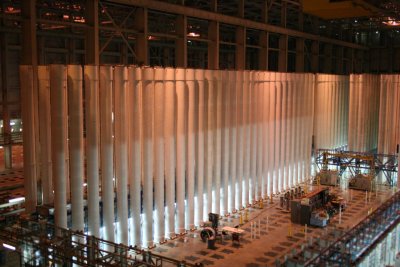
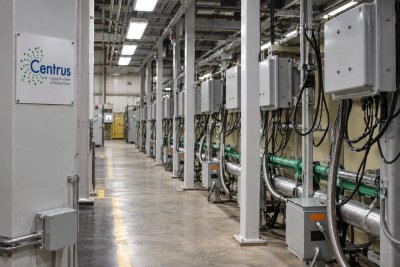
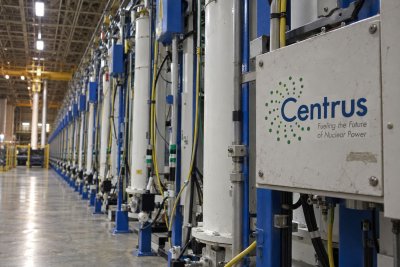
Enrichment is a separate supply-chain requirement. In September, Antares signed a contract with Centrus Energy (NYSE:LEU) for high-assay low-enriched uranium (HALEU), with deliveries expected before the end of the decade. The BWXT agreement covers the fabrication of that enriched material into TRISO fuel.
Regulatory and Demonstration Milestones
The Mark-0 reactor achieved zero-power criticality on June 4 at Idaho National Laboratory, a milestone that confirmed a sustained chain reaction but did not produce electricity. This event was independently documented by World Nuclear News, which also linked the fuel specification to the Project Pele program.
On October 23, Antares announced approval of the Nuclear Safety Design Agreement for Mark-1, the first step in the Department of Energy's authorization process. The agreement establishes design requirements, safety analysis approaches, and regulatory expectations for construction and operation.
Market Implications
This agreement strengthens Antares' supply chain resilience by diversifying its fabrication sources, reducing reliance on a single supplier. For BWXT, it represents a continued commitment to the advanced nuclear sector, positioning the company as a key player in the emerging microreactor market. Investors may view this as a positive signal for both companies, though the contract's financial impact remains undisclosed.
Analysts note that the success of Antares' 2028 deployment targets will depend on timely fuel deliveries, regulatory approvals, and the integrated performance of the reactor and power conversion systems. The closed Brayton-cycle nitrogen system is a novel approach that must be validated during the 2027 demonstration.
As the nuclear industry evolves, agreements like this highlight the growing importance of specialized fuel supply chains. With multiple suppliers now contracted, Antares is better positioned to meet its ambitious timeline, but execution risks remain.