SpaceX (NASDAQ:SPCX) has successfully completed a 33-engine static fire of the Super Heavy booster designated for Starship Flight 15, marking a significant milestone in the lead-up to the vehicle's next launch attempt. The test, conducted at the Starbase facility in Texas on October 25, 2026, lasted approximately 15 seconds, according to independent estimates from Space.com.
This static fire is a crucial pre-launch validation of the booster's propulsion systems, but it does not address the more complex challenge of recovering the redesigned Starship vehicle. The distinction is critical for SpaceX's ambitious Starlink expansion plans, as the company looks to leverage the Starship's massive payload capacity to accelerate satellite deployment.
Starlink Capacity: One Starship Equals Ten Falcon 9s
SpaceX's third-quarter results, reported on October 20, revealed that the September orbital Starship flight carried 26 V3 Starlink satellites. The company stated that this load added roughly ten times the downlink capacity of a Falcon 9 Starlink launch. This ratio suggests that a single Starship mission could deliver capacity equivalent to ten Falcon 9 missions, a significant advantage in the race to expand global internet coverage.
However, the arithmetic does not guarantee a repeatable launch rate. Sustained capacity additions depend on launch frequency and the timely entry of spacecraft into service. The company reported 13.6 million consumer subscribers as of the end of September, but the filing does not translate the Flight 14 capacity figure into individual connection speed forecasts.
Booster 22 Static Fire: A Check on Propulsion
Booster 22, the vehicle for Flight 15, was secured to the launch mount during the static fire. SpaceX described the event as a "Full duration 33-engine static fire" in its October 25 social media post. While the test confirms the engines can operate together at full power, it does not replicate the stresses of atmospheric reentry or the final approach to the launch tower. The company's confirmation provides no measured data on recovery margins, refurbishment requirements, or turnaround times.
V3 Redesign: New Hardware for Recovery
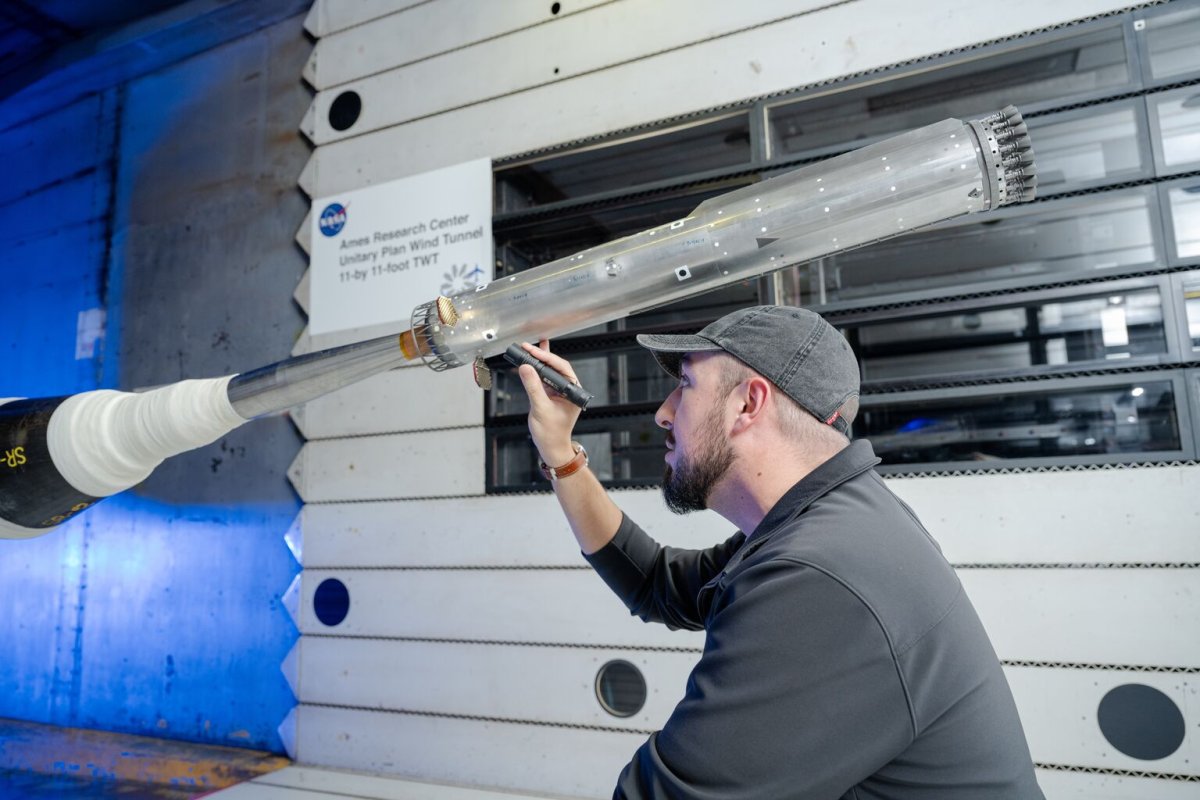
The Version 3 (V3) Starship design includes significant changes to the hardware needed for recovery. NASA's documentation lists three grid fins replacing the previous four, with each fin 50% larger. The design also integrates a hot stage and removes several engine-section shields. These modifications prompted dedicated aerodynamic testing, including a 1.2%-scale booster model tested at NASA's Ames Research Center in late 2025. The tests measured steady and unsteady airflow to help engineers predict forces, vibrations, and guidance responses during reentry.
Recovery Goals for Flight 15
SpaceX CEO Elon Musk outlined the recovery goal for Flight 15 on October 20, stating, "We're going to attempt to catch both the booster and the ship." November is the target month, though no firm launch date has been announced. The two vehicles have distinct roles: Super Heavy must return after accelerating the upper stage, while the ship must complete its orbital mission and survive reentry before approaching the catching tower.
The recovery process is an intermediate step; the equipment must be left in good enough condition for inspection and reuse. SpaceX's capacity comparison does not provide cost per kilogram or the number of flights between overhauls.
Investigating Flight 14 Engine Issue
The previous flight, Flight 14, returned on September 28 after approximately three hours instead of the planned ten, following an upper-stage engine shutdown during ascent. This incident remains under investigation and could impact the schedule for Flight 15.
Next Steps Before Launch
Ship 42, the planned upper stage for Flight 15, still requires an engine firing and final checks, according to Space.com's October 26 report. The company has not yet confirmed the mission's satellite payload. Engine or heat-shield problems could interrupt the return sequence before any catch attempt, and upper-stage testing, launch authorization, and inspection findings could also shift the schedule.
Investors will be watching closely for the launch date and the outcome of the recovery attempt, as successful recovery is essential for reducing launch costs and increasing launch cadence—key factors in SpaceX's long-term financial model.