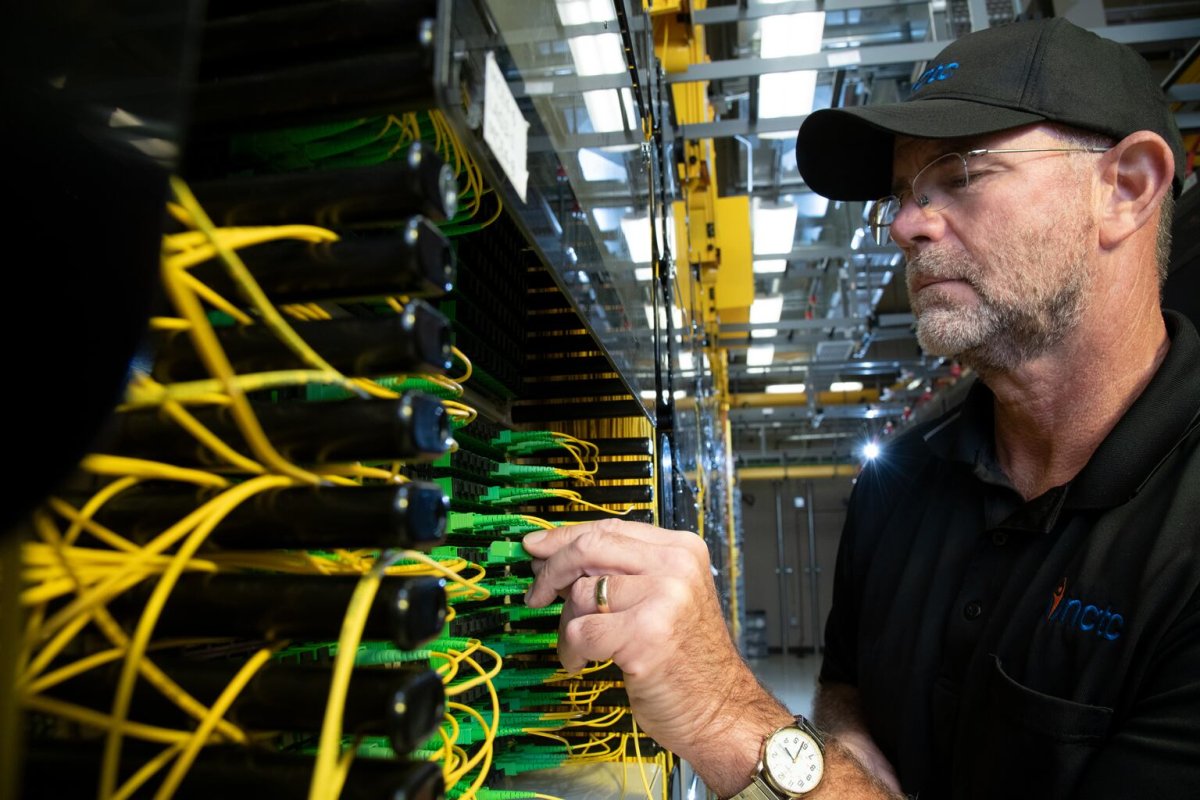
In a significant move to bolster India's digital infrastructure, Tata Communications (NSE:TATACOMM) has unveiled plans for a $400–450 million fiber optic network expansion. The initiative, disclosed in a regulatory filing on Monday, aims to connect major artificial intelligence and data-center hubs across approximately 10,000 kilometers. The company expects to add capacity in phases between fiscal years 2030 and 2036, a timeline that aligns with the anticipated growth in AI-driven data consumption.
The proposed expansion represents a monumental leap in capacity. Tata Communications currently operates with an installed capacity of 1.25 petabits per second (Pbps), which is already utilized at 70–80%. The new addition of roughly 6 Pbps would bring total capacity to 7.25 Pbps, a 5.8-fold increase over the current base. This substantial upgrade is designed to meet the surging bandwidth demands of cloud operators and AI workloads, which require high-speed, low-latency connections for distributed computing tasks.
Network Scope and Phased Rollout
The first phase of the rollout will cover key metropolitan areas including Mumbai, Pune, Hyderabad, and Chennai. Subsequent phases will extend to eastern and western hubs such as Visakhapatnam, Bhubaneswar, Jamnagar, and GIFT City. The strategic placement of these routes is intended to link domestic computing centers with international cable landing stations, facilitating seamless global connectivity.
Tata Communications already boasts a vast global footprint, with over 500,000 kilometers of subsea optical fiber and more than 200,000 kilometers of terrestrial fiber. The new Indian build, while relatively modest in distance compared to the global network, promises a significant boost in capacity, underscoring the company's focus on high-density, high-performance corridors.
Latency and Performance Considerations
Rupesh Chokshi, Tata's network-services chief, indicated to Moneycontrol that a round trip between Mumbai and Chennai could take approximately 15–16 milliseconds. However, this figure is an executive's projection and not a verified operational measurement. The company has not provided contractual latency guarantees, which may be a point of consideration for enterprise customers.
AI workloads place unique demands on network infrastructure. Nvidia's technical documentation highlights how unpredictable delays can disrupt synchronized training and disaggregated inference processes. More fiber alone does not guarantee predictable application performance; factors such as switching, congestion management, and workload placement are equally critical. Tata's expansion is a necessary step, but its effectiveness will depend on the network's ability to deliver consistent, low-latency performance.
Customer Demand and Commercial Commitments
Chokshi noted that customers are increasingly seeking 400-gigabit, 800-gigabit, and terabit-scale connections, reflecting the growing need for high-bandwidth links. However, the company has not disclosed how the 6 Pbps aggregate capacity will be allocated across individual corridors. While management mentioned that anchor commitments and contracted demand are driving a growing share of expansion, no project-specific contracted revenue has been announced.
The commercial viability of the project remains a key question. Chokshi mentioned advanced discussions with customers but stopped short of announcing any network contracts. The lack of committed revenue raises questions about the project's return on investment, especially given the substantial capital outlay.
Financial and Timeline Outlook
The capital expenditure for the program is set at ₹4,350 crore (approximately $520 million), funded through operating cash flows. The company's timeline indicates capital deployment over three to five years, while capacity additions are scheduled between FY2030 and FY2036. These timelines measure spending and delivery separately, and neither document links the spending schedule to individual commissioning dates.
Risks include construction delays and uneven customer take-up, which could leave installed capacity out of step with usable revenue. The funding depends on operating cash flows, and route-level latency and resilience remain unverified until services are commissioned and tested.
As Tata Communications embarks on this ambitious expansion, the industry will be watching closely to see which corridor receives the first capacity and how the company navigates the challenges of delivering a network built for the AI era. The announcement marks a significant step in India's journey toward becoming a global digital hub, but the proof will be in the performance.