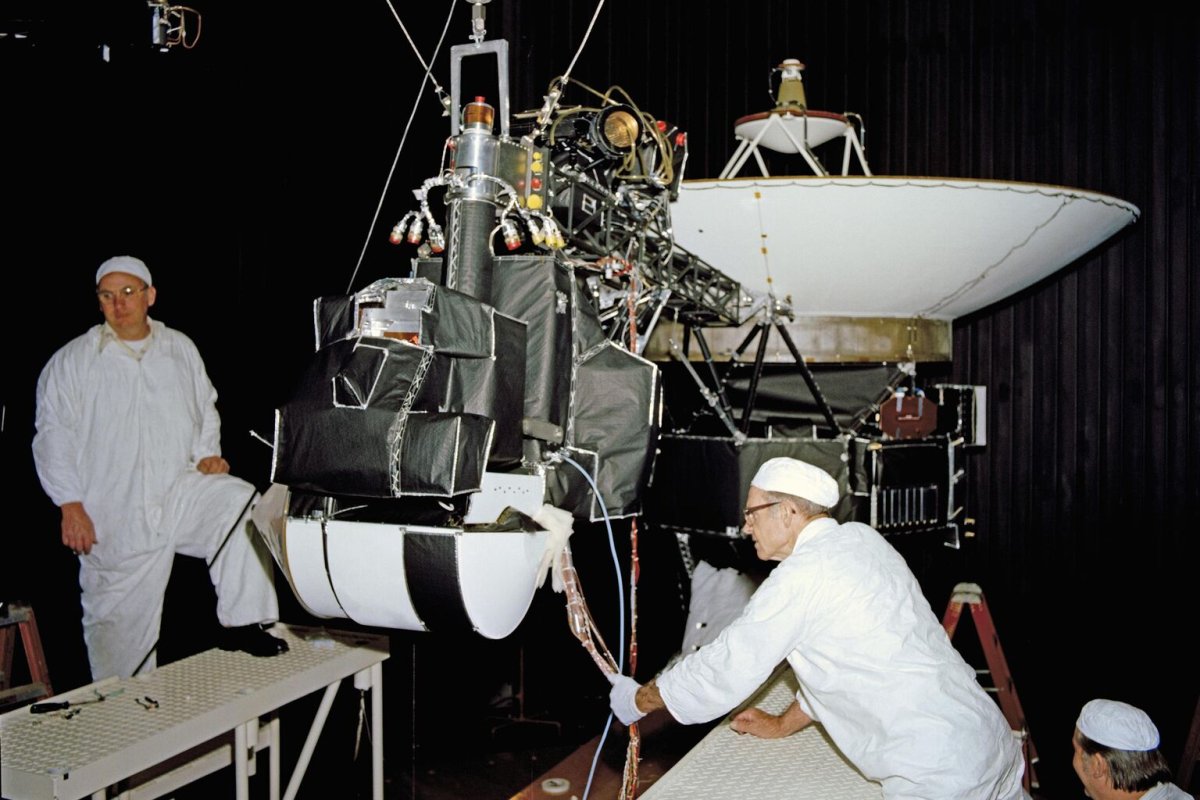
NASA has confirmed that Voyager 1, the most distant human-made object, completed a critical power-saving reconfiguration in September, a move that will allow the spacecraft to continue its scientific observations for longer than previously expected. The announcement, made on October 29, brings some relief to mission controllers who have been managing the spacecraft's steadily declining power supply since its launch in 1977.
The power-saving work involved replacing three devices with lower-power alternatives simultaneously, a complex operation given the spacecraft's age and distance. By switching these components together, engineers reduced electrical demand while preserving the necessary heat distribution aboard the probe. This adjustment delays the shutdown of another science instrument that could have been necessary as early as summer 2027.
NASA has not disclosed the exact amount of power saved or provided a revised timeline for future instrument shutdowns. The agency's current instrument status table shows Voyager 1 now operates just two science instruments, while its twin, Voyager 2, continues to run three. Both spacecraft are currently sampling interstellar space, the region beyond the Sun's protective bubble of particles and magnetic fields.
Voyager 2's Earlier Success
Voyager 2 served as the operational test bed for this power-saving approach. In an August 4 account, NASA noted that the savings from a similar intervention should allow Voyager 2 to keep its three instruments operating for at least another year. Without that intervention, another instrument on Voyager 2 was expected to shut down before the end of 2026.
The remaining instruments on each probe determine what scientific measurements are still possible. Both Voyager 1 and Voyager 2 retain their magnetometers and plasma-wave systems. Voyager 2 also continues to operate its cosmic-ray instrument. Neither probe's low-energy particle experiment is currently active, though Voyager 1's small scanning motor, which consumes just 0.5 watts, was preserved in an earlier shutdown in April, keeping open a possible route to eventual reactivation.
Plasma-Wave Science Legacy
The plasma-wave instrument aboard both spacecraft has a long-established technical role. Its original instrument paper, hosted by the University of Iowa, describes two 10-metre antenna elements and a 16-channel analyser covering a frequency range of 10 hertz to 56 kilohertz. Wave observations from this instrument can yield valuable information on local plasma density in interstellar space.
Power conservation has already narrowed Voyager 1's particle measurements. The current status table still lists the low-energy particle experiment as off, a consequence of the spacecraft's dwindling power supply.
Recent Communication Glitch
A separate communications failure earlier this month highlighted the challenges of operating spacecraft at such extreme distances. Two scheduled contacts with Voyager 1 failed on October 18 and 19. Reception resumed on October 20, before troubleshooting commands were sent, suggesting an autonomous recovery. NASA later found that one thruster group had gone offline and backups activated automatically. The cause of the failure remains under investigation.
"We're relieved to be back in contact with Voyager 1 and are eager to understand what happened," said mission manager Kareem Badaruddin.
Ground Infrastructure and Growing Delays
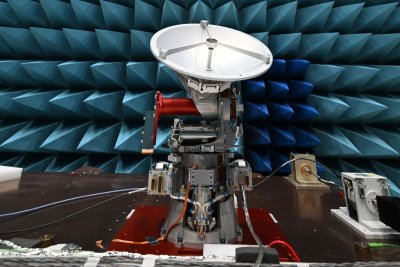
The mission relies on substantial ground infrastructure to maintain communication. In a March 2025 account, CSIRO described the Canberra Deep Space Communication Complex as having one 70-metre and three 34-metre antennas. CSIRO manages the site for NASA, alongside the network's Madrid and Goldstone facilities. However, even the most powerful antennas cannot eliminate the radio propagation delay.
The next major milestone is November 18, when Voyager 1 is expected to reach one light-day from Earth, approximately 25.89 billion kilometres. At that point, a command will take 24 hours to reach the spacecraft, with another 24 hours for a reply, making each round trip two days long.
Despite the completed power-saving work, risks remain. The cause of October's thruster switchover is unresolved, and the power supply continues to decline. NASA has not provided a revised date for shutting down Voyager 1's remaining instruments, and further hardware failures could interrupt measurements at any time.