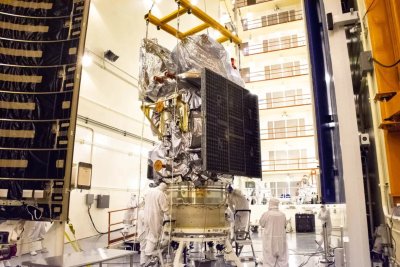
NASA has officially approved the Ultraviolet Explorer (UVEX) mission, committing $590 million to cover the telescope's entire lifecycle. The decision, announced on October 27 following a comprehensive technical and programmatic review, clears the way for construction to begin. The space agency expects the observatory to be ready for launch by January 2031.
UVEX is designed to conduct a sensitive all-sky survey in the ultraviolet spectrum, a capability that has been largely absent since the Galaxy Evolution Explorer (GALEX) mission ended. The new telescope's imaging field will cover 12.25 square degrees per pointing—roughly 10.8 times larger than GALEX's 1.13 square degrees. However, this geometric comparison reflects field size per exposure, not survey speed or depth.
Caltech, which leads the mission's science team, says UVEX could be up to 100 times more sensitive than GALEX. The spacecraft will carry two ultraviolet imaging bands (139–190 nm and 203–270 nm) and a spectrograph for rapid follow-up of transient events such as supernovae and neutron-star mergers. These capabilities are design targets; achieving them will depend on successful integration, launch, and on-orbit calibration.
The mission was initially selected in 2024 as a NASA Medium-Class Explorer with an estimated cost of approximately $300 million, excluding launch services. The newly announced $590 million figure covers the full lifecycle, including launch and operations, and does not represent a like-for-like cost increase.
UVEX will use modified CMOS detectors, a technology common in smartphone cameras but adapted for ultraviolet sensitivity through specialized coatings and filters. GALEX relied on microchannel-plate detectors. The mission team, including SRI International and JPL, is developing the sensors to meet the stringent requirements of the ultraviolet spectrum.
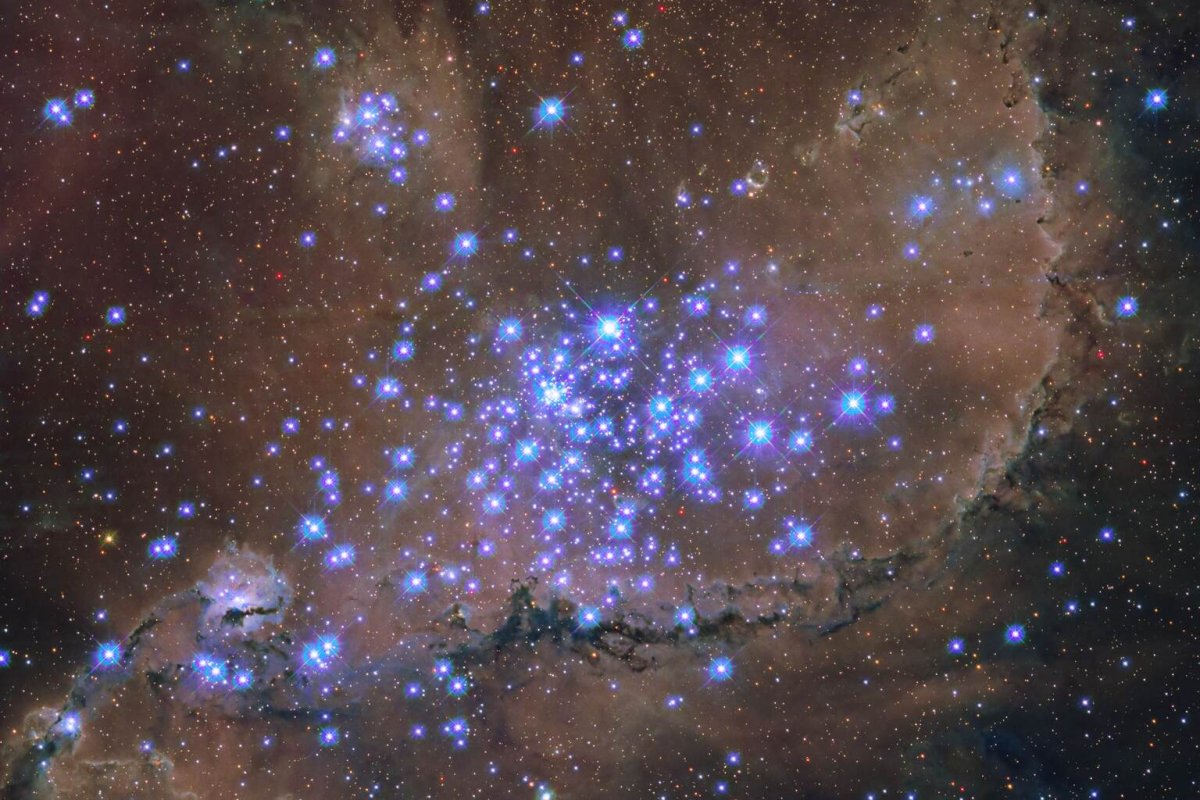
One of UVEX's primary scientific goals is to distinguish nearby small galaxies from distant ones in optical surveys. Ultraviolet light is a key diagnostic for identifying hot, young stars and active galactic nuclei. "Ultraviolet light will make them easier to find," said Fiona Harrison, principal investigator for the mission, in a Caltech announcement.
The mission will also conduct a two-year survey, repeated visits across the sky to build a deep map. This approach will enable the detection of faint sources, including small galaxies that resemble distant ones in optical images. The survey design aims to cover 100% of the sky, a significant improvement over GALEX's 77% coverage at varying depths.
In addition to the survey, UVEX will carry a spectrograph to study young supernovae within days of their explosion. These measurements could provide crucial data on the chemical composition of the early stages of stellar explosions. The confirmation notice identifies neutron-star mergers as a key target for rapid response observations.
Data processing will be handled by Caltech's IPAC, which will manage the science archive and analysis pipeline. Berkeley manages the mission, while Caltech leads the science. The team plans to deliver all data products within six months of the end of the prime mission, a timeline that will be closely watched.
The approval marks a significant step forward for ultraviolet astronomy, a field that has been underserved since GALEX's retirement. With UVEX, scientists hope to unlock new insights into stellar evolution, galaxy formation, and the dynamic ultraviolet universe.