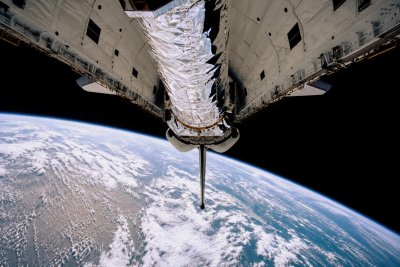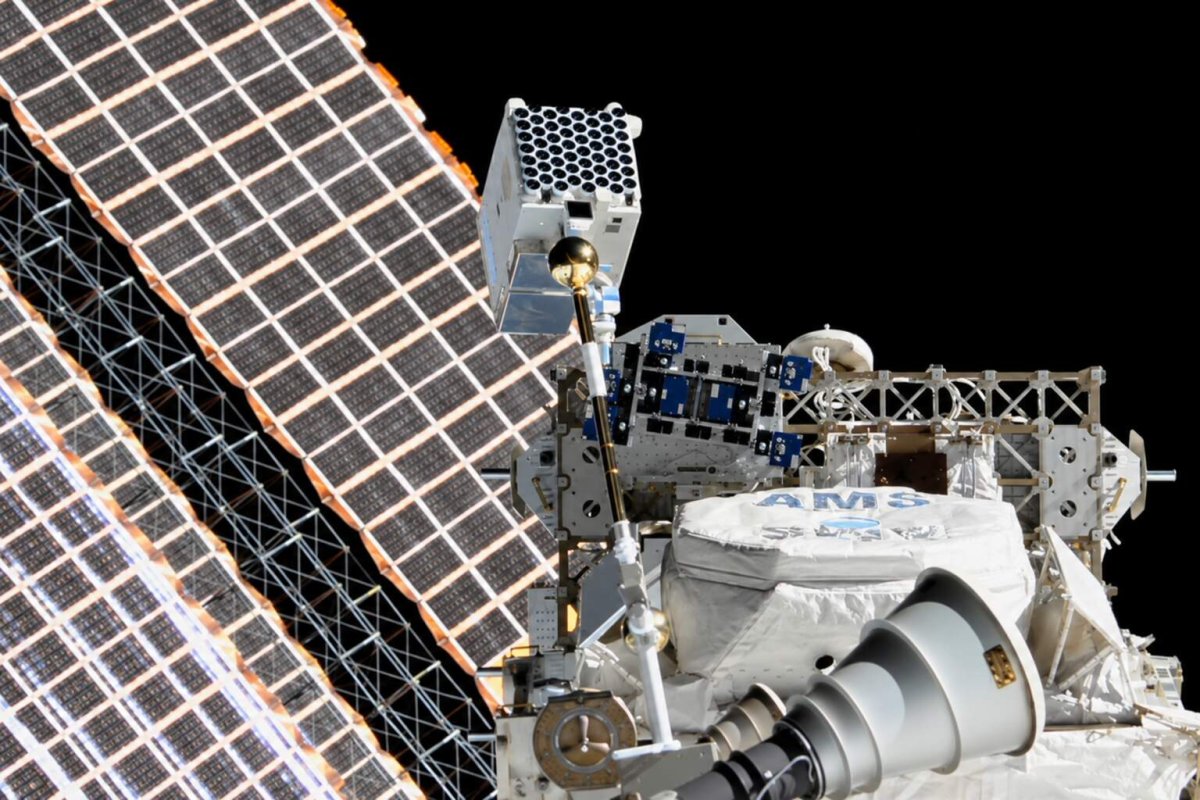
NASA has officially concluded the science mission of the Neutron star Interior Composition Explorer (NICER), an X-ray telescope attached to the International Space Station. The agency's announcement on November 17, 2026, brings an end to a mission that significantly advanced the study of neutron stars and demonstrated a novel navigation technique using their pulsating emissions.
NICER's observations were halted on June 17, 2025, when a motor malfunction restricted its ability to move sideways, a critical function for pointing the instrument at celestial targets. Following a thorough investigation, which included a review of images taken by robotic cameras on the station, engineers suspect an internal motor failure. However, NASA's assessment remains provisional, as the exact cause has not been definitively confirmed.
The motor trouble was a separate issue from an earlier problem involving light leaks through damaged thermal shields. Astronauts addressed the sunlight intrusion by installing nine patches during a spacewalk on January 16, 2025. While that repair successfully mitigated the light leak, the subsequent motor failure affected a different system, leading to the eventual termination of the mission.
Mission Timeline and Key Events
- May 2023: Sunlight leak discovered.
- January 16, 2025: Astronauts install nine patches to fix the light leak.
- June 17, 2025: Observations paused due to motor trouble.
- November 17, 2026: NASA announces the end of the science mission.
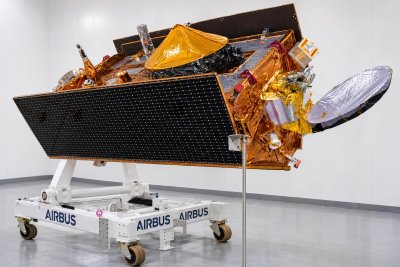
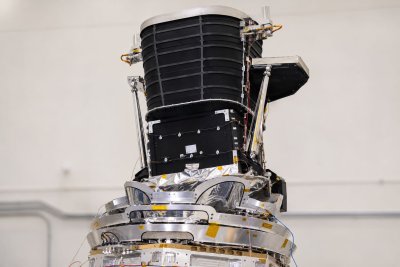
NICER, a compact observatory roughly the size of a washing machine, was mounted near the station's inner starboard solar panels. Its design featured 56 concentrators with nested mirrors that directed X-rays onto detectors. Thin shields allowed X-rays to pass while blocking sunlight, and circular sunshades provided additional protection. The instrument was not an imager; instead, it collected precise timing and spectral data within a narrow 5-arcminute field of view.
The instrument excelled at measuring the arrival times of individual X-ray photons with a resolution of 100 nanoseconds, across an energy band of 0.2 to 12 kiloelectronvolts. This capability enabled researchers to track bright regions on the surfaces of neutron stars as they rotated. Because gravity bends light around these ultra-dense objects, the pulse patterns observed from Earth are altered, allowing scientists to infer the stars' sizes and test the behavior of matter under extreme pressures.
Scientific Achievements and Navigation Test
One of NICER's key targets was PSR J0740+6620, a neutron star with a mass of about 2.1 times that of the Sun, previously measured via radio observations. Two independent teams, using NICER data combined with XMM-Newton observations, estimated its diameter at 24.8 and 27.4 kilometers, with overlapping uncertainties. The star was substantially heavier than a previously studied pulsar but similar in size, challenging some theoretical models that predict easier compression of dense matter.
Beyond stellar physics, NICER provided the observations for the SEXTANT experiment, an autonomous X-ray navigation test. During a two-day trial beginning November 9, 2017, the instrument observed four millisecond pulsars and generated 78 measurements. Onboard software used the pulse timings to calculate the spacecraft's position, which was verified against GPS. Within eight hours, the calculated position was within the experiment's 10-mile target (about 16 kilometers), as reported by NASA in January 2018.
The navigation technique could complement radio and optical methods for deep-space missions. However, NASA's report noted that further development is needed in detector size, power requirements, and sensitivity before a practical system can be deployed on distant spacecraft. The experiment was a technology demonstration, and those challenges remain.
Now, NASA plans to complete the eight-year observation archive, decommission NICER, and detach it from the station. The closure update does not specify a detachment date. The mission's data will be preserved and hosted by HEASARC, ensuring that the scientific results remain accessible to researchers as the hardware is retired.