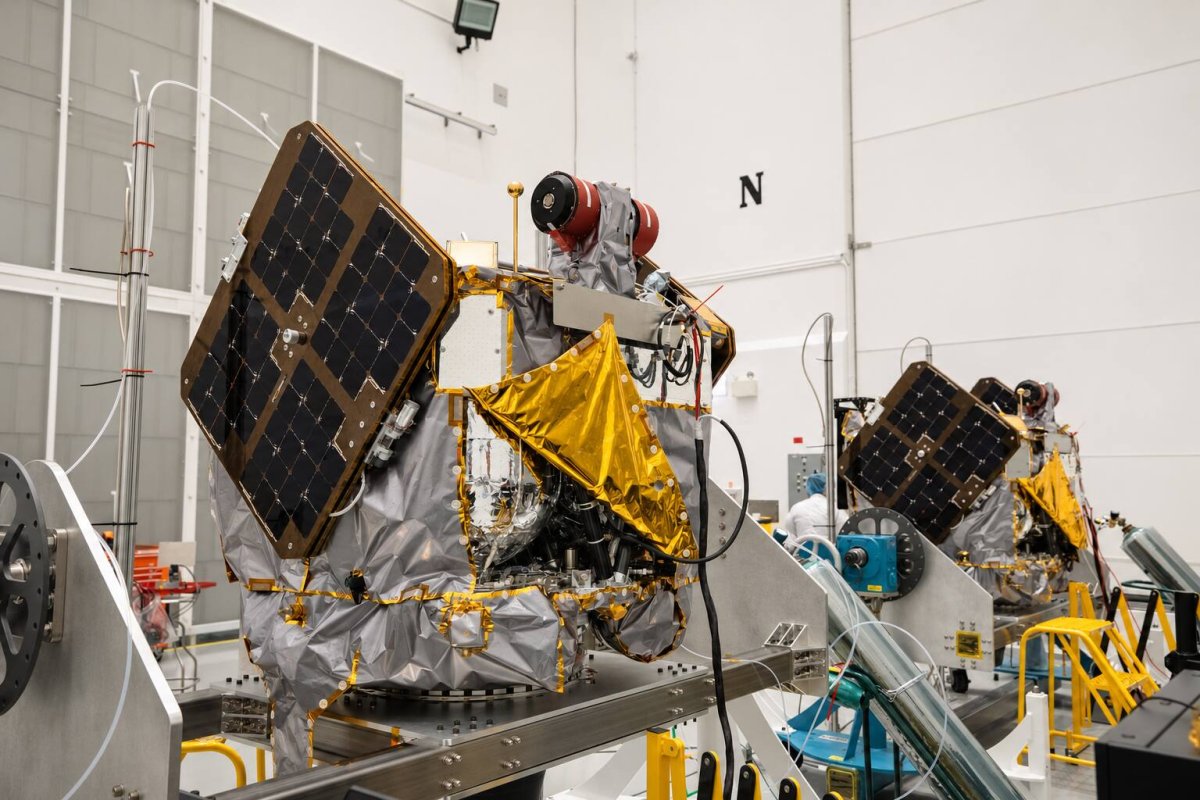
NASA's twin ESCAPADE spacecraft have successfully executed powered Earth flybys and are now on their trajectory toward Mars, marking a significant milestone in the mission to study the Red Planet's atmospheric escape. The two orbiters, named Blue and Gold, performed their departure maneuvers on November 7 and 9, 2026, respectively, using a combination of Earth's gravity and engine thrust to propel them on their interplanetary journey.
Mission Timeline and Key Events
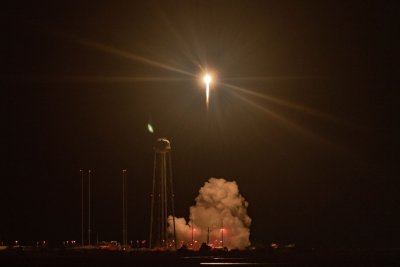
The spacecraft, which launched from Cape Canaveral aboard Blue Origin's New Glenn rocket on November 13, 2025, have been on a complex trajectory that took them on a long loop around the Earth-Sun L2 Lagrange point, roughly one million miles from Earth. This strategic path allowed the mission team to time the departure for optimal alignment with Mars, reducing the energy required for the transfer.
During their Earth flybys, Blue passed at an altitude of approximately 1,000 miles, while Gold came closer at about 650 miles. The burns were executed autonomously, with oversight from Rocket Lab, the spacecraft manufacturer, and UC Berkeley's Space Sciences Laboratory, which leads the mission. These maneuvers represent the two largest propulsive events of the mission, alongside the upcoming Mars orbit insertion burns.
Science Objectives: Unraveling Mars' Atmospheric Mysteries
The Escape and Plasma Acceleration and Dynamics Explorers (ESCAPADE) mission aims to investigate how the solar wind transfers energy into Mars' magnetic environment and drives atmospheric loss. Mars' magnetic field is a patchwork of localized crustal fields and an induced field created by the interaction of the solar wind with the planet's ionosphere. By placing two orbiters in coordinated positions, the mission will be able to distinguish between spatial variations and temporal changes in the plasma environment.
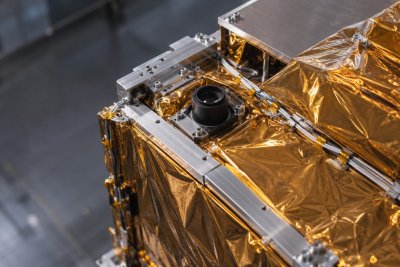
Each spacecraft carries a suite of scientific instruments, including an electrostatic analyzer from UC Berkeley, a magnetometer from NASA Goddard, and a Langmuir probe from Embry-Riddle Aeronautical University. These instruments will provide complementary measurements of plasma and magnetic field conditions, allowing researchers to reconstruct the processes that lead to atmospheric escape.
Orbit Insertion and Science Phases
After a cruise of approximately ten months, the spacecraft are scheduled to arrive at Mars on September 7 and 9, 2027, where they will fire their engines for about 11 minutes to enter orbit. The following months will be spent reducing and synchronizing their orbits to achieve the desired observing geometry, with science operations expected to begin in June 2028.
The mission's science plan is divided into two phases. Initially, both orbiters will follow similar trajectories, allowing scientists to separate changes over time from differences in location. In the second phase, one spacecraft will move to a higher orbit to sample the incoming solar wind, while the other remains closer to Mars to measure the planet's response, providing a two-point perspective on the solar wind-planet interaction.
Broader Implications and Future Prospects
The data collected by ESCAPADE will not only deepen our understanding of Mars' atmospheric evolution but also provide crucial information for future human exploration. Understanding the ionosphere and space weather environment is essential for designing communication and navigation systems, as well as for assessing radiation risks for astronauts. The mission's findings could also have implications for studying other planets with weak magnetic fields, including Venus and early Earth.
As the spacecraft continue their journey, the mission team will conduct course-correction maneuvers to fine-tune their trajectories. The successful completion of the Earth flybys is a testament to the precision engineering and collaborative effort between NASA, UC Berkeley, Rocket Lab, and Blue Origin. With Mars in sight, ESCAPADE is poised to unlock new secrets of the Red Planet and inspire future generations of space explorers.