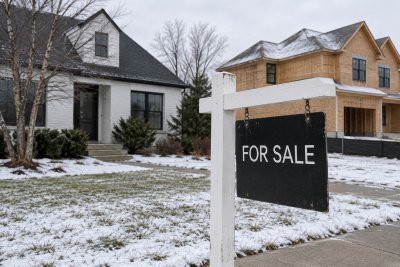
The U.S. housing market faces renewed pressure as borrowing costs move higher, erasing recent gains in affordability that had begun to lure buyers back. Data from Mortgage News Daily shows the benchmark 30-year fixed mortgage rate climbed to 6.29% on Tuesday, March 17, 2026. This marks a significant increase from late February, when rates had briefly fallen below the 6% threshold. A separate weekly survey from Freddie Mac placed the average at 6.11% for the period ending March 12.
Spring Thaw Faces Rate Headwinds
The timing of the increase is critical, coinciding with the traditional start of the spring homebuying season. Market activity had shown tentative signs of improvement following an extended period of stagnation. The National Association of Realtors reported that pending sales of existing homes, a forward-looking indicator, rose 1.8% nationally in February. In California, sales surged 7.0% from January, a jump attributed to the temporarily lower interest rates that motivated some hesitant purchasers.
Lawrence Yun, Chief Economist at the National Association of Realtors, cited "improved affordability conditions" for the February uptick but expressed caution. "The risk of a reversal remains if mortgage rates climb on the back of higher oil prices," Yun warned. In the West, pending sales increased 0.9% month-over-month and 3.2% year-over-year, with metropolitan areas like San Diego, San Jose, and Sacramento among the top performers.
California's High-Cost Reality
The California Association of Realtors provided a detailed snapshot of the state's challenging market. In February, single-family home sales occurred at a seasonally adjusted annual rate of 274,820. The median price paid for a home rose 0.9% from January to reach $830,370. While sales in the Bay Area climbed 4.0% compared to a year ago, the statewide sales pace has now remained below 300,000 units for 41 straight months, highlighting persistent affordability and inventory constraints.
"The market gained momentum in February," stated Tamara Suminski, President of the California Association of Realtors. However, she identified ongoing geopolitical tensions in the Middle East as a potential catalyst for both buyers and sellers to adopt a wait-and-see approach. Jordan Levine, the group's Chief Economist, pointed to the latest mortgage rate spike as a direct headwind for spring demand, a concern magnified by the continued shortage of available homes.
Consumer Sentiment and Builder Pessimism
Broader economic factors are also influencing buyer behavior. Chen Zhao, Head of Economic Research at Redfin, discussed shifting patterns in Northern California with SFGATE, noting that purchasers are now reacting to both interest rate volatility and rising fuel costs. "Nothing affects consumer sentiment like gas prices," Zhao observed, suggesting that higher energy expenses could lead to more cautious spending.
On the supply side, homebuilder confidence remains deeply pessimistic. The NAHB/Wells Fargo Housing Market Index edged up to 38 in March but has now lingered below the key 50-point threshold—indicating poor conditions—for 23 consecutive months. NAHB Chairman Bill Owens described today's typical buyer as "on the fence," with most awaiting anticipated rate cuts and more stable economic signals. To attract these hesitant customers, builders are aggressively using incentives; 37% reported cutting prices in March, while 64% offered sales concessions, even as costs for land, labor, and materials stay elevated.
Multiple Threats to Market Stability
Analysts see several concurrent risks. Realtor.com analyst Hannah Jones pointed to potential "headwinds" for the spring market, listing the Middle East conflict, persistent inflation, and trade tariffs as factors likely to keep mortgage rates and construction costs high. It's important to note that mortgage rates primarily follow the yield on the 10-year U.S. Treasury note, not the Federal Reserve's benchmark rate. This linkage makes the housing sector uniquely vulnerable to sharp movements in both the bond and oil markets, regardless of the central bank's expected decision to hold rates steady.
The durability of February's sales bounce now hinges on whether borrowing costs stabilize. The California Association of Realtors suggested a return of buyer confidence is possible if conditions calm, but warned that elevated oil prices and rising bond yields could derail the recent momentum. Despite these challenges, economists surveyed by Reuters maintain a forecast for U.S. home prices to rise 1.8% over the course of 2026.