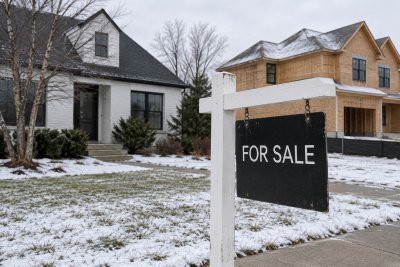
U.S. mortgage rates maintained their elevated position on Monday, continuing to challenge housing affordability as the critical spring selling season gains momentum. According to daily tracking data, the benchmark 30-year fixed mortgage rate registered at 6.49%, representing a marginal decline of just 4 basis points from the previous session. This level keeps borrowing costs close to their highest marks seen in recent years.
Separately, the widely followed weekly survey from Freddie Mac reported the average 30-year fixed rate at 6.22% for the week ending March 19. The disparity between the daily and weekly figures highlights the volatility in lending markets, with the more frequent daily reading currently running significantly higher than the weekly average. Freddie Mac's survey focuses on conventional purchase loans for borrowers with excellent credit and substantial down payments, collected from Thursday through Wednesday each week.
Housing Market Shows Strain
The persistent rate pressure coincides with concerning signals from the housing sector. Data released Monday revealed that sales of newly built homes collapsed by 17.6% in January, falling to a seasonally adjusted annual rate of 587,000 units. This marks the weakest pace of sales since October 2022 and underscores the sensitivity of buyer demand to financing costs. Concurrently, U.S. construction spending dipped 0.3% in January, with outlays for new single-family projects slipping 0.2%.
"The 30-year fixed-rate mortgage ticked higher to 6.22% this week, but still sits about half a point below where it stood a year ago," noted Sam Khater, chief economist at Freddie Mac. He suggested that buyers are entering a "more affordable spring homebuying season than last," pointing to recent increases in purchase applications and pending sales. However, this optimism is tempered by the stark January sales data and the recent climb in rates.
Geopolitics and Bond Markets Influence Rates
Financial markets experienced notable movements on Monday that indirectly affected mortgage pricing. Oil prices plummeted as much as 13% during the session, while the yield on the benchmark 10-year U.S. Treasury note fell by up to 8.7 basis points before paring losses. Analysts attributed the shift to President Donald Trump's announcement delaying planned U.S. strikes on Iranian power facilities, which eased immediate geopolitical tensions.
Fiona Cincotta, an analyst at City Index, described the market reaction as a repricing away from "worst-case expectations." The calmer bond market environment allowed for a moderate improvement in mortgage-backed securities (MBS), which can provide lenders with slight flexibility to offer better rates. However, the relief proved limited.
Builder Stocks Defy Gloomy Data
In a contrasting move, shares of major homebuilding companies rallied alongside the broader equity market's advance. D.R. Horton saw its stock price increase by 4.6% in afternoon trading, while Lennar gained 4.1% and PulteGroup rose 3.9%. The rebound appeared driven by the general market uptick and the retreat in oil prices, which alleviated some macroeconomic concerns and drew buyers back to sectors that had been under pressure.
The stock gains occurred despite the dismal new home sales report, suggesting investors may be looking beyond the immediate data toward potential future rate stabilization or improvements in supply chains and input costs.
Analysts Warn of Persistent Headwinds
Market observers expressed caution regarding the near-term outlook for mortgage rates and housing. Matthew Graham of Mortgage News Daily observed that the average lender rate had recently pushed past 6.5%, matching levels last seen in early September 2025. He poured cold water on hopes for a sustained decline below 6%, similar to the brief dip experienced in February, calling such a scenario "highly unlikely" in the foreseeable future, even if geopolitical conflicts were to resolve quickly.
Hannah Jones, a senior economic research analyst at Realtor.com, identified several potential "headwinds" for the spring housing market, including ongoing Middle East tensions, persistent inflation concerns, and evolving trade and tariff policies. These factors could maintain upward pressure on financing costs and consumer uncertainty.
Mixed Signals for Borrowers
Prospective homebuyers are receiving conflicting messages. While mortgage rates have retreated from their most extreme intraday spikes witnessed during recent geopolitical flare-ups, they remain substantially higher than the 5.98% average recorded just before the latest conflict escalation. Any renewed surge in oil prices or another upward move in Treasury yields could quickly erode affordability further, presenting a significant challenge as the market enters its traditional peak activity period.
The trajectory of borrowing costs will likely depend on incoming economic data, Federal Reserve policy signals, and the evolution of international events. For now, the housing market navigates a fragile balance between resilient underlying demand and the substantial burden of elevated mortgage rates.