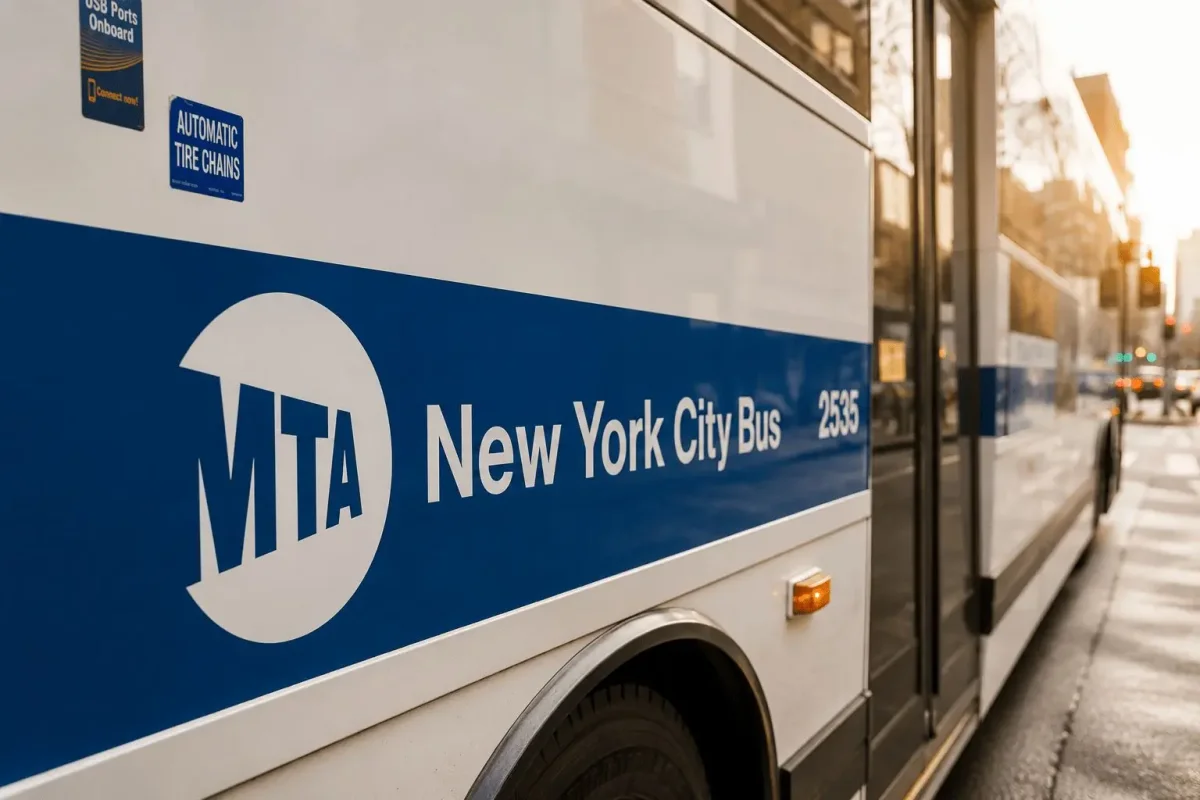
The Metropolitan Transportation Authority (MTA) in New York has expanded its automated camera enforcement program to 67 bus routes, covering over 1,900 buses, after initiating a 60-day warning period on Monday for four additional lines. The newly added routes include Brooklyn's B38 and B103, along with the Bronx's Bx11 and Bx17. This expansion marks a significant step in the agency's efforts to improve bus service and generate revenue.
Rise in Curb Fines
Investors are closely watching the curb, where Automated Camera Enforcement (ACE) has been targeting blocked bus stops and double-parking since June 2024. In fiscal 2025, MTA camera violations jumped 551%, with curb-side fines totaling $80.1 million—$7.3 million more than bus-lane fines. Payments, including penalties and interest, reached $65.0 million for curb violations, surpassing bus-lane collections by $3.9 million. The data highlights a shift in enforcement focus toward curbside infractions.
Revenue and Bondholder Impact
ACE fines are directed to the General Transportation Account, which provides operating subsidies for MTA Transportation Revenue Bond holders. Through May 2026, the MTA collected $47.5 million from ACE, slightly exceeding its budget by 0.6%. In fiscal 2025, total ACE revenue hit $108.1 million, surpassing the plan by 16.1%. These figures are crucial for investors monitoring the MTA's financial health and the performance of its bonds.
Enforcement Details and Compliance
New ACE cameras now target drivers misusing bus lanes, stopping in bus stops, or double-parking. City staff review footage from multiple buses, with fines starting at $50 and escalating to $250 for repeat offenders. Enforcement with fines began Friday on the M7 in Manhattan and the Q10 and Q80 in Queens. MTA Chair and CEO Janno Lieber noted that most violators do not receive a second ticket, with only 10% of violators accumulating multiple infractions. This high compliance rate improves traffic flow but limits potential revenue from repeat fines.
Service Improvements and Speed Gains
The MTA reports that ACE has boosted bus speeds by up to 30% and reduced crashes by 20%. However, New York buses still average only about 8 mph. "Buses can only move as fast as traffic allows," Lieber said last week, underscoring the challenges of urban transit. The program's expansion aims to further improve service reliability.
Vendor Contracts and Market Implications
The MTA awarded contracts for on-bus hardware to two vendors: Hayden AI ($83.1 million) and Seon ($58.4 million), covering up to 2,023 systems for a total of $141.5 million. Working with multiple vendors reduced the MTA's risk exposure. Verra Mobility (NASDAQ: VRRM) handles back-office processing through a deal with Hayden, converting camera data into citations. Its separate five-year, $998 million contract with the NYC Department of Transportation covers red-light, speed, bus-lane, and BQE weight cameras—up 34% from the previous contract. The revenue share from bus-lane cameras was not disclosed.
In Q1, Verra's Government Solutions unit saw service revenue rise 4%, but a pricing change under the new NYC contract reduced net revenue by $3.4 million after installation costs. Segment profit margin dropped to 20% from 29%, while total revenue remained nearly flat at $223.6 million. CEO David Roberts cited "strong bookings in Government Solutions," but the margin compression raises questions about profitability as the bus camera program expands.
Outlook and Risks
Several factors could limit future revenue: warning periods delay collections, only 10% of violators are repeat offenders, and ACE contributed just 1.1% of the MTA's $4.31 billion in operating subsidies through May. If compliance improves faster than route expansion, fine revenue could plateau. For Verra, bundled pricing and rollout costs may prevent margin expansion despite volume growth.
Looking ahead, the MTA and NYC plan to equip 25 more bus routes with ACE devices in both 2026 and 2027, and install 200 additional fixed bus-lane cameras by 2027. For bondholders and Verra investors, key metrics to watch include curb-side citation volume, fine-to-cash conversion rates, and vendor margins post-buildout.