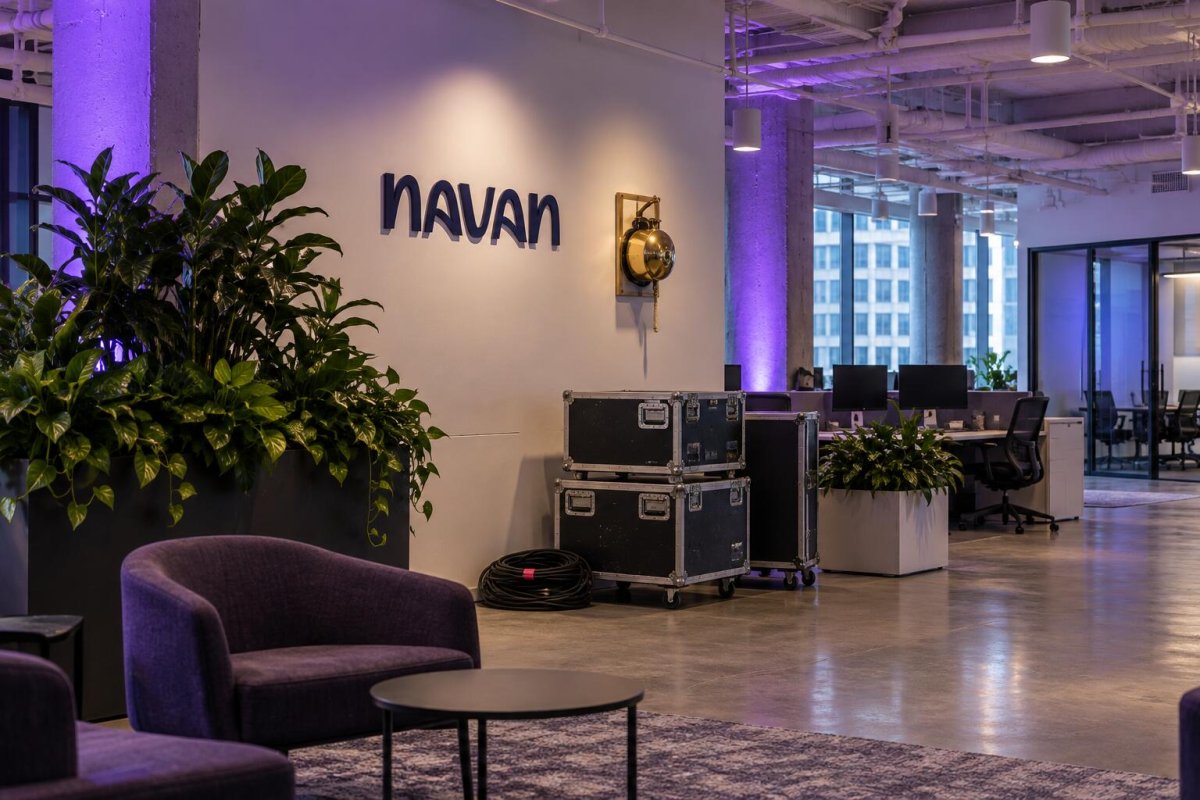
Navan's fiscal second-quarter results delivered the top-line growth investors want, but the cost of achieving it sent shares tumbling in after-hours trading. The business-travel software company saw its stock fall 15.3% to approximately $21.94 in extended trading on Wednesday, following a regular session close at $25.89. The market's reaction underscores a growing skepticism about whether the company's aggressive spending on AI and sales will translate into sustainable profitability.
A Beat That Didn't Satisfy
On the surface, the quarter was strong. Revenue jumped 35% year-over-year to $232.8 million, while gross booking volume surged 45% to $3.0 billion. Adjusted earnings came in at $0.05 per share, beating analyst expectations by a penny. The company also raised its full-year guidance and reported positive free cash flow. Yet, investors focused on the underlying cost structure: total operating expenses rose 46% to $200.2 million, outpacing revenue growth. The GAAP operating loss widened to $25.6 million from $12.3 million in the prior-year quarter, even as non-GAAP operating income improved to $17.3 million from $8.4 million.
The $42.8 million gap between GAAP and non-GAAP operating income is almost entirely attributable to stock-based compensation, which more than doubled to $43.3 million, representing 18.6% of quarterly revenue. Executives also cited higher sales commissions and continued investment in AI products as cost drivers. In essence, Navan is scaling, but shareholders are footing the bill through both cash expenses and dilution.
The Third-Quarter Margin Test
Management's outlook for the third quarter will be the next critical test. The company expects revenue of $253 million to $255 million, up about 30% at the midpoint, and non-GAAP operating income of $35.5 million to $36.5 million, implying a 14% operating margin—a significant improvement from the 7% reported in the second quarter. The full-year forecast was also raised, with revenue now projected at $927 million to $933 million and non-GAAP operating income of $82 million to $86 million, keeping the annual margin target at 9%.
This sets up a clear scorecard: if third-quarter margins approach 14% while growth remains near 30%, the recent spending surge could be seen as productive investment. However, a miss would validate concerns that commissions, product development, and public-company costs are structurally heavier than the adjusted figures suggest.
AI Metrics Show Promise, But Not Yet Decisive
Navan provided two encouraging AI-related metrics. More than half of its AI calls now run on proprietary models, up from 30% at the previous earnings call. Additionally, its support agent, Ava, handled about 60% of customer interactions during the quarter. These figures suggest Navan is making progress in automating expensive service functions without relying on external vendors. However, they don't reveal key details like resolution rates, cost per interaction, or customer satisfaction trade-offs. Investors will need to see these automation gains translate into GAAP operating leverage, not just a rising non-GAAP margin that excludes stock compensation.
Cash flow was a bright spot, with operating cash flow of $25.2 million and free cash flow of $21.5 million, a marked improvement from negative $4.1 million a year earlier. Still, relative to the company's valuation—roughly $5.6 billion based on the after-hours price and 256.4 million basic weighted-average shares—these figures remain modest. That's about six times the midpoint of fiscal-year revenue guidance, a rough comparison that highlights why the market is demanding execution.
BoomPop Acquisition Adds Opportunity, But Also Uncertainty
Navan also announced the acquisition of BoomPop, an AI-powered meetings-and-events platform that has supported events for about 250,000 people. The company said the deal won't materially affect previously issued guidance, but it didn't disclose the purchase price. Reuters reported that a person familiar with the matter valued the cash-and-stock deal at up to $95 million. Strategically, the acquisition makes sense—corporate meetings sit naturally alongside travel, payments, and expense management. However, without details on revenue, purchase consideration, or integration costs, investors should treat BoomPop as optional upside until Navan quantifies its contribution.
What Would Make the Selloff Look Overdone
The bull case isn't without merit. New signed gross booking volume in Navan's strategic large and global segment reached $4.0 billion over the trailing 12 months, up 60%, and the company continues to win notable enterprise customers. Gross margin also improved by one percentage point to 74%. On the other hand, the bear case is that a high-growth travel platform can produce impressive booking statistics while delivering thin GAAP economics.
Investors should closely watch the third-quarter adjusted operating margin target of 14%, stock compensation as a percentage of revenue, free cash flow, and any BoomPop purchase accounting. Navan's guidance suggests growth remains robust, but Wednesday's selloff makes it clear that the market is now pricing in the cost of achieving that growth just as heavily as the growth itself.