Navitas Semiconductor (NVTS) saw its stock jump 10.5% to $21.28 on Wednesday, pushing its market capitalization near $4.9 billion, after the company disclosed it had raised approximately $122 million in net proceeds from an at-the-market (ATM) share offering. The move, detailed in a securities filing, comes just two days after the launch of a $125 million program, with over 6.5 million Class A shares sold as of May 12.
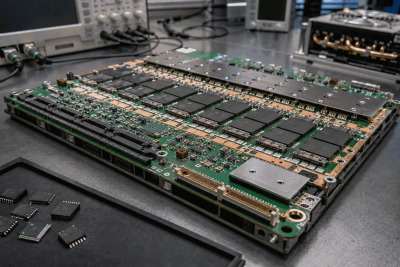
The Torrance, California-based company is aggressively shifting its focus from legacy mobile-charger applications to high-power gallium nitride (GaN) chips designed for AI data centers, grid systems, and industrial automation. By executing the equity sale swiftly, Navitas is capitalizing on recent stock price strength to secure funding for this strategic pivot, even as it means diluting existing shareholders.
Timing is critical for Navitas. The company is betting that investors will look past its declining revenue—first-quarter sales fell to $8.6 million from $14 million a year earlier—and instead focus on the long-term potential of its GaN technology in high-growth markets. The ATM offering, managed by Craig-Hallum Capital Group and UBS Securities, allows Navitas to sell shares incrementally into the market, minimizing price disruption. The firm is paying up to 3.0% of gross proceeds for the service.
Adding to the positive sentiment, Navitas announced a strategic partnership with Cyient Semiconductors, which has launched seven GaN power devices for the Indian market built on Navitas technology. Cyient will also serve as a secondary supplier for selected GaN devices, with Navitas CEO Chris Allexandre calling India “a key market” for the company’s high-power strategy. The collaboration underscores Navitas’s push to expand its footprint in emerging economies.
Despite the upbeat news, Navitas remains a small player in the semiconductor industry, competing against giants like Infineon Technologies, Power Integrations, and Texas Instruments, all of which have significantly larger resources. The company posted a GAAP operating loss of $27.8 million in the first quarter, though it held $221 million in cash and equivalents as of March 31, excluding the latest raise.
Management is framing the current period as a reset. CEO Chris Allexandre described the first quarter as a “return to top-line sequential growth,” highlighting the shift away from mobile and consumer markets. CFO Tonya Stevens echoed this optimism, citing “strong momentum” in core high-power segments and projecting continued sequential revenue gains through 2026.
The broader market context is also favorable. According to Reuters, semiconductor stocks have been a key driver of the recent U.S. equity rally, fueled by AI infrastructure spending that benefits not just Nvidia but the entire sector. However, some analysts warn that valuations may be stretched, adding an element of risk to Navitas’s growth story.
Navitas’s risks are clear: the company is tapping equity markets while still operating at a loss, betting that its AI power, grid, and industrial projects will convert development into real revenue. The company’s filings flag uncertainties around demand volatility, shifting standards, and the possibility that larger rivals could outspend or outpace it. For now, investors view the capital raise as a vote of confidence in the strategic shift, but if the funds fail to generate orders or a path to profitability, sentiment could reverse quickly.