Ticketmaster's proposed acquisition of ticketing rights at São Paulo FC's MorumBIS stadium has encountered a new obstacle. NewC, a rival bidder, has indicated it will match Ticketmaster's financial terms while also presenting a separate R$500 million fund structure to the club's board, according to a September 16 report from Blog do São Paulo.
It is important to clarify that this does not mean Ticketmaster has been outbid by R$360 million. The two figures pertain to different transactions, and NewC's latest proposal has not been formalized as a signed, financed offer. For Live Nation Entertainment (NYSE: LYV), Ticketmaster's parent company, this development is best interpreted as renewed execution risk on a single Brazilian venue contract rather than a fundamental change to the company's earnings outlook.
Market Reaction
Live Nation shares closed at $168.34 on September 17, down 1.63% from the previous close of $171.13, according to Yahoo Finance data. Trading volume stood at 1.45 million shares, approximately 15% below the average of the preceding three sessions. No pre-market activity was available at 4:08 a.m. New York time, and the São Paulo report was not accompanied by any official Live Nation filing or company release.
Understanding the Numbers
The R$500 million figure is not the price of a ticketing contract. São Paulo FC selected Ticketmaster in a competitive process to replace its existing ticketing operator. The club's decision was based on R$140 million in upfront liquidity, as reported by ge. This package includes a R$110 million loan, repayable over five years at Brazil's CDI rate plus 1.99%, along with R$30 million tied to other commercial arrangements. Ticketmaster would also manage a premium box for five years.
NewC's R$500 million headline is broader in scope. The proposal has been described as a fund aimed at restructuring the club's debts, with stadium-related revenue backing the structure. Earlier reports indicated that the club viewed this plan as preliminary and outside the ticketing tender, while NewC argued that its alternative was not evaluated on equal terms. The latest report suggests NewC now wants to both match Ticketmaster's financial proposal and revive its fund plan.
The distinction is crucial. A committed R$140 million advance carries a funding cost and a repayment schedule. A fund with capacity of up to R$500 million does not represent R$500 million in cash unless investors subscribe, conditions are met, and the collateral structure is accepted. São Paulo FC must also weigh how much control over future stadium receipts it is willing to exchange for immediate liquidity.
Strategic Significance for Live Nation
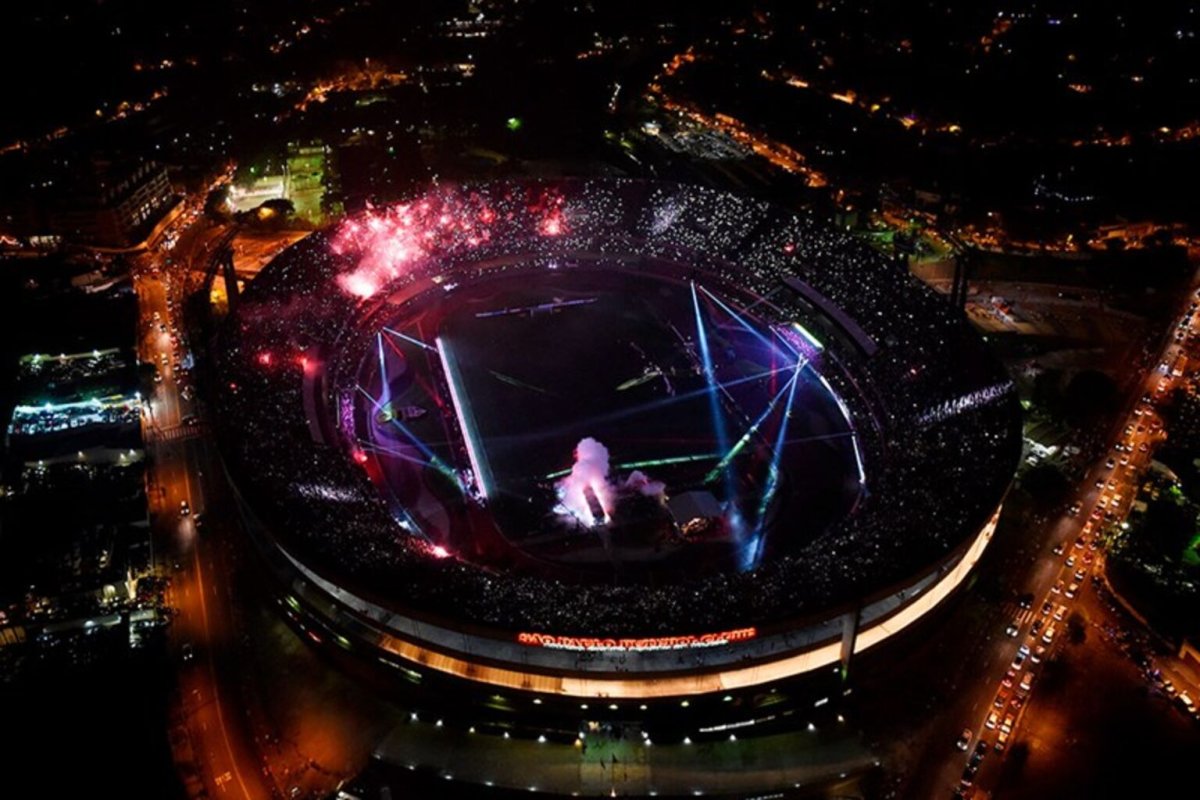
MorumBIS is a significant asset for São Paulo FC, with the club's official venue profile listing 66,435 saleable seats, 105 ticket windows, and 81 food-and-beverage outlets. These numbers explain why both ticketing data and adjacent commercial rights are valuable. However, they do not reveal Ticketmaster's expected fees, contract margins, or guaranteed ticket volumes.
On a group scale, MorumBIS is unlikely to move the needle in the next quarter. Live Nation's second-quarter filing shows Ticketing revenue of $852.2 million, up 15% year-over-year. The segment processed 90.1 million fee-bearing tickets and generated $331.0 million in adjusted operating income. One stadium agreement is small relative to that base.
The stronger bull case is strategic. Live Nation reported that international markets supplied 70% of Ticketmaster's adjusted operating income growth in the quarter. A long-term relationship with a 66,795-capacity stadium in South America could support more than football ticket sales if it deepens the company's ties across venue operations, concerts, sponsorship, and premium hospitality.
There is a serious counterargument. Winning a contract by offering a large advance can destroy value if the fee pool does not cover financing costs, implementation expenses, and client risk. The club's need for immediate cash gives Ticketmaster leverage over terms, but it also raises collection and governance questions. NewC's challenge could force richer economics or delay deployment, even if it never becomes a fully funded bid.
What to Watch
The next useful evidence will be documentary: a formal NewC proposal, a final club approval, a signed Ticketmaster agreement, and disclosure of contract duration, fee mechanics, and guarantees. Until any of those appear, the R$500 million figure remains a negotiating claim. Investors should judge the eventual contract by the cash committed and the return on that cash, not by which bidder produces the larger headline.