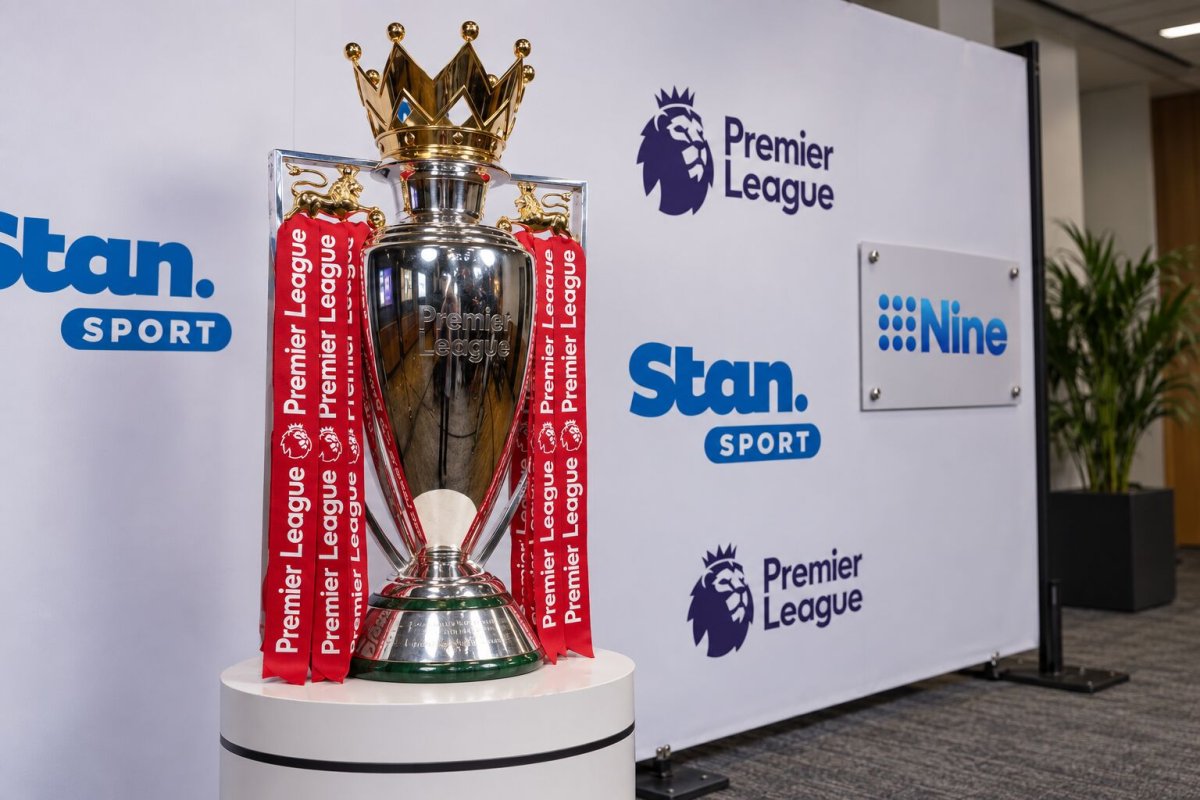
Investors in Nine Entertainment (ASX: NEC) saw the company's stock close at A$0.79 on Thursday, a 5.4% decline, following the announcement that the Australian media group had secured exclusive Premier League rights through the 2033/34 season. However, the apparent market sell-off is not as severe as it first appears, because the stock went ex-dividend on the same day for A$0.03 per share. Adjusting for that, the theoretical ex-dividend price was A$0.805, meaning the actual market reaction was a more modest 1.9% decline.
While the adjusted drop is less alarming, the deal itself carries significant strategic implications. The renewal provides Stan Sport with an exceptionally long runway, locking in rights for six additional seasons from 2028/29 through 2033/34. This stability comes with a controlled initial rights fee increase, but it also commits Nine to years of content cost inflation at a time when shareholders are increasingly focused on streaming profitability rather than just subscriber growth, especially as traditional television faces structural pressures.
What Nine Actually Bought
According to the ASX filing, Nine has extended its exclusive Australian streaming and broadcast rights for the Premier League for six seasons, ensuring every match remains live and exclusive on Stan Sport. The financial terms reveal that the FY29 rights fee will be broadly in line with FY28, followed by an annual escalation of approximately 3% across the extension period. The absolute fee amount was not disclosed, leaving investors without full transparency.
Another key element is the phasing out of legacy discounts previously offered to former Optus subscribers. Nine management has indicated that removing these discounts, combined with cost and revenue initiatives, should offset the financial impact. However, until detailed dollar figures are provided, investors cannot independently verify this assertion.
Stan's Financial Performance Supports the Bet
The initial season of Premier League coverage has demonstrated the property's value. In Nine's FY26 results, Stan revenue increased 16% to A$569.0 million, while EBITDA climbed 34% to A$80.6 million. The margin expanded to 14.2% from 12.3%, despite a 13% rise in costs to A$488.4 million, primarily due to higher sports investment.
Average Stan Sport subscriptions grew nearly 50%, largely driven by the Premier League. Total Stan paying subscribers reached approximately 2.3 million, with average subscriptions up 4% and average revenue per user (ARPU) rising 8% thanks to the sports add-on uptake and a July price increase. These metrics provide the strongest justification for the extension, as recent revenue and ARPU growth comfortably exceed the projected 3% annual rights fee escalation.
Share Price Movement and Ex-Dividend Adjustment
The stock fell from Wednesday's close of A$0.835 to A$0.79, touching an intraday low of A$0.775 on 14.2 million shares, which was roughly 81% higher volume than the previous session. Thursday was also the ex-date for Nine's A$0.03 unfranked final dividend, payable on October 22. Investors purchasing after the cutoff do not receive that cash, so a mechanical price adjustment was expected. The stock's close at A$0.79 was only A$0.015 below the dividend-adjusted reference price of A$0.805, indicating the market was cautious rather than emphatically negative.
Key Metric for NEC Investors
The success of this renewal hinges on Stan's ability to keep incremental subscription and advertising revenue ahead of incremental sports costs. Subscriber growth alone is an insufficient gauge, as premium rights can attract users while eroding the economics they create. The cleanest test is Stan's EBITDA margin, which improved by 1.9 percentage points in FY26 despite the first season of Premier League expense. Continued margin expansion would demonstrate that price increases, lower discounts, and advertising are absorbing the rights bill. Conversely, a reversal—especially if Sport subscriptions plateau after the initial migration from Optus—would transform the long contract from an asset into a fixed-cost burden.
Nine's broader financial position adds discipline to this evaluation. FY26 continuing-business EBITDA rose 17% to A$378.8 million, but net debt stood at about A$658 million following the QMS acquisition, representing a manageable 1.7 times leverage. This leaves limited room for error on sports rights, despite Stan's promising subscriber numbers.
For NEC holders, the deal removes strategic uncertainty and caps near-term fee inflation, but it does not eliminate execution risk. The next proof point will be whether Stan can preserve its 14.2% margin as the Premier League evolves from a powerful acquisition tool into an expensive retention product.
