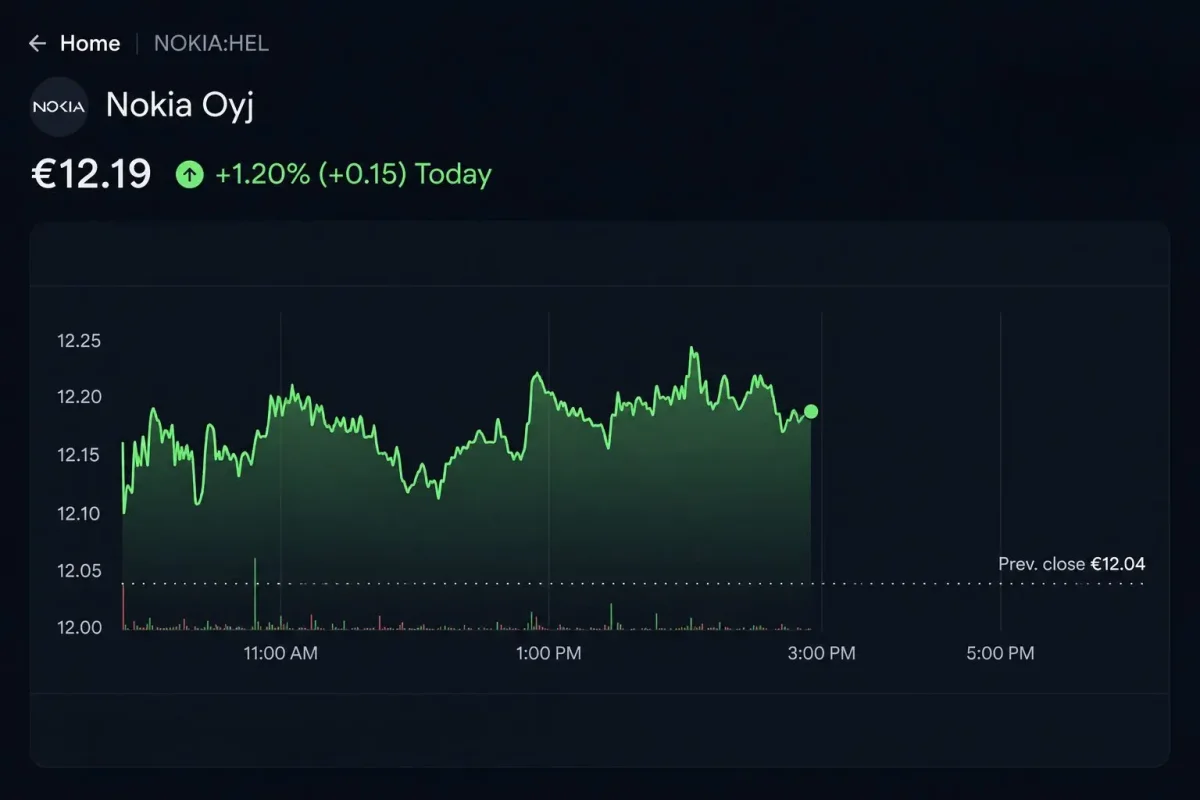
Nokia shares advanced 1.3% to €12.20 in Helsinki afternoon trading on Thursday, outperforming the OMXH25 index by roughly 2.2 percentage points. The move followed the announcement of a multi-year patent cross-licensing agreement with Lenovo and fresh initiatives in optical networking and defense.
Lenovo Patent Deal
The Finnish telecom equipment maker said it signed a multi-year cross-licence patent agreement with Lenovo, covering a range of technologies. The deal includes FRAND licensing for standard-essential patents, ensuring fair, reasonable, and non-discriminatory access. “The agreement reflects the strength of Nokia’s patent portfolio,” Susanna Martikainen, Nokia’s licensing chief, said in a statement. However, financial terms were not disclosed, leaving investors unable to model the deal's direct revenue impact.
Optical Networking and AI Investments
Nokia also detailed plans to invest approximately $30 million to expand its Allentown, Pennsylvania site, boosting photonic chip testing and packaging capacity by up to tenfold. The new facility is expected to come online by the end of the third quarter, with employment at the location projected to exceed 500. “The AI supercycle is fundamentally reshaping network and infrastructure requirements,” CEO Justin Hotard said. This aligns with Nokia’s first-quarter results, where sales to AI and cloud customers surged 49% and orders reached €1 billion. Comparable operating profit rose 54% to €281 million, driven by higher optical-networking demand.
Defense and Subsea Cable Contracts
On the defense front, Nokia announced a collaboration with KNDS, the Franco-German armored vehicle group, to integrate its deployable 5G technology into KNDS’s VBCI vehicle. The system aims to provide secure communications for soldiers and unmanned systems in the field. Ari Kynäslahti, head of Nokia Defense, noted that the project demonstrates “high-performance connectivity can move with the mission.” Additionally, Nokia will upgrade the Malaysia-Cambodia-Thailand subsea cable for Symphony Communication, tripling capacity to 30 terabits per second per fiber pair. Contract values for both projects were not disclosed.
Market Context and Risks
Nokia’s stock has surged roughly 119% year-to-date as investors price in higher expectations from AI infrastructure, optical networking, and licensing. The rally provides some leeway, but the company’s ability to convert headlines into tangible sales and earnings is now under scrutiny. Key risks include potential pullbacks in cloud spending by major players, which could leave extra capacity idle, as well as variables like customer network budgets, component supply, currency fluctuations, tariffs, and the timing of patent renewal revenues. Disappointment in any of these areas could weigh on growth and squeeze margins.
Q2 Earnings Preview
Nokia’s next major test comes on July 23 with its second-quarter earnings report. Investors will be watching for signs that first-quarter AI orders are translating into revenue, and whether higher spending on optical capacity is pressuring margins. The Lenovo deal, while positive for sentiment, remains an unknown in terms of financial contribution.
In comparison, Ericsson’s B shares rose 0.8% to 110.60 Swedish crowns in Stockholm, but Nokia’s outperformance against its Nordic rival was notable.
