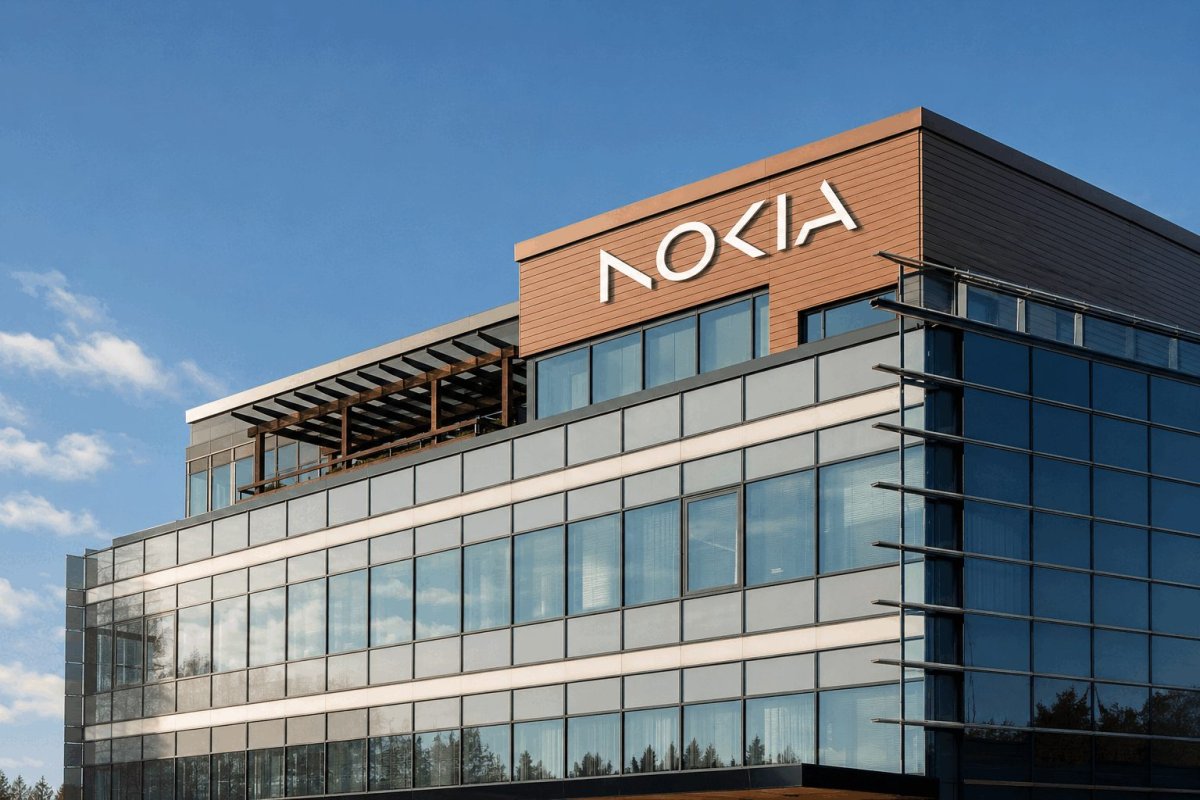
Nokia Oyj (NYSE: NOK) witnessed a notable rebound on Tuesday, with its American Depositary Receipts (ADRs) climbing 3.4% to $9.44 during regular trading. This uptick comes after four consecutive sessions of losses, offering a glimmer of relief to investors who have seen the stock tumble nearly 48% from its June peak of $17.45. Despite the bounce, the shares remain 45.9% below that 52-week high, underscoring the challenging market environment for the Finnish telecom equipment maker.
AI Order Backlog: A Key Catalyst
The primary driver of investor optimism is Nokia's expanding order book in the artificial intelligence (AI) and cloud computing sectors. In the second quarter, the company reported a staggering €2.8 billion in AI and cloud orders, which dwarfed the €446 million in quarterly sales to those clients by more than sixfold. This order intake, highlighted by J.P. Morgan analyst Sandeep Deshpande as "the key number," signals robust demand for Nokia's data-center and networking solutions, even as overall market conditions remain volatile.
CEO Justin Hotard emphasized the demand-supply dynamic, stating, "Demand remains strong, while supply continues to be the main industry constraint." This sentiment aligns with the company's expectations that approximately 50% of these orders will convert into revenue over the next 12 months, translating to around €1.4 billion in potential sales. Such a conversion would represent a threefold increase from the most recent quarter's AI and cloud revenue, a metric that could significantly bolster Nokia's financial performance.
Financial Performance and Segment Strength
Nokia's second-quarter results provided operational backing to the order thesis. Comparable net sales rose 8% year-over-year to €4.815 billion, while operating profit climbed 18% to €434 million. The operating margin expanded by 70 basis points to 9.0%, and diluted earnings per share surged 75% to €0.07. These figures indicate that the company is not only growing its top line but also improving profitability, a positive sign for investors.
Segment-wise, Network Infrastructure proved to be a standout, with net sales up 12% to €2.037 billion and operating margin expanding by 1.7 percentage points to 8.1%. Within this segment, Optical Networks grew 20% in constant currency terms, and IP Networks advanced 16%. This faster expansion in optical and IP segments is particularly encouraging, as it positions Nokia to capitalize on data-center investment trends, reducing its reliance on the more sluggish carrier radio expenditure. In contrast, Mobile Infrastructure saw its margin contract by 0.6 points to 11.6%, reflecting ongoing challenges in that area.
Analyst Sentiment and Price Targets
Wall Street remains largely bullish on Nokia, with all five analysts who have issued ratings in the past three months recommending a buy. The mean price target stands at $17.89, representing an 89.6% premium to the current trading price. Targets range from $15 (Argus Research, Craig-Hallum) to $21 (J.P. Morgan), indicating a broad spread but a consistent positive outlook. Analysts like Jim Kelleher (Argus) and Tim Savageaux (Northland) reaffirmed their buy ratings in late July, while Sandeep Deshpande (J.P. Morgan) maintained a $21 target in June.
However, the wide range of targets and the fact that they were set before the recent four-session decline suggest that the market may still be pricing in significant uncertainty. The key test will be Nokia's ability to convert its AI order backlog into actual revenue. If the company falls short of the projected €1.4 billion conversion, the premium to analyst targets could be at risk.
Guidance and Risks
Nokia has maintained its forecast for comparable operating profit this year at €2.1 billion to €2.6 billion, with a technical €100 million adjustment related to discontinued operations. Management expects third-quarter sales to increase by 3% to 7% sequentially, with profit remaining broadly stable before a projected stronger fourth quarter. This guidance, while steady, does not include an upgrade, which some investors might have hoped for given the AI order strength.
Risks remain tangible. Shortages of memory and other components could delay deliveries or inflate costs, potentially squeezing margins. Additionally, Nokia is set to incur €800 million in restructuring charges in 2026, which could weigh on near-term earnings. The timeline from order to revenue is also subject to shifts, adding another layer of uncertainty.
Market Context and Outlook
The broader market context is mixed. Nokia's ADR volume on Tuesday was 36.66 million shares, representing about 42% of its typical daily average, suggesting that the rebound was not accompanied by a surge in trading activity. The company's market value stood at $55.11 billion based on the indicated ADR price. While the AI order backlog provides a compelling growth narrative, the stock's significant pullback from its peak indicates that investors are cautious about near-term execution risks.
For now, the focus remains on conversion. Nokia's ability to turn its €2.8 billion AI order book into revenue will be closely watched in the coming quarters. If successful, the stock could see a meaningful re-rating toward analyst targets. If not, the current premium to those targets may prove unsustainable. As the market digests these dynamics, Nokia's shares are likely to remain volatile, offering both opportunities and risks for investors.
