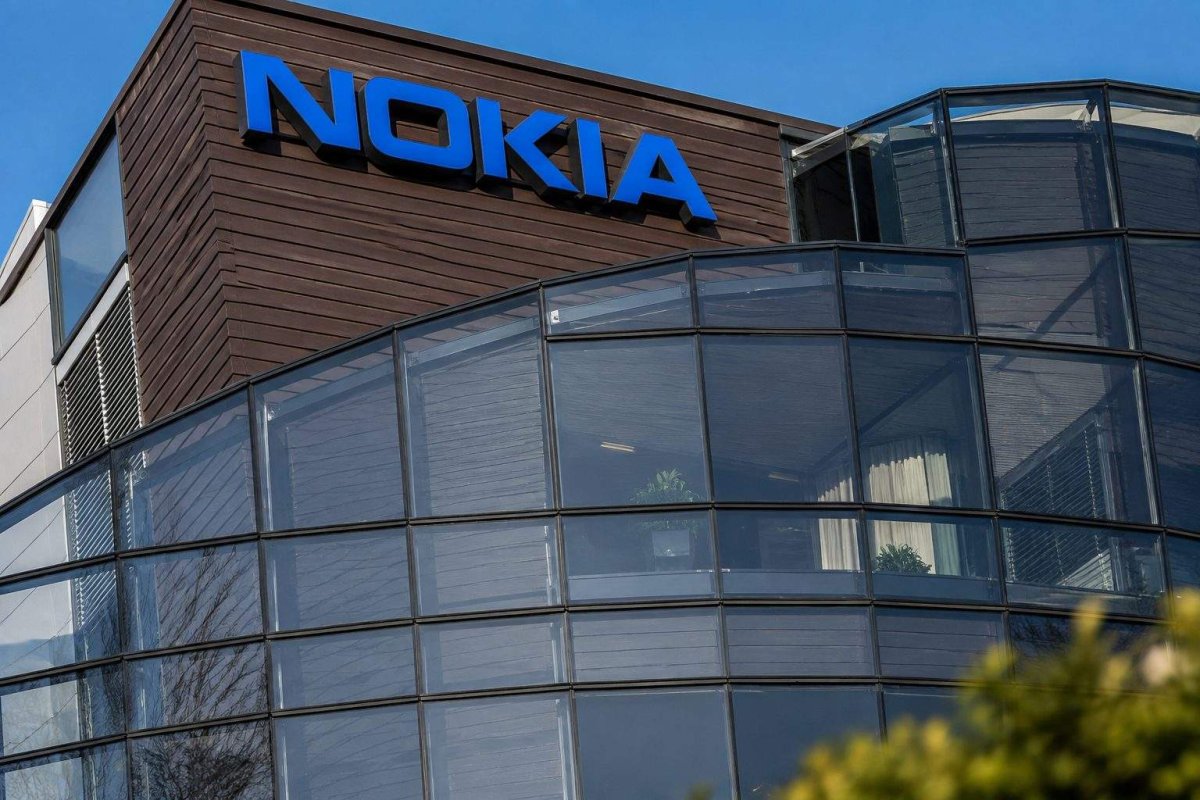
HELSINKI — Nokia's stock opened lower on the Nasdaq Helsinki on Monday, continuing a sharp valuation reset that has wiped out a significant portion of its AI-driven gains. The Finnish telecom equipment maker saw its shares decline by 1.3% to approximately €7.85 during midday trading, underperforming Finland's blue-chip OMX Helsinki index by about 0.8 percentage point.
The drop came without any new company announcement over the weekend, pointing to persistent investor concerns about the company's ability to convert its record order book into cash. While Nokia has been a major beneficiary of the AI infrastructure boom, the market is now demanding tangible evidence of profitability and cash generation rather than just order headlines.
AI Orders vs. Cash Conversion
The core issue lies in the disconnect between incoming orders and the company's valuation. In the second quarter, Nokia secured €2.8 billion in AI and cloud orders, a figure that equates to 6.3 times its quarterly revenue from that segment. However, the company has maintained its outlook for annual operational profits, suggesting that the financial benefits of these orders will take time to materialize.
Investors are increasingly focused on the timing of order conversion. Nokia anticipates converting approximately half of these orders into revenue within the next 12 months, translating to roughly €1.4 billion — or about 3.1 times its second-quarter AI and cloud sales. While longer conversion periods offer better forward visibility, they also increase working capital requirements and delivery risks.
Q2 Performance: Strong Results, Weak Stock Reaction
Nokia's operational performance in the second quarter actually exceeded market expectations. Comparable operating profit came in at €434 million, up 18% year-over-year and beating the LSEG consensus of €382 million by 13.6%. Comparable net sales rose 8% to €4.815 billion, and the comparable operating margin expanded 70 basis points to 9.0%.
Chief Executive Justin Hotard emphasized that "demand remains strong, while supply continues to be the main industry constraint." Despite these positive results, the stock has continued to slide, indicating that investors are looking beyond the immediate numbers.
Segment Dynamics: Growth vs. Profitability
A closer look at Nokia's business segments reveals a trade-off. The AI and cloud segment, which is driving growth, posted a 105% increase in net sales to €446 million. However, its operating margin remains relatively thin. Network Infrastructure, which includes AI-related products, recorded an 8.1% operating margin, up 170 basis points, but still below the 11.6% margin achieved by Mobile Infrastructure.
This margin differential underscores the challenge Nokia faces. To justify its AI-driven valuation, the company must demonstrate that it can achieve sustained operating leverage in its faster-growing segments.
Industry Context: Ericsson's Contrast
Sweden's Ericsson, Nokia's main rival, provided a contrasting picture. Ericsson reported a 6% decline in quarterly sales, but its adjusted EBIT margin stood at 12.4%. However, Ericsson also cautioned that future margins could be squeezed by AI-driven cost inflation for components, a warning that resonates with Nokia's situation.
Comparing the two companies, Nokia's sales growth of 8% far outpaced Ericsson's -6%, and its adjusted profit growth of 18% was also stronger. However, Ericsson's adjusted operating margin of 12.4% was considerably higher than Nokia's 9.0%.
Valuation and Cash Flow: The Key Test
Nokia's market capitalization stood at approximately €45.1 billion at midday. Using the company's cash conversion target of 55% to 75% on the midpoint of its profit guidance range (€2.35 billion), the implied free cash flow would be between €1.29 billion and €1.76 billion. This translates to a free cash flow yield of just 2.9% to 3.9% — a modest return that may not satisfy investors accustomed to the high multiples of AI plays.
Risks remain concentrated on supply chain constraints, component costs, restructuring expenses, and the timing of order conversions. Nokia has guided for restructuring-related cash outflows of €700 million to €800 million in 2026, which could further pressure cash generation.
Outlook: A Test of Patience
Monday's price action sets up a straightforward test for investors. The demand for Nokia's AI and cloud products is evident, but the market is waiting for proof that these orders can be converted into profitable revenue and free cash flow. Until then, the stock may continue to face downward pressure, despite its year-to-date gain of 41%.
The company's ability to manage supply constraints, control costs, and execute on its order pipeline will be critical in determining whether the current valuation reset is temporary or the beginning of a more prolonged correction.
