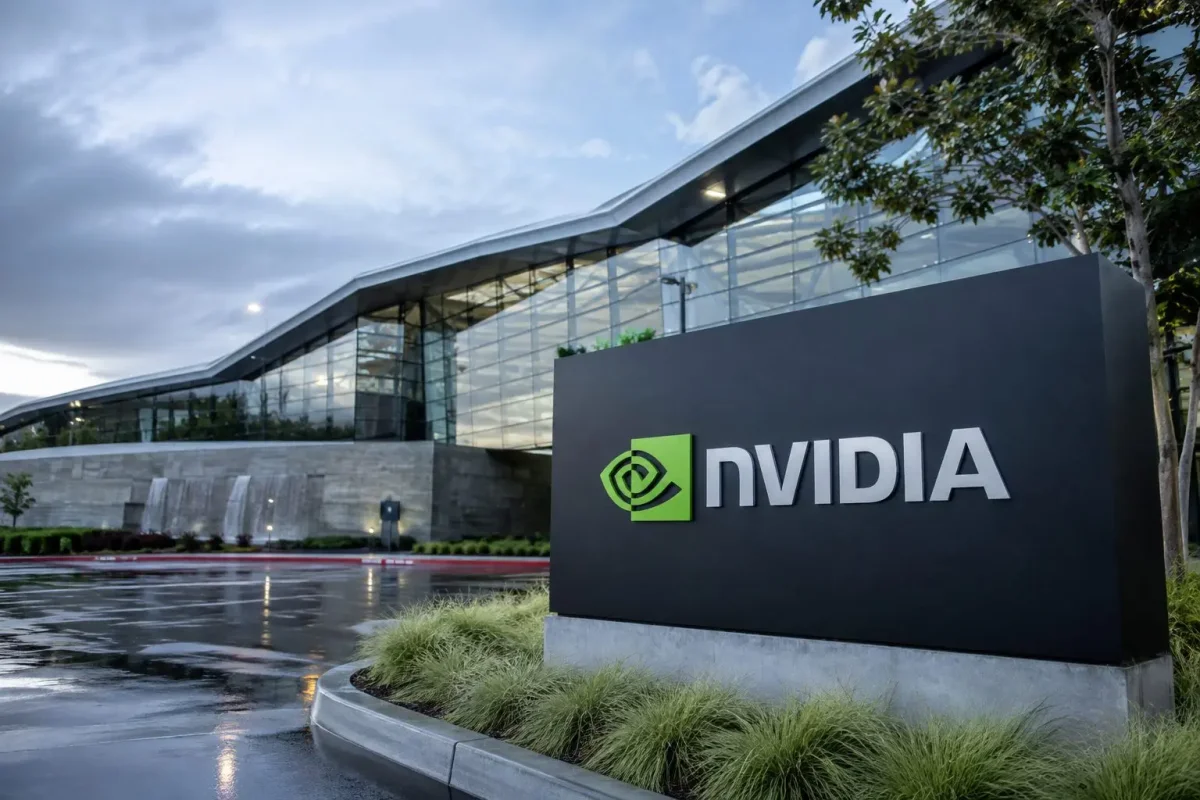
NVIDIA Corporation (NASDAQ:NVDA) ended Friday's trading session at $200.75, marking a 2.9% daily gain, though the stock still closed the week 2.9% lower. The move came as Amazon.com, Inc. (NASDAQ:AMZN) signaled a significant expansion in its artificial intelligence infrastructure spending, reinforcing the sustained demand for Nvidia's data center processors.
Amazon's Capital Expenditure Surge
Amazon announced a 10% increase in its projected 2026 capital expenditures, bringing the total to $220 billion. This announcement, coupled with a 37% year-over-year jump in AWS revenue to $42.2 billion, provided a strong vote of confidence in the AI-driven cloud computing market. However, the company's trailing free cash flow swung to a $7.6 billion deficit, highlighting the heavy investment phase.
Amazon CEO Andy Jassy emphasized the company's deep partnership with Nvidia, noting that AWS clients will continue to seek Nvidia systems. He also revealed that Amazon's in-house chip division has reached an annualized run rate exceeding $25 billion, underscoring the competitive landscape Nvidia faces.
Nvidia's Data Center Dominance
Nvidia's most recent quarterly results underscored the critical role of its data center segment, which accounted for 92.1% of total revenue. In the first quarter of fiscal 2027, data center sales surged 92% year-over-year to $75.2 billion, while edge computing grew 29% to $6.4 billion. Overall, the company reported a record $81.6 billion in revenue, an 85% increase from the prior year.
Despite these strong fundamentals, Nvidia's stock experienced volatility during the week. After reaching a Monday peak of $208.75, shares fell 9% by Wednesday's close before rebounding 5.7% by Friday. The weekly close was $6.09 below the prior Friday's level.
Market Dynamics and Investor Sentiment
The contrasting performance between Nvidia and other semiconductor stocks last week suggests investors are not broadly exiting the sector. While Nvidia rose 2.93% on Friday, Advanced Micro Devices (NASDAQ:AMD) fell 1.90%, and the PHLX Semiconductor Index (SOX) gained just 0.07%. Broadcom (NASDAQ:AVGO) showed resilience with a 0.37% daily gain and a 1.93% weekly advance.
Analysts view Amazon's results as a key validation for the AI spending cycle. "The new dividing line is whether unprecedented spending is producing visible, near-term revenue and margin expansion," said Bill Birmingham, managing director at REX Financial. Amazon's shares jumped 15.3% on Friday, reflecting investor approval of its AWS margin improvements.
Nvidia's Outlook and Upcoming Catalysts
Looking ahead, Nvidia projects second-quarter revenue of $91 billion, plus or minus 2%, excluding any data-center compute sales to China. The company also recently disclosed an investment in Safe Superintelligence Inc. (SSI), aiming to expand SSI's computing capability tenfold.
Investors will closely monitor several upcoming events, including the July ISM manufacturing index on Monday, AMD's second-quarter earnings on Tuesday, and the July U.S. employment report on Friday. AMD's guidance calls for $11.2 billion in revenue, a 46% year-over-year increase, with a non-GAAP gross margin of 56%.
Nvidia is scheduled to release its own second-quarter earnings on August 26. In the interim, trading is likely to be influenced by customer results and broader economic data.
Risks and Considerations
Key risks to Nvidia's growth include the development of custom chips by major customers, potential regulatory restrictions in China, and the possibility of tightening customer budgets. Any slowdown in infrastructure spending could rapidly impact Nvidia's data center-centric revenue model.
Friday's market action reaffirmed that Nvidia remains a primary beneficiary of AI demand. However, last week's pullback serves as a reminder that spending alone may no longer be sufficient to drive sustained valuation gains.