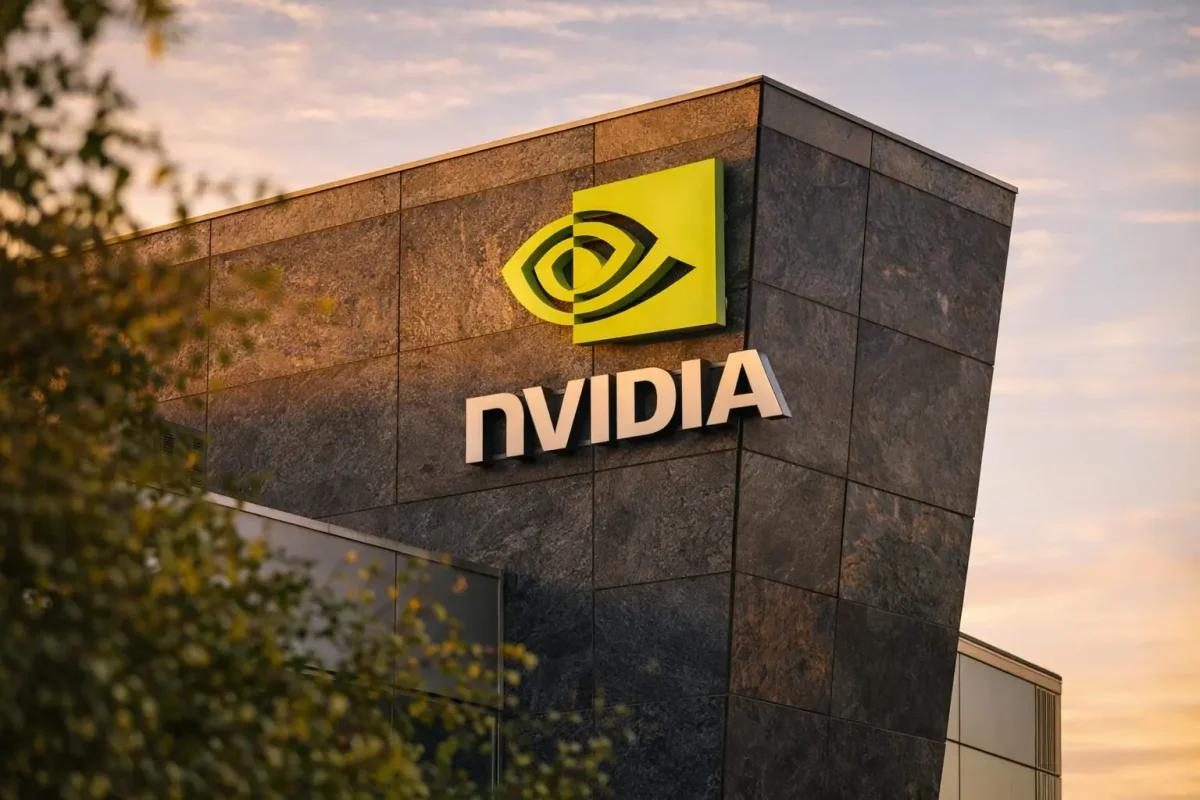
Nvidia Corporation's shares faced a potential lower opening on Thursday, March 12, 2026, as the semiconductor giant revealed a significant strategic investment. The company is committing $2 billion to acquire an 8.3% ownership position in Nebius, a specialized cloud services provider focused on artificial intelligence infrastructure. This capital deployment arrives with Nvidia's stock trading close to its previous closing price of $186.03, maintaining a market valuation of approximately $4.5 trillion. Early indications from premarket activity suggested a modest decline at the opening bell.
Strategic Capital Deployment and Shareholder Pressure
This transaction signals a notable evolution in Nvidia's corporate strategy, moving beyond its core role as a hardware supplier to actively shaping the AI ecosystem through its substantial balance sheet. The company is increasingly using its financial resources to steer the direction of AI infrastructure development rather than merely supplying it. Despite reporting extraordinarily robust financial results, some investors continue to urge management to consider returning a larger portion of Nvidia's growing cash reserves to shareholders through dividends or buybacks, advocating for a balance between reinvestment in the AI landscape and direct shareholder returns.
Mounting Competitive Pressures
The competitive environment for AI semiconductors is intensifying rapidly. In a significant development on Wednesday, Meta Platforms announced an ambitious roadmap to introduce four successive generations of its proprietary MTIA (Meta Training and Inference Accelerator) chips within the next 24 months. A substantial portion of this development effort is concentrated on inference workloads—the phase where trained AI models process user queries and generate responses. Notably, Meta emphasized it will continue to procure hardware from established suppliers like Nvidia and AMD to meet its needs. "We are currently witnessing an explosion in inference demand," stated Yee Jiun Song, a Meta engineering executive, highlighting the strategic rationale behind the push.
According to a regulatory filing, Nvidia will acquire its stake in Nebius at a price of $94.94 per share. Nebius operates as a "neocloud"—a newer, smaller cloud provider specializing in AI-optimized services. The company has outlined plans to expand its data-center capacity beyond 5 gigawatts by the year 2030. Nvidia's CEO, Jensen Huang, characterized Nebius as "constructing an AI cloud architected for the agentic era," underscoring the forward-looking nature of the partnership.
A Pattern of Strategic Investments
The Nebius disclosure followed closely on the heels of another strategic announcement. Thinking Machines Lab, a startup led by former OpenAI technical chief Mira Murati, entered into a multiyear agreement with Nvidia. The deal includes a financial investment from the chipmaker and guarantees access to at least one gigawatt of computing power from Nvidia's Vera Rubin systems. Industry reports suggest the total value of computing power involved could approach $50 billion, illustrating Nvidia's expanding dual role as both a critical supplier and a strategic financier within the AI value chain.
Nebius represents just one of several major financial commitments from Nvidia's treasury. Earlier in the month, the company revealed plans to invest $2 billion each in Lumentum Holdings and Coherent Corporation. These investments are strategically aimed at securing advanced optical and networking technologies essential for accelerating AI systems, providing further evidence that Nvidia is aggressively reinforcing its comprehensive hardware ecosystem and is not hesitating to deploy capital to maintain its technological edge.
Record Financial Performance and Guidance
Nvidia's fundamental business strength remains undeniable. In late February, the company reported record quarterly revenue of $68.1 billion. A dominant $62.3 billion of that total was generated by its data-center product segment. For the current quarter, management provided revenue guidance of approximately $78 billion, plus or minus 2%. This forecast explicitly excludes any data-center compute sales destined for the Chinese market, reflecting ongoing geopolitical trade restrictions.
Evolving Competitive Dynamics
The investment thesis for Nvidia is becoming more complex as the competitive landscape shifts. "The competitive picture is also shifting," noted eMarketer analyst Jacob Bourne following the earnings report. He pointed to Meta's procurement beginning to include AMD products and major cloud providers aggressively funding their own custom silicon projects. For Nvidia, this environment suggests robust sales may continue in the near term, but capturing the next wave of AI infrastructure spending will likely require more effort as customers diversify their supply chains.
Signals of heightened competition are proliferating. Last week, Broadcom—a partner to Meta on certain custom-chip initiatives—projected it would generate over $100 billion in AI chip sales by 2027. Concurrently, AMD's supply agreement with Meta indicates that large technology firms are deliberately splitting their chip orders among multiple vendors to avoid over-reliance on any single supplier. "They are locking in supply," observed Matt Britzman, an analyst at Hargreaves Lansdown, describing Meta's strategy to secure capacity and reduce dependency.
Upcoming Catalyst: GTC Conference
Market attention now turns to Nvidia's upcoming GTC developer conference, scheduled to commence in San Jose on March 16. The event is expected to spotlight key industry themes such as AI inference, "AI factories," and next-generation infrastructure. These topics align directly with the strategic questions investors are weighing in the wake of the Nebius investment and Meta's newly detailed chip roadmap, making the conference a critical venue for Nvidia to articulate its vision and address competitive concerns.