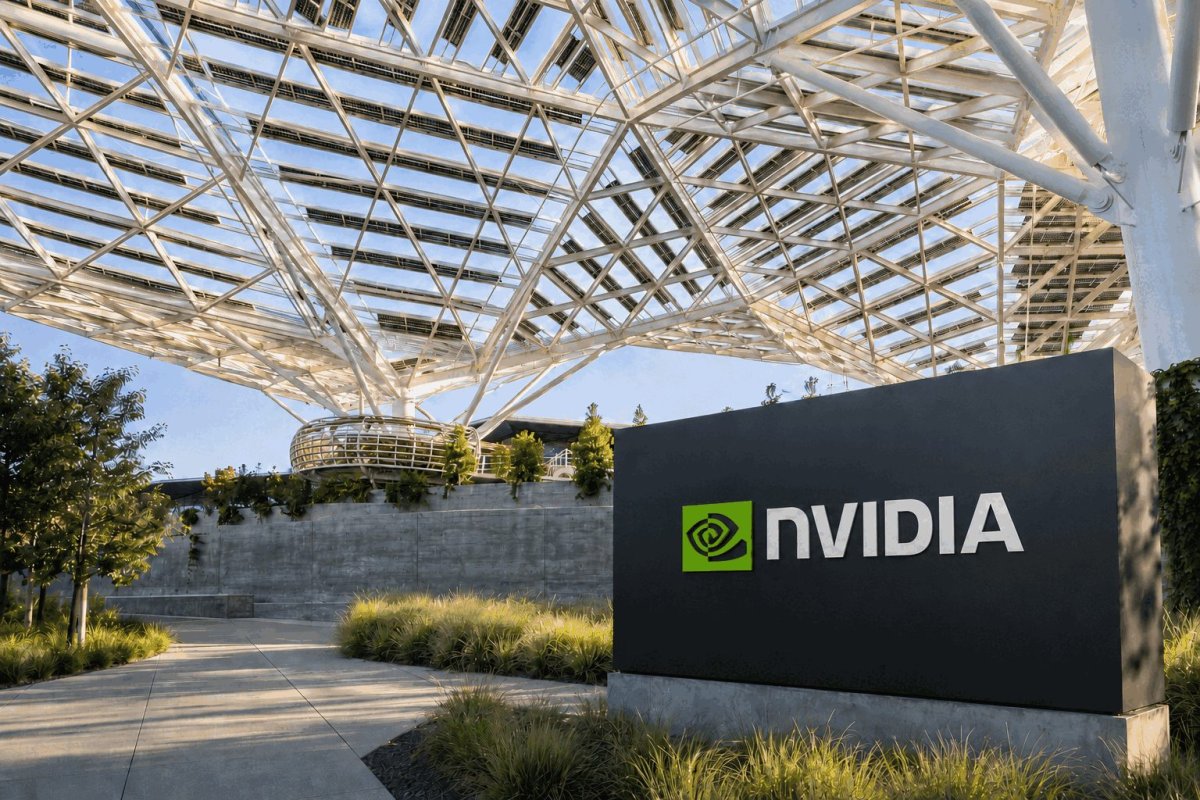
Nvidia Corporation (NASDAQ:NVDA) disclosed in its latest 13F filing that it holds $63.44 billion in U.S.-listed equities as of June 30, 2026. The portfolio is heavily concentrated, with Intel (NASDAQ:INTC) and SpaceX (NASDAQ:SPCX) together accounting for 80.3% of the total value. This concentration introduces a new layer of earnings volatility ahead of Nvidia's fiscal second-quarter results, scheduled for release on August 26.
The filing, made public on Friday, shows Intel as the largest position at $29.99 billion, representing 47.3% of the portfolio. SpaceX follows with $20.98 billion, or 33.1%. Other notable holdings include CoreWeave (NASDAQ:CRWV) at $4.70 billion, Coherent (NYSE:COHR) at $3.07 billion, Nokia (NYSE:NOK) at $2.21 billion, and Synopsys (NASDAQ:SNPS) at $2.15 billion. Smaller positions in Nebius (NASDAQ:NBIS) and Generate Biomedicines (NASDAQ:GENB) total $342.8 million.
Compared to the previous quarter, Nvidia's equity portfolio value surged from $18.37 billion to $42.46 billion, but this increase is largely attributed to market appreciation and the inclusion of SpaceX, which listed in June. The share counts for seven previously held positions remained unchanged, indicating that Nvidia did not make significant new purchases during the quarter.
The portfolio's impact on Nvidia's financials is notable. The $63.44 billion in listed equities represents approximately 1.16% of the company's $5.45 trillion market capitalization. In the first quarter of fiscal 2027, Nvidia recorded net equity-security gains of $15.94 billion, which contributed to GAAP diluted earnings per share of $2.39, compared to $1.87 on a non-GAAP basis. This gap highlights how equity valuations can sway reported profits.
SpaceX, in particular, illustrates the potential downside. According to the Financial Times, Nvidia's stake in SpaceX was valued at about $17 billion after the initial post-IPO surge subsided, a decrease of roughly $4 billion from the June filing valuation. Such swings could lead to significant GAAP earnings volatility in future quarters.
Despite the portfolio's influence on earnings, Nvidia's core business remains the primary driver of its valuation. The company reported first-quarter revenue of $81.62 billion, an 85% year-over-year increase, with data center revenue climbing 92% to $75.2 billion. CEO Jensen Huang noted that AI-factory expansion is "accelerating at extraordinary speed." Nvidia projects second-quarter revenue of $91 billion, with a possible 2% fluctuation, and excludes any data center compute revenue from China in its estimates.
Analysts remain largely bullish on Nvidia, with consensus ratings of "Strong Buy" and an average price target of $302.83, implying a 34.5% upside from Friday's closing price of $225.16. However, price targets range widely from $180 to $500, underscoring the divergence in views. KeyBanc, Morgan Stanley, and TD Cowen have set targets of $330, $288, and $275, respectively.
Investors will be watching Nvidia's upcoming earnings report for signs of operational momentum, particularly in data center growth and margin trends, while also monitoring any further developments in the equity portfolio. The filing adds a layer of complexity to Nvidia's earnings story, as fluctuations in its equity holdings could obscure underlying business performance.