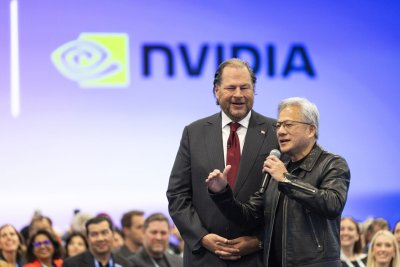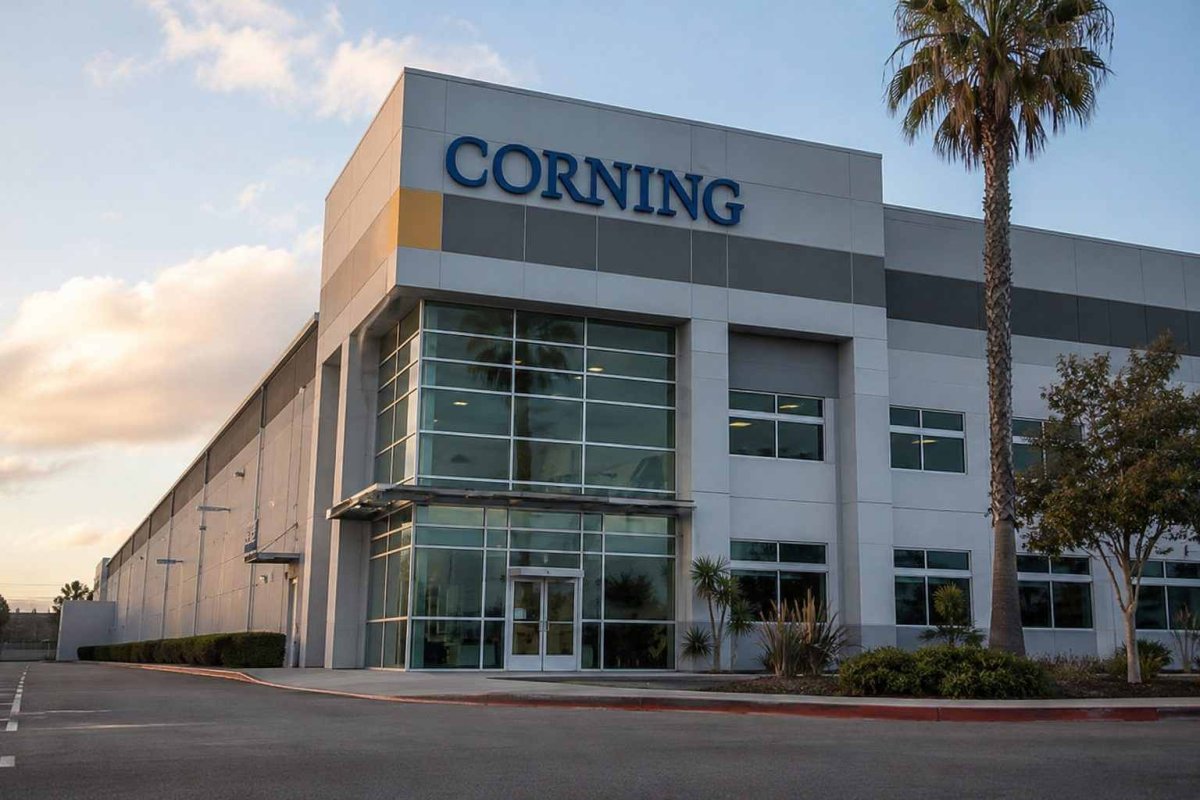
In a move that underscores the deepening ties between AI infrastructure and advanced manufacturing, Nvidia has made a multi-billion dollar upfront payment to Corning Incorporated to support the expansion of U.S. optical fiber production. The deal, which includes Nvidia purchasing $500 million in Corning warrants, was confirmed by both CEOs in a CNBC interview and goes well beyond the equity-linked arrangement disclosed earlier this week.
Corning, traditionally known for its glass, display, and life-sciences businesses, is now being drawn into the heart of the AI data-center boom. Optical fiber—the ultra-thin glass threads that transmit data at high speeds using light—has become a critical component for connecting thousands of processors in massive computing hubs. The agreement positions Corning to capitalize on surging demand from Nvidia and other AI infrastructure players scrambling to secure fiber for data movement between chips, servers, and entire data-center clusters.
The multiyear deal, announced on May 6, covers both commercial and technology collaboration. Corning plans to increase its U.S. optical-connectivity output by ten times and boost domestic fiber-making by more than 50%. To achieve this, the company will build three new facilities in North Carolina and Texas, a move expected to create over 3,000 jobs. Nvidia's prepayment, described by CEO Jensen Huang as a "multi-billion-dollar prepayment," is separate from the equity component, which gives Nvidia the right to take a roughly $3 billion position in Corning stock.
According to a May 6 filing, Nvidia acquired $500 million in Corning warrants. The primary warrant allows Nvidia to purchase up to 15 million Corning shares at $180 each, while a pre-funded warrant covers an additional 3 million shares at just $0.0001 apiece. Warrants enable the holder to buy stock at a fixed price within a specified timeframe, providing a potential upside as Corning's growth story unfolds.
Corning's strategy involves sharing the financial risk of ramping up manufacturing capacity. CFO Ed Schlesinger noted that the company will seek to lock in long-term agreements with customers to appropriately distribute the investment burden while aiming to boost free cash flow. This approach aligns with Corning's updated long-term guidance, unveiled at the May 6 investor event. The company now targets an annualized sales run rate of $20 billion by late 2026, with internal goals of reaching $30 billion by 2028 and $40 billion by 2030. The annualized run rate reflects the current pace of sales extended over a year, distinct from actual annual revenue.
The Nvidia deal follows several other significant AI contracts for Corning. In April, the company announced long-term agreements with two additional hyperscale customers, comparable to its multiyear, up-to-$6 billion arrangement with Meta. First-quarter core sales reached $4.35 billion, an 18% increase year-over-year, driven largely by the Optical Communications segment, which saw a 36% jump in sales. In contrast, Glass Innovations grew just 1%, and Automotive dipped 1%, highlighting the AI-driven shift in Corning's business mix.
Competitive dynamics are also evolving. Seaport analyst Jay Goldberg noted that Nvidia's deal with Corning locks in optical fiber components before demand fully ramps up, while Nvidia has also forged ties with other optical players like Lumentum Holdings and Coherent. This preemptive strategy underscores the critical role of optical connectivity in AI infrastructure.
Despite the positive news, execution remains a key risk. Corning has flagged uncertainties around its partnership with Nvidia, new facility construction, hiring plans, and AI-fueled demand. Potential supply-chain issues, trade friction, shifting product demand, and industry capacity swings could alter the outcome. Investors will be watching closely to see if Corning can convert Nvidia's capital and customer interest into sustained revenue growth rather than just expanding its factory footprint.
As of the latest trading, Corning shares closed at $186.94, up 2.4% from the previous close, after briefly hitting $198.19 on Friday. The stock surged more than 19% on May 6 following the partnership announcement and upgraded sales targets. The market's reaction reflects optimism about Corning's role in the AI revolution, but the company's ability to execute on its ambitious plans will determine whether this momentum is sustainable.