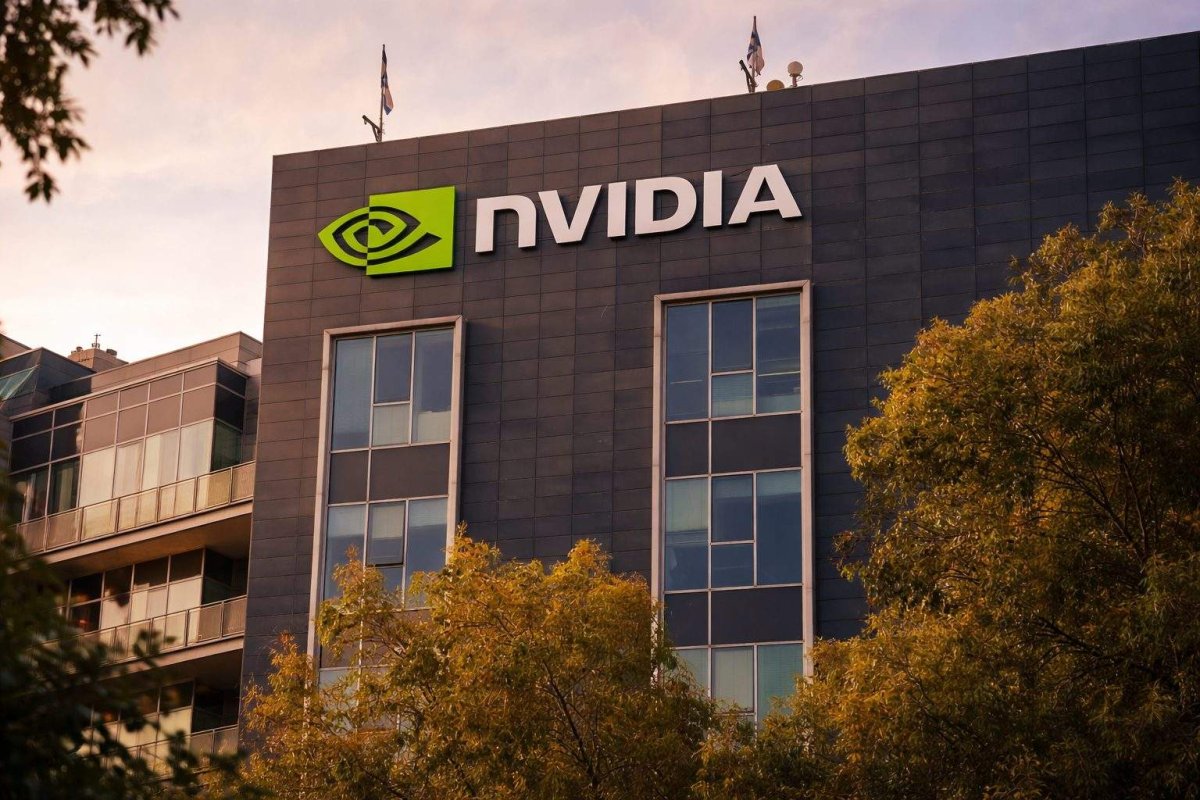
Shares of Nvidia Corporation retreated sharply in Thursday's trading session, closing down approximately 4% at $187.60. This decline occurred despite the semiconductor leader announcing record-breaking financial results for its fourth fiscal quarter and providing a robust sales forecast for the current period. The sell-off highlights growing investor scrutiny over stock valuations and the company's capital allocation strategy, even in the face of seemingly unstoppable demand for its artificial intelligence processors.
Market-Wide Tech Pressure
The weakness in Nvidia, a bellwether for the AI sector, exerted significant pressure on the broader technology landscape. By late morning, the Nasdaq Composite Index had fallen 1.5%, while the S&P 500 slipped 0.87%. The Philadelphia SE Semiconductor Index, which had reached a record high just a day prior, tumbled 3.4%. Other major chip stocks like Advanced Micro Devices and Broadcom also traded lower, dragged down by Nvidia's momentum.
Analysts pointed to rich valuations as a core concern. "The main issue is valuations," stated Jake Johnston, a portfolio manager at Advisors Asset Management, who characterized some technology stocks as being "priced for perfection." The pullback suggests the market is grappling with how to price equities that have already delivered exceptional growth, with Nvidia's recent performance serving as a critical indicator for the health of the AI investment cycle.
Record Results Meet Investor Skepticism
Financially, Nvidia's report was formidable. The company posted fourth-quarter revenue of $68.1 billion, a staggering 73% increase from the same period a year ago. The overwhelming driver was its data-center segment, which generated $62.3 billion in sales. For the first quarter of fiscal 2027, Nvidia provided revenue guidance of approximately $78.0 billion, plus or minus 2%. Notably, this outlook does not include any meaningful data-center compute revenue from China, reflecting ongoing export restrictions.
CEO Jensen Huang declared that "the agentic AI inflection point has arrived," underscoring the company's central role in the industry's evolution. Furthermore, Nvidia returned a substantial $41.1 billion to shareholders during its 2026 fiscal year and has $58.5 billion remaining under its current share repurchase authorization. A nominal dividend of $0.01 per share is scheduled for payment on April 1 to shareholders of record on March 11.
Questions on Capital Deployment
Despite these strong fundamentals, investor enthusiasm was tempered. Shares showed little movement in after-hours trading following Wednesday's earnings release, signaling a cautious mood. A key point of discussion on the earnings conference call, highlighted by UBS analyst Tim Arcuri, centered on whether Nvidia would accelerate shareholder returns given its massive projected cash generation, which is nearing $100 billion for the current year. CFO Colette Kress indicated the company plans to continue directing significant capital toward investing in AI growth opportunities.
The company also noted that while it has secured chip supply and manufacturing capacity well beyond the next few quarters, it foresees potential pressure on its gaming segment. This warning comes as technology giants like Meta Platforms have outlined enormous capital expenditure plans for 2026, totaling at least $630 billion industry-wide, largely focused on data centers and processors.
Analyst Views and Inherent Risks
Some Wall Street firms maintained bullish stances following the report. Analysts at D.A. Davidson highlighted Nvidia's earnings beat and persistent demand for AI compute, while KeyBanc Capital Markets pointed to robust data-center growth. Both firms maintained price targets above $250 per share.
However, risks to Nvidia's dominant trajectory are coming into sharper focus. Potential headwinds include uneven cloud infrastructure spending, major customers increasingly developing their own custom chip designs, and geopolitical export controls that could further limit the Chinese market. Any of these factors could slow Nvidia's growth more abruptly than a market pricing in near-flawless execution is prepared for.
Broader Economic Data in Focus
Traders are now turning their attention to upcoming inflation data for further clues on the interest rate path. The Producer Price Index for January is scheduled for release on Friday at 8:30 a.m. ET. More significantly, the Federal Reserve's preferred inflation gauge, the Personal Consumption Expenditures (PCE) price index, is due on March 13. Should these reports indicate persistent inflationary pressures, high-valuation technology stocks like Nvidia and its peers could face additional downward pressure as the outlook for monetary policy tightens.
The day's action underscores a pivotal moment for the AI trade, where spectacular financial performance is now being weighed against lofty expectations and macroeconomic uncertainties. Nvidia's ability to navigate these crosscurrents will be closely watched as a barometer for the entire sector.