Occidental Petroleum Faces Pressure from Falling Crude, Leadership Transition
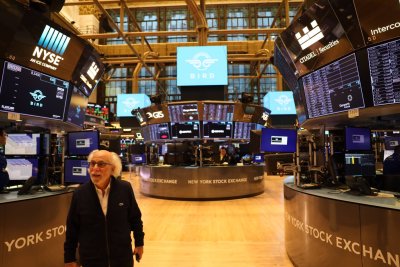
Shares of Occidental Petroleum were poised for a significant decline in Wednesday's premarket session, mirroring a retreat in oil prices following news of a ceasefire agreement between the United States and Iran. The stock was indicated down approximately 7.8%, reflecting the immediate market reaction to the potential for increased global oil supply and reduced geopolitical risk premium.
Analyst Outlook Mixed Despite Wolfe Research Upgrade
Amid the broader sell-off, Wolfe Research provided a contrasting note of optimism by raising its price target on Occidental to $70 from a previous level and maintaining an Outperform rating. This new target implies an upside of roughly 11.8% from the stock's closing price on Monday, April 7, 2026. However, the broader analyst consensus remains tempered. The stock currently carries a Hold rating on average, with the collective price target standing at $59.52, suggesting many on Wall Street see limited near-term catalysts.
The decline was part of a sector-wide move, with industry giants Exxon Mobil and Chevron also trading lower in premarket action. The market's focus shifted swiftly from company-specific fundamentals to macro-driven commodity price dynamics, underscoring the inherent volatility for pure-play exploration and production firms.
Streamlined Operations and Financial Progress
Occidental has undergone a significant transformation in recent years, culminating in a more focused operational profile. The company completed the sale of its OxyChem business to Berkshire Hathaway for $9.7 billion, a strategic move that helped reduce its principal debt burden to $15 billion. This leaves the firm with a streamlined oil and gas portfolio, a structure that management argues is not fully appreciated by the current share price.
On recent analyst calls, CEO Vicki Hollub characterized 2025 as "an exceptional year for Oxy," attributing the outperformance relative to full-year guidance to operational excellence and cost efficiency. Chief Financial Officer Sunil Mathew projected more than $1.2 billion in improved free cash flow for the coming period, citing approximately $365 million in interest savings from debt reduction. Furthermore, the company anticipates an additional $500 million in cost savings for 2026.
Impending Leadership Change Adds Uncertainty
The financial narrative is now intersecting with a looming leadership transition. According to sources cited by Reuters on March 26, Hollub, 66, is expected to announce her retirement later this year. The leading internal candidate to succeed her is Chief Operating Officer Rob Jackson, who was promoted to that role in October 2025. Jackson is known for his advocacy of enhanced oil recovery techniques, which are critical for maximizing production from mature fields. The company has declined to comment on the speculation, but the succession plan is a key focus for investors evaluating the long-term strategy.
Hollub's potential departure would mark the end of an era defined by bold, and at times contentious, strategic decisions. Her tenure was highlighted by the hard-fought, $55 billion acquisition of Anadarko Petroleum in 2019—a deal that outmaneuvered Chevron and was backed by $10 billion in financing from Warren Buffett's Berkshire Hathaway. More recently, she oversaw the aforementioned sale of OxyChem, also to Berkshire. Under her leadership, the company's operational footprint shifted dramatically, with U.S. operations now driving 83% of total output, a substantial increase from just 50% in 2015.
Market Risks and the Path Forward
The immediate risk for Occidental is clear: a sustained decline in crude oil prices, facilitated by a durable ceasefire, could erode the gains the stock has made based on its commodity exposure and debt reduction progress. This could occur before a new CEO has the opportunity to outline a fresh capital allocation strategy. Analysts note that uninterrupted shipping through the Strait of Hormuz is essential for oil to revert to pre-conflict price levels. Occidental has sought to mitigate this risk, highlighting that 84% of its resources break even with oil prices below $50 per barrel, providing a measure of resilience.
The company now finds itself at a crossroads, caught between a supportive analyst note and turbulent market trading. All eyes will turn to the upcoming first-quarter earnings report, scheduled for release on May 5, with a conference call to follow on May 6. These events will serve as a critical indicator, more telling than any external report, of whether the intertwined narratives of debt management, oil price sensitivity, and executive succession remain on a stable path or are beginning to diverge.