Shares of leading quantum computing firms IonQ, D-Wave Quantum, and Rigetti Computing traded lower on Wednesday. The decline followed a research note from Mizuho Securities analyst Vijay Rakesh, who revised his price targets downward for all three companies while maintaining Outperform ratings.
Revised Price Targets and Market Reaction
Rakesh set new price targets of $61 for IonQ, down from a previous $80; $31 for D-Wave, reduced from $40; and $33 for Rigetti, lowered from $43. The analyst's move contributed to selling pressure, extending losses from the prior session where the group had already shed approximately 4%. The adjustment reflects a recalibration of near-term expectations rather than a loss of long-term conviction in the quantum computing sector.
Catalyst: Nvidia's GTC and Sector Reset
The analyst cited Nvidia's recent GPU Technology Conference (GTC) and a series of industry updates as catalysts for a fresh evaluation of the quantum landscape. Mizuho's report suggests Wall Street is "dialing down short-term hopes" amid evolving competitive dynamics. A key technological focus highlighted was NVQLink, Nvidia's technology for connecting quantum processors with classical accelerated computing systems, which could accelerate progress in quantum error correction.
The industry's race is intensifying to surpass 200 logical qubits—error-corrected qubits reliable for practical computation—with a target window of 2027 to 2029. This longer-term roadmap remains intact, but near-term financial projections are being moderated.
Company-Specific Financials and Outlook
Despite the target cuts, Mizuho retained bullish ratings, pointing to significant potential upside exceeding 100% across the sector. The firm's optimism is partly underpinned by strong balance sheets and operational milestones disclosed by the companies.
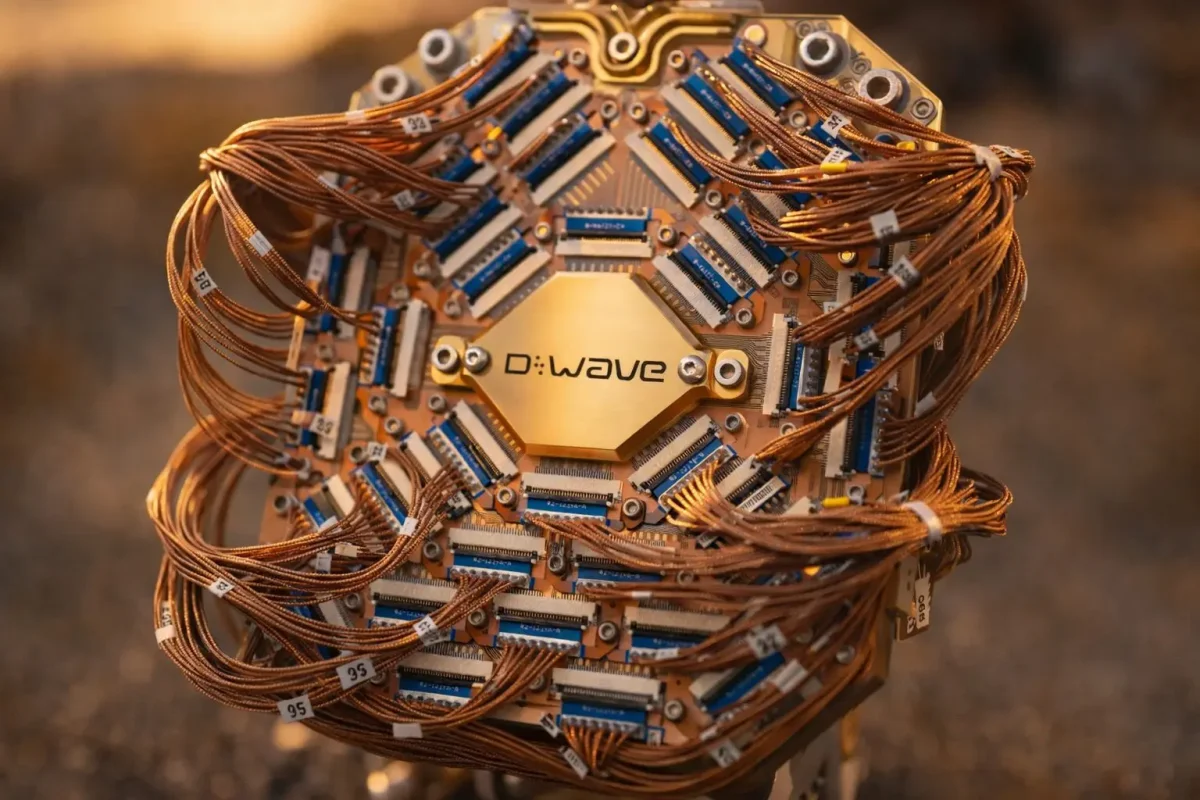
D-Wave Quantum reported concluding 2025 with $884.5 million in cash and marketable securities, having raised over $800 million during the year. Even after a $250 million acquisition of Quantum Circuits, management believes existing liquidity is sufficient to fund operations to profitability. The company also announced record 2026 bookings that have already surpassed any previous full-year result, with its sales pipeline up nearly 1,500% year-over-year. Notable deals include a $20 million system sale to Florida Atlantic University and a $10 million, two-year Quantum Computing as a Service (QCaaS) contract with a Fortune 100 company. CFO John Markovich projected quarterly operating expense growth of roughly 15% through 2026, while CEO Alan Baratz called 2026 "a defining year for D-Wave."
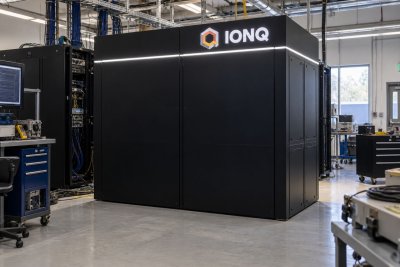
IonQ posted 2025 revenue of $130 million and held a substantial $3.3 billion in cash, cash equivalents, and investments. For 2026, the company provided revenue guidance of $225 million to $245 million. CEO Niccolo de Masi cited "continued momentum" toward that goal. However, the company also forecast an adjusted EBITDA loss between $310 million and $330 million for 2026, underscoring the heavy investment phase.
Rigetti Computing, while generating smaller revenue of $1.9 million in its most recent quarter, maintains a robust balance sheet. As of early March, the company held $44.9 million in cash, $398.7 million in short-term investments, and $146.3 million in long-term holdings. Subsequently, Rigetti announced plans to invest up to $100 million in the United Kingdom, aligning with the UK government's quantum strategy, which includes up to £2 billion in funding. CEO Subodh Kulkarni noted "strong alignment" between the company's plans and the national roadmap.
Persistent Near-Term Risks
The report also acknowledged clear short-term risks. D-Wave cautioned that system sales, due to lengthy installation timelines, may not be recognized as revenue for several months or even quarters. Rigetti's revenue base remains modest. These factors highlight the common challenge for quantum firms: they are often well-capitalized with ambitious plans, yet tangible commercial momentum and profitability remain on the horizon.
Investors are thus navigating a familiar pattern in high-growth, pre-commercial technology sectors. While the fundamental long-term thesis for quantum computing's transformative potential is unchanged, the path to commercialization requires patience, and near-term valuation benchmarks are being adjusted to reflect a more measured timeline for adoption and revenue recognition.