The U.S. Commerce Department announced Thursday it has signed letters of intent to allocate $2.013 billion from the CHIPS and Science Act to support nine quantum computing companies. In a notable shift from traditional grant funding, the government will take minority, non-controlling equity stakes in each recipient, marking a strategic move to bolster domestic advanced technology manufacturing.
Details of the Funding
IBM will receive the largest portion, $1 billion, to establish a new subsidiary focused on quantum foundry operations, specifically producing superconducting wafers. GlobalFoundries is set to get $375 million to build a secure U.S.-based quantum foundry for critical hardware components. Seven other companies will receive up to $100 million each: Atom Computing, D-Wave, Infleqtion, PsiQuantum, Quantinuum, and Rigetti. Diraq will receive up to $38 million.
Market Reaction
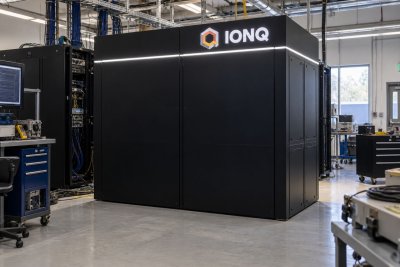
Shares of quantum computing firms surged in premarket trading following the announcement. IBM rose 6.4%, Rigetti gained 14%, D-Wave advanced 18%, and IonQ, though not named in the award list, climbed 6.9%. Overall, companies involved in the deal traded between 7% and 21% higher before the opening bell.
Strategic Implications
The Trump administration has framed this funding as an investment rather than a direct subsidy, reflecting a broader strategy to secure key U.S. supply chains in semiconductors and rare earths. The government previously took a 9.9% stake in Intel in 2025 under a similar CHIPS Act agreement. Commerce Secretary Howard Lutnick stated that the administration is pushing the U.S. ahead on quantum technology through these CHIPS Research and Development investments.
Technical Context
The funding targets multiple competing quantum computing approaches, including neutral-atom, silicon-spin, superconducting, photonic, and trapped-ion systems. These represent different methods for creating qubits, the fundamental units of quantum computers. The Commerce Department noted that the investments will address key challenges such as error rates, cryogenic equipment, readout electronics, photonic loss, and interconnects. However, the technology remains in development, with current quantum machines still devoting most of their computing power to error correction, making them no faster than classical computers for most tasks.
The CHIPS and Science Act of 2022 set aside $50 billion for semiconductor initiatives, with $11 billion earmarked for research and development and $39 billion for incentives for facilities and equipment. This quantum computing investment is part of a broader effort to bring advanced tech manufacturing back to the U.S. before quantum systems reach commercial scale.