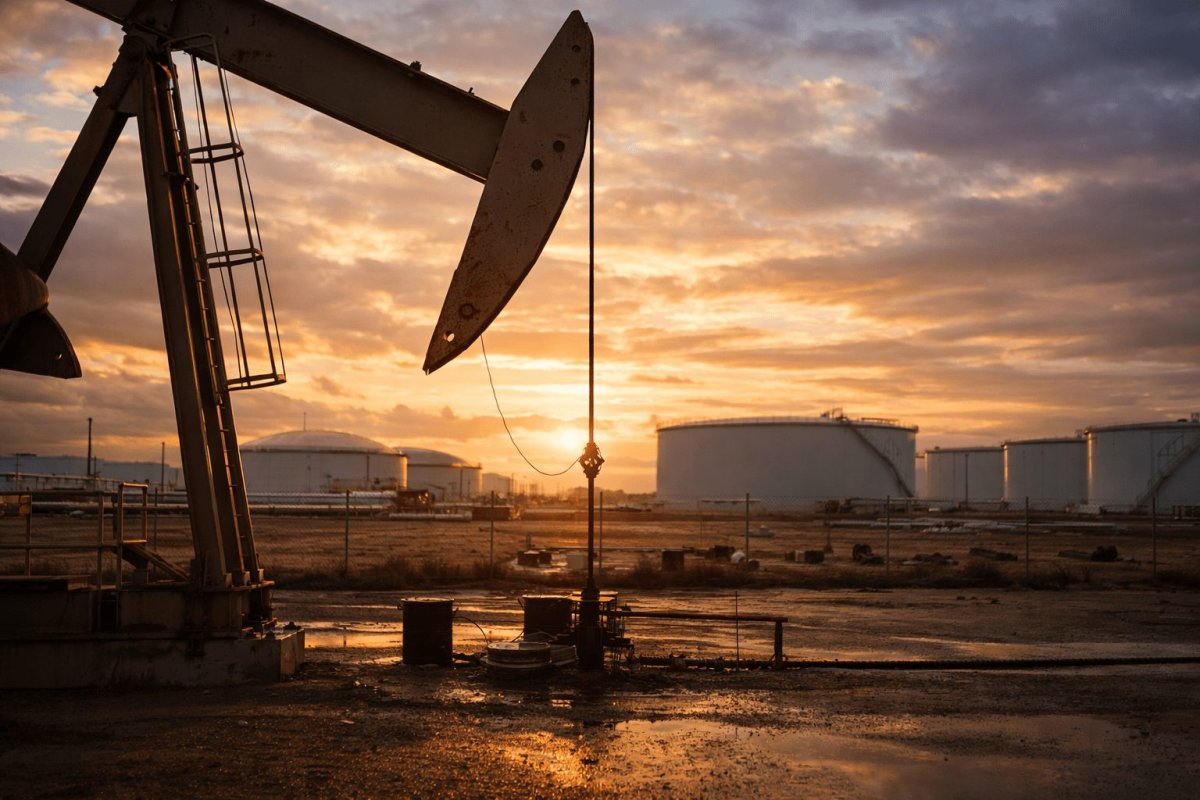
Global oil benchmarks exhibited limited volatility on Wednesday, with prices stabilizing near recent highs as competing geopolitical and fundamental factors created a tense equilibrium in the market.
Brent crude futures for June delivery settled at $94.93 per barrel, posting a marginal gain of 14 cents. The U.S. benchmark, West Texas Intermediate (WTI), edged up a single cent to close at $91.29. The subdued price action reflected a market grappling with opposing forces: ongoing physical supply constraints against a backdrop of renewed diplomatic efforts aimed at de-escalation in the Middle East.
Geopolitical Tensions Underpin Market
The primary supportive factor remains the severely disrupted flow of crude through the Strait of Hormuz, a critical maritime chokepoint that facilitates roughly one-fifth of global seaborne oil and liquefied natural gas trade. For 45 days, since Iran's Revolutionary Guards announced the waterway's closure, tanker traffic has failed to recover. Daily crossings remain far below the pre-conflict level of over 130 transits. Analytics firm Kpler estimates the cumulative impact on Middle East crude and condensate shipments has reached a staggering 496 million barrels.
"The market is still pricing in a significant risk premium," noted one analyst, pointing to the fact that physical cargoes are trading at substantial premiums to futures. On Monday, a North Sea Forties crude cargo for prompt delivery reportedly traded at a record $148.87 a barrel, highlighting the acute strain in the spot market. Repsol CEO Josu Jon Imaz characterized the physical trading environment as "under a lot of strain" as buyers compete for barrels outside the Persian Gulf.
Inventories and Shifting Demand Outlook
Domestic U.S. data provided some underlying support. The Energy Information Administration (EIA) reported that commercial crude inventories fell by 0.9 million barrels last week to 463.8 million barrels. The draw was accompanied by larger declines in refined product stocks, with gasoline down 6.3 million barrels and distillates dropping 3.1 million barrels.
However, the demand picture is becoming clouded. The International Energy Agency (IEA), in its latest monthly report, now projects a slight contraction in global oil demand for 2026, a notable shift from previous forecasts. The agency labeled the resumption of normal flows through the Strait of Hormuz as "the single most important variable" for any meaningful price relief and projected global oil supply would fall by 1.5 million barrels per day this year.
Concurrently, the Organization of the Petroleum Exporting Countries (OPEC) trimmed its estimate for second-quarter 2026 oil demand by 500,000 barrels per day. The cartel, however, left its full-year growth projection unchanged.
Analyst Views and Price Risks
Market participants are divided on the path forward. John Kilduff of Again Capital suggested traders are leaning toward "a better outcome" diplomatically, which is capping bullish momentum. Conversely, Tamas Varga of PVM warned that the recent sell-off ignores the "loss of physical barrels" due to the ongoing supply disruption.
Goldman Sachs outlined a two-way risk scenario in its 2026 outlook, maintaining forecasts of $83 for Brent and $78 for WTI. The bank noted that production shut-ins have been less severe than initially feared, and optimism around a potential peace deal exerts downward pressure. Yet, with Hormuz flows at approximately 10% of typical volumes, a strong case remains for prices to move higher. Varga cautioned that a breakdown in negotiations or a stalling shipping recovery could put March's price peak back in play, while a swift reopening of the strait could cause the geopolitical risk premium to evaporate rapidly.
Broader financial markets have signaled a preference for de-escalation, with equities rallying aggressively, according to David Seif, Nomura's chief economist for developed markets. Nonetheless, oil traders continue to monitor a crucial shipping lane that remains far from fully operational, ensuring volatility persists.