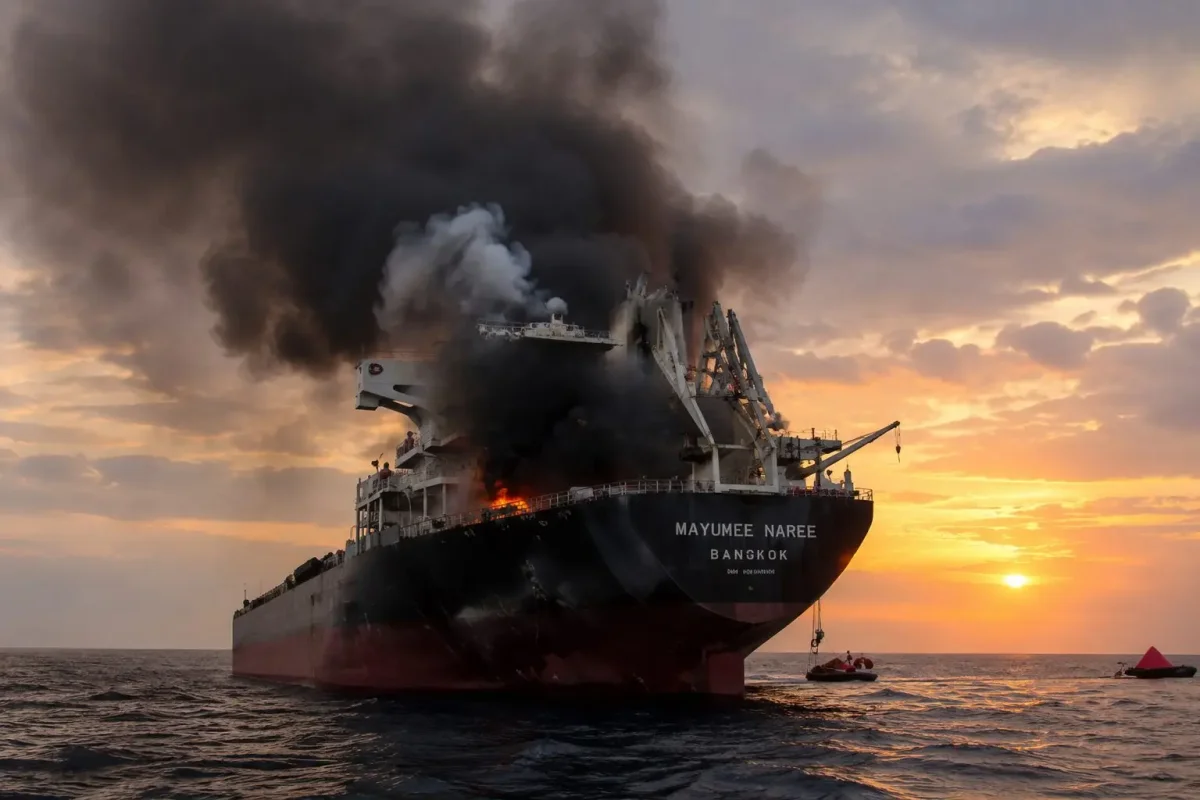
Oil prices rallied sharply on Monday, with Brent crude climbing within striking distance of $100 per barrel, after Iran's Tasnim news agency reported that Tehran had halted indirect talks with Washington via mediators. The development reignited fears of potential disruptions to shipping through the strategic Strait of Hormuz, a critical chokepoint for global crude and natural gas flows.
Brent futures surged $6.02, or 6.6%, to trade at $97.14 per barrel by 10:02 a.m. ET, while U.S. West Texas Intermediate crude jumped $6.68, or 7.7%, to $94.04. The sharp upturn marked a dramatic reversal from the prior week, when oil closed out May with its steepest monthly dollar decline since March 2020, driven by optimism over a possible U.S.-Iran ceasefire extension and concerns about sluggish demand.
The Strait of Hormuz, through which the International Energy Agency estimates roughly 20 million barrels per day of crude and oil products flowed in 2025—representing about a quarter of all seaborne oil trade—once again became the focal point for market anxiety. According to the Tasnim report, Iran and its so-called Resistance Front partners in Yemen, Lebanon, and Iraq have placed a full blockade of the Strait of Hormuz and potential moves to target other routes, including the Bab el-Mandeb Strait near Yemen, on their agenda.
Geopolitical Tensions Escalate
Iranian Foreign Minister Abbas Araqchi warned on Monday via social media that any violation of the ceasefire would be considered a breach on all fronts, holding the U.S. and Israel responsible. This came as Israeli forces expanded ground operations in southern Lebanon, pushing further against Hezbollah despite a ceasefire that began over six weeks ago. Reports indicated that Israeli troops had captured Beaufort Castle and a key ridge, with Prime Minister Benjamin Netanyahu ordering the military to intensify the offensive.
On the diplomatic front, U.S. Secretary of State Marco Rubio has engaged with Lebanese President Joseph Aoun and Netanyahu to discuss a gradual de-escalation framework, while President Trump stated he is nearing a decision on extending the early-April ceasefire with Iran for an additional 60 days. However, Reuters noted that significant gaps remain between the U.S. and Iranian positions, with Tehran accusing Washington of shifting its stance.
Physical Supply Risks and Market Dynamics
Beyond headline risks, traders are increasingly focused on tangible supply threats. Tony Sycamore, an analyst at IG, highlighted growing concerns over the potential placement of mines in the Strait of Hormuz, noting that even a diplomatic breakthrough would not immediately restore supply flows. This physical disruption risk is compounded by the fact that some Gulf nations have already missed earlier output increases due to Hormuz-related bottlenecks.
OPEC+ members are reportedly preparing to approve another output target hike in July, according to three Reuters sources, though the effectiveness of such moves remains uncertain given the geopolitical overhang. Meanwhile, Saudi Arabia is expected to cut its July official selling price for Asia for the second consecutive month, reflecting a Reuters poll that indicated weakening regional demand.
Demand Side Pressures
On the demand side, China's official manufacturing purchasing managers' index slipped to 50 in May from 50.3 in April, landing exactly at the expansion-contraction threshold. New export orders also weakened. Goldman Sachs analysts suggested that oil demand from end-users may have fallen more than anticipated, as elevated prices weighed on jet fuel, petrochemicals, and fuel consumption in parts of China and Western Europe.
The market now faces a two-sided risk: the potential for slowing economic activity to cap price gains, while ongoing conflict keeps supply tightly constrained. Kazakhstan reported on Monday that it had restored output following disruptions at its Tengiz field, but this is a minor factor compared to any sustained disruption in Gulf exports.